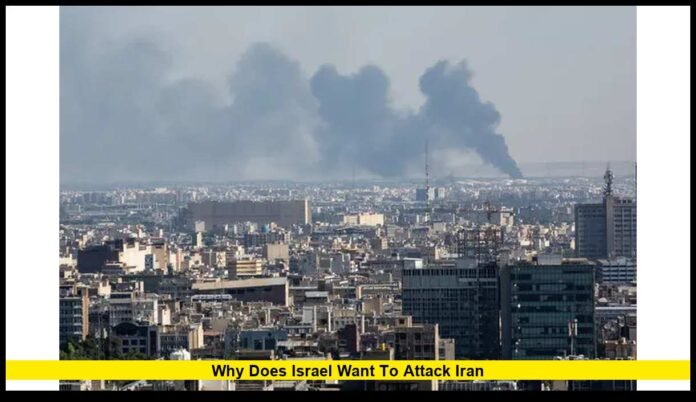

Why does Israel want to attack Iran has become a widely discussed question as tensions between the two countries remain one of the most significant geopolitical issues affecting global security in 2026. Israeli leaders continue to warn that Iran’s nuclear development and expanding military influence across the Middle East pose a direct threat to Israel’s safety, while Iran maintains that its nuclear activities are intended for civilian purposes.
This conflict does not revolve around a single event. Instead, it stems from decades of political rivalry, ideological opposition, and security concerns. Governments, defense analysts, and international organizations continue to monitor developments closely because any military confrontation between Israel and Iran could affect global stability, energy markets, and diplomatic alliances.
To understand why does Israel want to attack Iran, it is essential to examine the history of their rivalry, the debate surrounding Iran’s nuclear program, regional military dynamics, and the current strategic environment.
Historical Background of Israel–Iran Relations
The relationship between Israel and Iran has changed dramatically over the past several decades.
Before 1979, Iran and Israel maintained relatively cooperative ties. Iran recognized Israel and engaged in trade and diplomatic contact.
The situation changed after the Iranian Revolution in 1979, which transformed Iran into an Islamic Republic led by Ayatollah Ruhollah Khomeini.
After the revolution:
- Iran ended diplomatic relations with Israel.
- Iranian leaders adopted strong opposition toward Israel.
- Israel began viewing Iran as a major regional adversary.
From that point forward, political hostility between the two nations increased steadily.
The rivalry now represents one of the most serious strategic conflicts in the Middle East.
Iran’s Nuclear Program and Global Attention
At the center of the debate surrounding why does Israel want to attack Iran is Iran’s nuclear program.
Iran began developing nuclear technology in the 1950s with international support for peaceful energy programs. Over time, the country built a network of nuclear facilities capable of producing nuclear fuel.
Iran states that its nuclear program focuses on civilian purposes, including:
- Electricity generation
- Medical research
- Scientific development
However, Israel and several Western governments remain concerned that nuclear infrastructure could potentially produce material usable in nuclear weapons.
The issue primarily centers on uranium enrichment, a process that increases the concentration of uranium isotopes used as nuclear fuel.
While low enrichment levels support power generation, higher levels can be used in nuclear weapons production.
Major Iranian Nuclear Facilities
Iran operates several nuclear sites that have drawn international attention.
These facilities support different stages of nuclear fuel production.
| Nuclear Facility | Location | Purpose |
|---|---|---|
| Natanz | Central Iran | Uranium enrichment |
| Fordow | Near Qom | Underground enrichment facility |
| Isfahan | Isfahan Province | Nuclear fuel conversion |
| Bushehr | Persian Gulf coast | Nuclear power plant |
The Natanz and Fordow facilities focus on uranium enrichment using centrifuge technology.
Fordow is located deep underground, which makes it difficult to target with conventional military strikes.
These facilities play a major role in Israel’s security concerns regarding Iran.
International Monitoring of Iran’s Nuclear Activities
International organizations monitor Iran’s nuclear program through inspections and oversight.
The International Atomic Energy Agency (IAEA) oversees safeguards designed to ensure nuclear materials remain dedicated to peaceful purposes.
Inspectors track several key factors:
- Uranium enrichment levels
- Nuclear material inventories
- Operation of centrifuge machines
- Compliance with international agreements
Over the past decade, negotiations between Iran and global powers have aimed to limit nuclear development and strengthen monitoring.
The 2015 Nuclear Agreement
A major milestone in the diplomatic effort occurred in 2015 with the creation of the Joint Comprehensive Plan of Action (JCPOA).
This agreement involved Iran and several global powers.
The deal placed restrictions on Iran’s nuclear activities, including:
- Limits on uranium enrichment levels
- Reduction of active centrifuges
- Expanded international inspections
- Modifications to certain nuclear facilities
The agreement aimed to extend the time needed for Iran to produce nuclear weapons material while increasing transparency.
Israel strongly criticized the agreement, arguing that it did not fully eliminate long-term nuclear risks.
Israel’s Security Concerns
Israel consistently states that Iran must not develop nuclear weapons capability.
Israeli leaders across multiple administrations have emphasized this position.
Israel views nuclear weapons in Iran’s possession as a major threat because of the following factors:
- Iran’s hostility toward Israel’s existence
- Iran’s growing missile capabilities
- Iran’s regional alliances with armed groups
Israeli officials argue that preventing nuclear weapons development is a matter of national security.
This concern drives much of the discussion around why does Israel want to attack Iran.
Iran’s Influence Across the Middle East
Another major factor involves Iran’s influence through regional partners and armed groups.
Iran maintains relationships with several organizations across the Middle East.
These groups operate in countries near Israel.
Examples include:
- Hezbollah in Lebanon
- Armed groups in Syria
- Militias in Iraq
- Palestinian factions in Gaza
These alliances extend Iran’s influence across the region and contribute to ongoing tensions with Israel.
Hezbollah and Israel’s Northern Border
One of the most significant security concerns for Israel is Hezbollah, an armed organization based in Lebanon.
Hezbollah maintains a large arsenal of rockets and missiles capable of reaching Israeli cities.
Israeli defense officials state that Hezbollah receives support from Iran in several areas:
- Military training
- Weapons supply
- Financial assistance
This relationship increases Israel’s concern about Iran’s role in regional conflicts.
The proximity of Hezbollah forces to Israel’s northern border makes the issue particularly sensitive.
Military Capabilities of Israel
Israel operates one of the most advanced military forces in the Middle East.
The Israel Defense Forces (IDF) include highly trained personnel and sophisticated technology.
Key components of Israel’s defense system include:
- Advanced fighter aircraft
- Intelligence and surveillance networks
- Cybersecurity capabilities
- Missile defense systems
Israel also maintains several defensive systems designed to intercept incoming rockets and missiles.
| System | Purpose |
|---|---|
| Iron Dome | Short-range rocket interception |
| David’s Sling | Medium-range missile defense |
| Arrow System | Long-range ballistic missile defense |
These systems form a multi-layered defense structure protecting Israeli cities.
Iran’s Military Capabilities
Iran also possesses significant military resources.
The country’s armed forces include two main branches:
- The Iranian Army
- The Islamic Revolutionary Guard Corps (IRGC)
Iran has invested heavily in missile technology over the past two decades.
Iran’s missile arsenal includes short-range and medium-range ballistic missiles capable of reaching targets across the Middle East.
Iran also maintains naval forces operating in the Persian Gulf and the Strait of Hormuz.
These capabilities contribute to the strategic balance between Israel and Iran.
Cybersecurity and Modern Warfare
Beyond traditional military power, both Israel and Iran have developed cyber capabilities.
Cyber operations have become an important aspect of modern security competition.
Cyber activities can target:
- Government infrastructure
- Energy systems
- Communication networks
- Financial institutions
These operations often occur without direct military confrontation.
Cybersecurity has therefore become an important element of the broader strategic rivalry.
The Role of the United States
The United States remains deeply involved in Middle East security dynamics.
Washington maintains a strong strategic partnership with Israel.
U.S. policy in the region focuses on several priorities:
- Preventing nuclear weapons proliferation
- Maintaining regional stability
- Supporting diplomatic negotiations
- Protecting international trade routes
American officials frequently emphasize diplomacy and international monitoring efforts to address nuclear concerns.
Why the Conflict Draws Global Attention
The question why does Israel want to attack Iran receives worldwide attention because the consequences of a military conflict could extend far beyond the Middle East.
A confrontation between the two countries could influence several global issues.
These include:
- Energy supply and oil markets
- International shipping routes
- Security alliances
- Regional political stability
The Persian Gulf region plays a crucial role in global oil transportation.
Any disruption in this region could affect energy markets worldwide.
Current Situation in 2026
As of March 2026, tensions between Israel and Iran remain unresolved.
Both countries continue to monitor each other’s military and strategic activities closely.
International organizations continue overseeing nuclear monitoring efforts while governments encourage diplomatic engagement.
Despite ongoing disagreements, diplomatic discussions remain an important tool for addressing nuclear and security concerns.
Key Issues Driving the Conflict
The following table summarizes the primary issues shaping tensions between Israel and Iran.
| Issue | Explanation |
|---|---|
| Nuclear Development | Concerns over uranium enrichment capabilities |
| Regional Influence | Iranian alliances with armed groups in nearby countries |
| Missile Programs | Ballistic missile capabilities across the region |
| Strategic Rivalry | Decades of political hostility and security concerns |
These factors together help explain the ongoing debate surrounding the relationship between the two countries.
Understanding why does Israel want to attack Iran requires examining decades of political tension, nuclear development concerns, and regional security challenges that continue shaping Middle East geopolitics today.
What are your thoughts on the tensions between Israel and Iran and how they affect global security? Share your perspective and stay informed as developments continue to unfold.