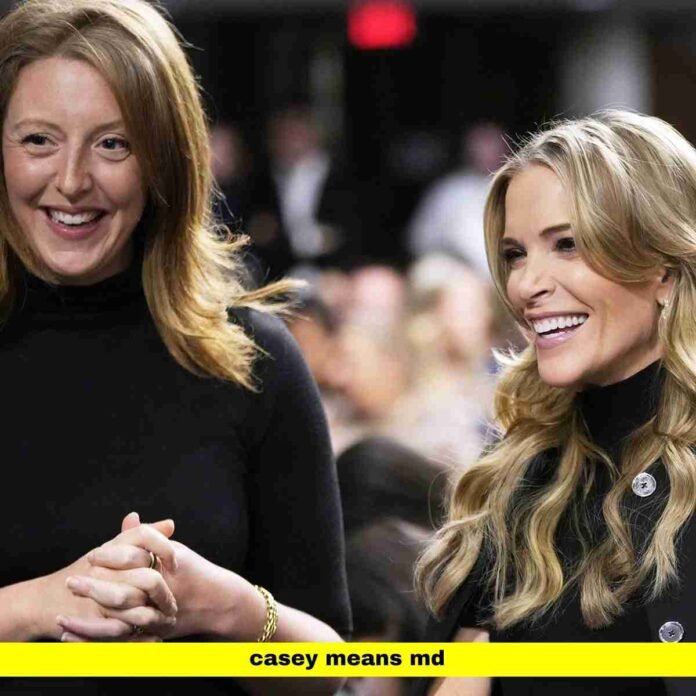

The national conversation over health leadership in the United States took center stage today as casey means md appeared before the Senate Health, Education, Labor and Pensions Committee in a long-anticipated confirmation hearing. Dr. Casey Means stepped up to the witness table in Washington, D.C., to discuss her nomination by President Donald Trump to serve as the next Surgeon General of the United States. The event marked a pivotal moment in national healthcare policy, shining a spotlight on her career, her positions on public health priorities, and the intense scrutiny she has faced from lawmakers and medical experts alike.
At 38 years old, Dr. Means is one of the youngest nominees ever considered for the nation’s top public health advisory role. Her journey to this moment has been unconventional, rising from medical school graduate to wellness entrepreneur, digital health innovator, and vocal advocate for a new approach to addressing chronic disease in America.
Today’s Senate hearing offered Dr. Means the opportunity to present her vision for reshaping how the United States addresses chronic disease, lifestyle-related health conditions, and prevention. It also placed her under fire on questions about her clinical experience, her past business interests, her alignment with political health movements, and the depth of her knowledge on key public health issues.
Here’s a detailed, clear breakdown of what happened at the hearing, who Dr. Means is, why her nomination has become a flashpoint, and what this moment could mean for American health policy.
Dr. Casey Means: A Journey From Medicine to Wellness Advocacy
Dr. Casey Means earned her medical degree from a top-tier U.S. medical school and completed postgraduate training, yet she did not finish her surgical residency. Years ago, Dr. Means made a significant career decision to step away from clinical practice. Legal and professional records show her medical license in Oregon currently carries inactive status, meaning she is not authorized to treat patients as a physician at this time.
After leaving traditional clinical training, Dr. Means expanded her public profile through launching and co-founding a digital health company focused on metabolic health. The platform tracks nutrition, sleep, and exercise data, often using continuous glucose monitoring to help users understand how lifestyle influences metabolic function.
Over time, Dr. Means authored books, became a prominent speaker on health topics, and built a substantial online audience centered around prevention, nutrition, and holistic wellness approaches. Her message gained traction with audiences interested in lifestyle medicine, chronic disease reduction, and personal empowerment around health choices.
Her path from medical school graduate to wellness entrepreneur diverges sharply from the traditional profile of past Surgeons General, who often bring decades of experience in federal health agencies, academic research, epidemiology, or large-scale public health leadership. Dr. Means’ nomination represents a departure from that model, which has fueled much of the debate examining her qualifications.
Why This Hearing Was Delayed and Why It’s Rescheduled Now
This particular confirmation hearing was originally scheduled more than a year ago. However, it was postponed when Dr. Means went into labor the day she was set to testify before the Senate committee. That delay shifted the timetable for evaluating her nomination and brought more national attention as the hearing was rescheduled for today.
In light of that postponement, members of the Senate committee have had more time to review her background, financial disclosures, public statements, and writings. That deeper review set the stage for robust questioning during today’s session.
Public Health Leaders and the Senate Committee Set the Stage
Senators from both parties participated in the hearing, reflecting the bipartisan nature of oversight for the Surgeon General position. The Senate’s Health Committee plays a critical role in vetting nominees for major health leadership offices. Its members asked detailed questions probing Dr. Means’ medical background, her views on public health science, and her vision for the Surgeon General’s role.
Supporters of Dr. Means emphasize her communication skills, her engagement with the public on health literacy, and her ability to advocate for preventive health measures. Opponents raised concerns about her lack of traditional public health experience, the inactive status of her medical license, and her past business ventures.
During the hearing, Dr. Means described her approach to public health as centered on addressing the root causes of chronic disease. She outlined ideas focused on dietary improvement, better lifestyle habits, and reducing exposure to foods and environmental factors that she and her allies argue contribute to widespread metabolic dysfunction in the population.
She positioned her goals not as replacements for modern medicine but as complementary strategies to reduce long-term disease risk and healthcare strain. Her comments emphasized a data-driven focus on behaviors, community support, and targeted national messaging to improve health outcomes.
Detailed Examination of Her Medical Background and Qualifications
Much of the questioning at the hearing focused on Dr. Means’ medical credentials. Although she completed medical school, she did not finish her surgical residency program. In response to senatorial inquiries, she affirmed that her training provided valuable clinical insight and that her subsequent career gave her a broader view of public health trends.
Several senators pressed her to clarify why she left residency, how her clinical experience would support her ability to serve effectively as Surgeon General, and what she sees as the role’s key responsibilities. Dr. Means reiterated her belief that prevention strategies and public education play a fundamental role in reducing chronic diseases that burden the healthcare system.
A point of focus was her current inactive medical license. Committee members asked how that status impacts her credibility as a physician and as a national health leader. Dr. Means responded that the Surgeon General role does not require active clinical practice and that her broader professional work qualifies her to lead national health conversations.
That assertion drew both support and criticism during the hearing. Supporters argued that preventing chronic disease requires engaging Americans where lifestyle choices occur — in everyday environments — and that strong communication skills and public influence are essential. Critics contended that clinical experience, ongoing medical practice, and deep public health research expertise should be non-negotiable for the nation’s chief health advisor.
Questions on Past Business Activities and Ethical Transparency
Another major theme in the hearing involved Dr. Means’ business interests prior to her nomination. Senate members reviewed financial disclosures showing that she earned significant income from the wellness industry, including promoting products such as supplements, teas, and specialized food and health programs.
Some lawmakers raised concerns about potential conflicts of interest, noting that recommending or profiting from products while holding influence over public health messaging could create real or perceived ethical issues. Dr. Means acknowledged these concerns and pointed to her ethics filing, in which she pledged to resign from her leadership role at her former company and divest any stock holdings if confirmed.
She also committed to severing ties with other business ventures that might pose conflicts. Committee members probed whether these steps were sufficient to ensure impartiality if she became Surgeon General.
Debate Over Public Health Philosophy and Vaccine Policy
Public health advocacy played a central role in discussions today. Committee members asked a series of targeted questions about Dr. Means’ views on vaccines and mainstream public health practices, a topic that has drawn national scrutiny.
While she affirmed that vaccines are a cornerstone of public health and that she respects established immunization schedules, Dr. Means also acknowledged calls for more research on certain aspects of vaccine administration timing. Her answers reflected an attempt to balance respect for scientific consensus with an openness to exploring health outcomes across diverse populations.
Some senators expressed caution, emphasizing that clear, evidence-based communication on vaccines has been essential to controlling infectious diseases. They pressed Dr. Means to delineate how she would support existing vaccination programs while pursuing preventive health goals.
In her responses, she said she would collaborate with scientific experts within federal agencies and rely on rigorous data when issuing any advisories tied to vaccine guidance. However, that topic remains a point of debate among lawmakers and independent public health experts observing the hearing.
Support From Some Lawmakers and Administration Figures
Not every question during the hearing was adversarial. Several Republican members of the Senate committee highlighted Dr. Means’ abilities to communicate complex health information to the public. They said her experience engaging with communities and translating scientific concepts into accessible language could be an asset for a Surgeon General tasked with nationwide public outreach.
Supporters pointed to her book, speaking engagements, and digital platforms as examples of how she has built a broad audience around health literacy and awareness. They noted that modern public health strategy increasingly involves mass communication, digital outreach, and cultural engagement — areas where Dr. Means has demonstrable experience.
Those allies argued that her nomination represents a fresh perspective, especially in an era where lifestyle-related diseases such as diabetes, heart disease, and obesity continue to rise.
Criticism From Medical Experts and Public Health Advocates
In contrast, numerous health professionals and former public health officials expressed skepticism about Dr. Means’ readiness to take on the Surgeon General role. Critics pointed to her inactive medical license, the fact that she did not complete residency training, and the absence of long-term experience in epidemiology or public health leadership.
These voices argue that while preventive health messaging is important, the Surgeon General must also carry deep expertise in evidence-based public health practices, communicable disease response, and scientific rigor. They warn that the position should not be reduced to lifestyle advocacy alone.
Some medical commentators also raised concerns about statements Dr. Means has made regarding non-traditional approaches to health and disease. They argue that public health leadership must be rooted in established science and clear communication to maintain public trust, especially during health crises.
Historical Context of Surgeon General Qualifications
In looking at the history of the surgeon general role, most individuals who have held the position brought extensive backgrounds in medical practice, research leadership, military medicine, or federal public health administration.
Many past Surgeons General served in roles that involved direct policy development, crisis response, and extensive engagement with scientific advisory boards. While the responsibilities vary over time, the public generally views the position as a bridge between scientific expertise and national health communication.
Dr. Means’ nomination highlights a shift in how some policymakers define the qualifications for high-level health leadership. Her supporters argue that lived experience in health communication, prevention strategy, and engagement with public audiences is equally valuable for the role’s outreach mission. Opponents emphasize that depth of medical and public health expertise is crucial for guiding the country.
The Hearing’s Broader Political and Public Health Implications
Today’s hearing has implications that extend beyond a single nominee. The debate reflects broader tensions in how American health leaders approach the twin goals of disease prevention and evidence-based practice.
As chronic diseases continue to strain healthcare systems, public health messaging is evolving to address lifestyle factors, dietary influences, and behavioral health patterns. Dr. Means has positioned herself at the forefront of that conversation, advocating for a national focus on metabolic health and prevention.
However, critics say effective national leadership must balance those goals with rigorous science, deep clinical understanding, and the ability to respond effectively to emergent threats such as infectious disease outbreaks.
The Senate’s evaluation of Dr. Means’ nomination therefore becomes a referendum not only on her personal qualifications but also on the role public health leadership will play in the years ahead.
What’s Next in the Confirmation Process
After the hearing, the Senate Health Committee will deliberate on whether to advance Dr. Means’ nomination to the full Senate for a confirmation vote. That process could unfold over the coming weeks as committee members evaluate testimony, review ethics pledges, and engage with stakeholders across the health sector.
If her nomination proceeds to the full Senate, lawmakers will debate and cast votes that ultimately decide whether she will assume office as the next Surgeon General.
Regardless of the outcome, today’s hearing stands as a key moment in shaping public expectations and national priorities for health leadership.
Final Thoughts on the Hearing and Its Impact
The confirmation hearing for Casey Means has energized discourse across the health landscape in America. Lawmakers, experts, and public audiences alike are grappling with questions about how best to lead the nation’s approach to chronic disease, prevention, and health education.
Dr. Means stood before the Senate and articulated her vision, defended her record, and pledged commitment to ethical leadership and health improvement. Senators challenged her perspectives, weighed her qualifications, and tested her readiness for one of the most visible public health roles in the nation.
This moment will resonate throughout the confirmation process and continue to shape conversations long after the hearing adjourns.
Share your thoughts below and keep following this story as it progresses.