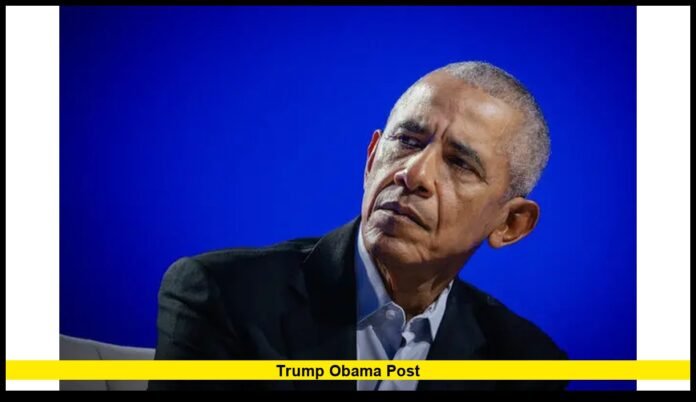

The Trump Obama post controversy has become one of the most significant political flashpoints of early 2026, igniting bipartisan criticism and renewed debate over presidential conduct in the digital age. The situation began when a video shared from President Donald Trump’s official social media account included racially offensive imagery depicting former President Barack Obama and former First Lady Michelle Obama. The fallout was immediate, drawing condemnation from lawmakers across party lines and prompting a national conversation about leadership standards.
Here is a comprehensive, fact-focused look at what happened, how leaders responded, and why the issue continues to matter.
How the Controversy Began
On February 5, 2026, a video was posted from President Trump’s official social media account. The video largely focused on claims surrounding the 2020 presidential election. Near its conclusion, however, the clip included imagery portraying Barack Obama and Michelle Obama in a racially offensive manner.
Within hours, the content began circulating widely across social media platforms. Screenshots and clips spread rapidly, fueling criticism and concern.
The reaction was swift.
Lawmakers, civil rights advocates, and public figures called the imagery inappropriate and offensive. The timing also intensified scrutiny, as the incident occurred during Black History Month, a nationally recognized period honoring the achievements and contributions of Black Americans.
Shortly after backlash intensified, the video was deleted from the account.
White House Explanation
Following the removal of the post, White House officials addressed the situation publicly.
Initial statements described the video as an internet meme that was posted without a full review of its content. Officials later said a staff member had shared the clip in error.
President Trump stated that he did not view the entire video before it was published. As of mid-February 2026, no formal apology has been issued by the president.
No disciplinary action has been publicly announced regarding the staff member reportedly involved.
The controversy has remained a political issue rather than a legal one. There are no criminal investigations or formal charges connected to the post.
Barack Obama’s Public Remarks
Former President Barack Obama responded publicly several days after the video surfaced. In his comments, he addressed the broader tone of political discourse in the United States.
Obama described current political rhetoric as troubling and emphasized the importance of civility, dignity, and respect in public life. He noted that most Americans value decency and fairness, even during moments of intense political disagreement.
Although he did not focus solely on President Trump in every statement, his remarks clearly addressed the nature of the incident and its implications for national unity.
Obama’s response drew national attention and was widely discussed across television networks and online platforms.
The Trump Obama post became more than a social media incident. It evolved into a wider conversation about the responsibilities that come with holding the nation’s highest office.
Bipartisan Condemnation
One of the most notable aspects of this controversy was the bipartisan reaction.
Several Republican lawmakers publicly criticized the content. Senator Tim Scott described the imagery as unacceptable and offensive. Other Republican leaders expressed concern about the message it sent domestically and internationally.
Democratic leaders also condemned the post. House Minority Leader Hakeem Jeffries called for accountability and urged higher standards in presidential communication.
While partisan divisions remain strong in Washington, moments of bipartisan condemnation are less common. That made the response particularly significant.
The unified criticism signaled that certain boundaries still hold weight across party lines.
Public Reaction Across the Country
The American public responded quickly.
Social media platforms saw heated debate, with users sharing opinions, criticism, and support. Cable news programs devoted extended segments to the issue. Political commentators discussed the implications for presidential behavior in the digital era.
Many Americans pointed to the broader historical context of racially offensive imagery in the United States. Civil rights organizations reiterated concerns about harmful stereotypes and their lasting impact.
Supporters of President Trump defended him, arguing that the backlash was politically motivated. Critics countered that the office of the presidency carries a responsibility to avoid inflammatory content.
The controversy became one of the most searched political topics of early February 2026.
Digital Communication and Presidential Power
Modern presidents communicate directly with millions of Americans through social media. That power allows leaders to bypass traditional media filters and speak instantly to supporters.
It also increases the risk of rapid controversy.
Unlike prepared speeches or press briefings, social media posts can spread nationwide within seconds. Once shared, screenshots and recordings ensure that content remains accessible even after deletion.
The Trump Obama post underscores the evolving nature of presidential messaging. It highlights how digital platforms have reshaped political communication norms.
Presidents now operate in a 24-hour news cycle amplified by online engagement. Every post carries potential political impact.
Political Climate in 2026
The controversy unfolded during a politically charged period.
Election discussions are intensifying across the country. Campaign strategies are taking shape. Voters are closely watching public conduct.
Incidents involving presidential communication often influence voter perception. Political strategists from both parties are analyzing how tone and messaging affect independent voters and suburban constituencies.
The debate surrounding the post intersects with broader issues including race relations, political polarization, and leadership standards.
Public opinion remains divided. Some voters view the controversy as disqualifying behavior. Others see it as part of ongoing partisan conflict.
Regardless of perspective, the issue has added another layer to an already complex political environment.
No Legal Consequences Announced
As of today, the situation remains within the realm of public discourse.
No legal action has been initiated in response to the post. There are no announced investigations by federal agencies related specifically to the shared video.
The matter continues to unfold primarily through political commentary and public debate.
Historical Sensitivity Around Racial Imagery
The United States has a long history of racially charged caricatures targeting Black Americans. Many critics referenced that history when condemning the imagery.
Black History Month, observed every February, honors the achievements and contributions of Black Americans throughout U.S. history. The timing of the incident during this period heightened awareness and sensitivity.
Civil rights advocates stressed that public officials should remain mindful of historical context when sharing content online.
The reaction reflects ongoing national efforts to address racial bias and promote respectful public dialogue.
Impact on Presidential Image
Presidential image plays a central role in shaping domestic and global perception.
Allies and adversaries alike monitor U.S. political leadership. Social media content from a sitting president can influence diplomatic relationships, economic confidence, and international opinion.
While the long-term political effects remain uncertain, the controversy has reinforced discussions about standards expected from those holding the presidency.
The Trump Obama post remains a reference point in conversations about digital accountability and executive conduct.
Media Coverage and Public Dialogue
News outlets across the country continue covering the issue.
Talk shows, political podcasts, and opinion programs have debated its implications. Analysts have discussed how political rhetoric influences civic engagement.
The story illustrates how quickly political moments evolve in the digital age. A single post can trigger days of national discussion.
Media attention has kept the topic in public focus throughout February 2026.
Looking Forward
Political controversies often fade as new headlines emerge. However, issues involving race and presidential conduct tend to leave lasting impressions.
The broader debate centers on expectations for leadership in a polarized era. Americans continue to wrestle with questions about free expression, accountability, and national unity.
Digital platforms remain powerful tools for engagement. They also present challenges for maintaining respectful dialogue.
As election activity intensifies later this year, scrutiny of political messaging is likely to grow.
The conversation sparked by the Trump Obama post shows how leadership decisions resonate far beyond a single upload.
What standards do you believe should guide presidential communication in today’s digital landscape? Share your perspective and stay informed as national politics continues to evolve.