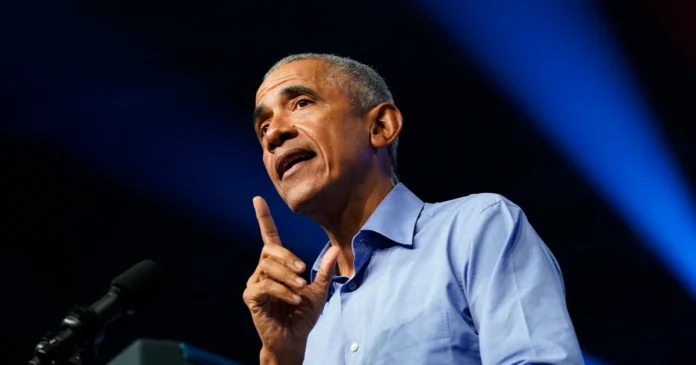

Democrats are up in arms after President Trump defended a social media post featuring a video that showed former President Barack Obama and former First Lady Michelle Obama depicted as apes, reigniting intense debate over race, political rhetoric, and social media oversight in modern U.S. politics. The video, which also touched on election issues, was shared late one night on the president’s Truth Social account, quickly drew condemnation across the political spectrum, and was later removed amid mounting pressure.
The incident has now become one of the most talked-about political controversies of the year, with reactions pouring in from congressional leaders, civil rights groups, and the public at large. If you want the most comprehensive, up-to-the-minute coverage of how this story is unfolding and what it means for elections and political discourse, keep reading.
Strong Reactions From Lawmakers and Leaders
Within hours of the post going up, lawmakers from both parties denounced its content as offensive. Democratic leaders immediately criticized the imagery as dehumanizing and inappropriate, particularly given its timing during Black History Month. House and Senate Democrats publicly demanded accountability from the White House and urged the president to issue an apology for sharing the video.
Republican criticism came swiftly as well. A number of GOP lawmakers, including Senator Tim Scott of South Carolina — the only Black Republican in the Senate — called the content the “most racist thing” they had seen from the White House and demanded its removal. Multiple Republican members of Congress, breaking with party messaging, said the video crossed a line and reflected poorly on the presidency.
White House Defense and Subsequent Removal
Initially, White House Press Secretary Karoline Leavitt defended the post, characterizing it as part of an “internet meme” that juxtaposed Trump as the “King of the Jungle” with other political figures portrayed as characters from The Lion King. That explanation was widely challenged given that the actual video contained imagery depicting the Obamas as apes — a depiction with long-standing racist connotations.
Facing swift backlash, the White House later said that the video had been posted by a staff member in error and removed it from the president’s Truth Social account roughly 12 hours after the initial upload. Despite the deletion, the controversy has continued to grow, with many lawmakers and civil rights advocates pushing for further consequences or a formal acknowledgment of wrongdoing.
Trump’s Response: No Apology, Claims Limited Knowledge
When pressed by reporters about the video and whether he would apologize, President Trump steadfastly refused. He stated that he had not seen the entirety of the video before it was shared and maintained that he “didn’t make a mistake” by authorizing its posting. The president described the larger video’s focus on election issues as justified and said that he condemned any offensive part of the imagery — though he declined to apologize for sharing it.
This stance has done little to quell the outrage. Democrats, civil rights organizations, and a growing number of Republicans argue that the refusal to apologize, combined with the racially charged content, reflects deeper issues with how political messaging is managed at the highest levels of government.
Democratic Leaders Condemn the Content and Call for Accountability
Prominent Democratic figures have issued strong statements criticizing the post and urging accountability. House Minority Leader Hakeem Jeffries and Senate Minority Leader Chuck Schumer both called for the president to address the controversy directly, not just delete the video. Some Democratic leaders framed the matter not simply as a political misstep, but as part of ongoing concerns about racial sensitivity in national discourse.
Civil rights groups also weighed in, decrying the imagery as dehumanizing and harmful given the history of racist tropes in American culture. They emphasized the impact such representations can have on public perception and political polarization.
Impact on Public Opinion and Political Discourse
The fallout extends beyond the immediate controversy over the video itself. Analysts point out that social media continues to play an outsized role in shaping political narratives, and incidents like this one highlight how quickly content can escalate into national debate. Experts say the episode underscores the need for clearer oversight and review processes for official accounts, particularly those tied to high-profile figures like the president.
Public opinion is also likely to be influenced. Polls have shown that voters are sensitive to issues involving race and respect for public office, and controversial posts like this may affect how different demographic groups view political leadership. Some commentators suggest that the timing — during Black History Month — intensified reactions and could have lasting implications for engagement with minority voters.
Broader Conversations About Race and Representation in Politics
The debate sparked by this event has also reopened broader conversations about race, representation, and respect in political communication. Many commentators on both sides of the aisle have weighed in on how leaders should navigate sensitive topics and avoid perpetuating harmful stereotypes.
Some Republicans argue that criticism of the post is politically motivated and that outrage is being exaggerated for effect. Others within the GOP have echoed that certain content is inappropriate and reflects poorly on the nation’s leadership. Democrats have seized on the moment to call for higher standards of conduct and greater awareness of racial implications in political messaging.
Civil rights organizations have taken the opportunity to emphasize education and awareness, noting that imagery depicting Black people as animals carries a long and painful history in the United States. These discussions are expected to continue in the days and weeks ahead as leaders, activists, and voters reflect on the incident’s wider meaning.
What Happens Next?
In the aftermath of the controversy, political observers are watching for how both parties respond in the longer term. Democrats are likely to continue pushing the narrative that the incident reflects broader concerns about racial sensitivity and political accountability, especially as the 2026 midterm elections approach. Meanwhile, Republicans are facing internal debate over how to address criticism of their leader without alienating key supporters.
Experts say that how the White House and lawmakers handle this episode could have implications for public trust, party dynamics, and voter engagement. Calls for staff accountability, clearer social media policies, and open dialogue about race and politics have all emerged as potential areas for reform.
Strong opinions across the political spectrum are shaping how this controversy will be discussed in the coming weeks, and its impact on the national conversation is just beginning to take shape.
We want to hear your thoughts on this political flashpoint — share your perspective in the comments or stay tuned for the next developments in this evolving story.