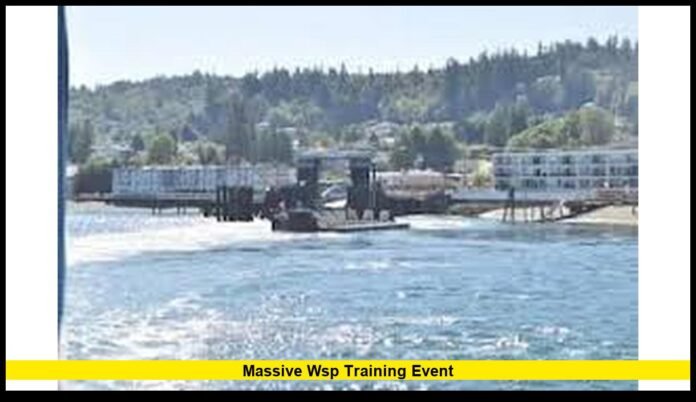

On Friday, residents and commuters in the Mukilteo area will notice an increased law enforcement presence as a Massive WSP training event takes place at the Mukilteo ferry dock. The large-scale exercise is scheduled from 8:30 a.m. to 1:30 p.m. and is designed to strengthen emergency response capabilities within the Washington State Patrol. Officials have confirmed that the training is planned, controlled, and part of routine preparedness operations.
The exercise comes at a time when public safety agencies across the country continue to prioritize readiness, coordination, and real-world scenario training. Washington State Patrol leaders say this hands-on operation will allow troopers to familiarize themselves with the ferry terminal’s layout and operational environment in a way that classroom instruction alone cannot provide.
Why the Training Is Taking Place at the Ferry Dock
The Mukilteo ferry terminal offers a unique environment that includes vehicle staging areas, passenger walkways, dock access points, and maritime infrastructure. Because ongoing construction work on a wing wall has limited some regular activity at the terminal, officials identified an opportunity to conduct a large-scale training without disrupting ferry schedules.
Troopers participating in the exercise will focus on physical walkthroughs, access routes, staging procedures, and coordinated movement within the ferry terminal space. The objective is to strengthen situational awareness and operational familiarity. Understanding entrances, exits, structural layouts, and response logistics is critical for rapid deployment during emergencies.
Officials emphasize that this training is not in response to any specific threat. It is a proactive preparedness measure aimed at ensuring law enforcement can respond effectively if ever called upon in a complex scenario.
What the Public Can Expect to See
During the Massive WSP training event, community members should expect to see a noticeable increase in marked and unmarked patrol vehicles, emergency equipment, and uniformed personnel around the ferry dock area.
The visible presence of law enforcement may include specialized units and equipment used for coordinated response operations. Residents might observe groups of troopers moving through ferry staging areas or accessing dock structures as part of structured training rotations.
Despite the scale of the operation, ferry services are expected to continue as scheduled. Authorities have stated that minimizing disruption to commuters remains a priority. Travelers planning to use the ferry during training hours may want to allow a little extra time for arrival due to the increased vehicle presence.
Officials also stress that there is no safety risk to the public associated with the exercise.
Strengthening Real-World Preparedness
Modern law enforcement agencies rely heavily on scenario-based training to prepare for incidents that demand rapid coordination. Controlled exercises allow personnel to test communication systems, movement strategies, and tactical planning in environments that mirror real-world conditions.
Hands-on training helps build muscle memory and improves decision-making under pressure. When officers physically navigate a location, they gain insights that cannot be replicated through maps or digital simulations. This familiarity can significantly improve response times and coordination during actual emergencies.
The Washington State Patrol maintains comprehensive training programs for recruits and veteran troopers alike. New troopers complete extensive academy instruction followed by field training alongside experienced officers. Beyond initial training, ongoing exercises ensure that personnel remain current with operational procedures and evolving best practices.
This event represents an extension of that broader training philosophy. It allows officers to adapt to maritime and transportation-related environments that may differ from typical highway patrol assignments.
Community Awareness and Transparency
Public visibility during large-scale law enforcement exercises often raises questions. By announcing the Massive WSP training event in advance, officials aim to prevent confusion and reassure residents.
Transparent communication builds trust and reduces unnecessary alarm. When communities understand that increased emergency activity is part of a scheduled training effort, they can feel more confident about public safety operations.
Preparedness activities like this also demonstrate the agency’s commitment to readiness. Law enforcement agencies must remain prepared for a range of potential incidents, from natural disasters to major traffic disruptions and security threats. Proactive training ensures that response systems remain sharp and coordinated.
Why Realistic Training Matters
Emergency response often requires seamless collaboration between personnel, equipment, and communication systems. Realistic training environments help identify gaps before they become problems.
Ferry terminals and transportation hubs present unique logistical challenges. They combine vehicle traffic, pedestrian movement, maritime access, and infrastructure constraints. Training in such a setting allows officers to refine coordination techniques and rehearse entry and staging strategies under controlled conditions.
Preparedness exercises also reinforce inter-unit cooperation. Troopers from different specialties may train together to improve communication flow and response timing. This coordination is critical during high-pressure situations.
While members of the public may only see patrol vehicles and uniformed personnel, behind the scenes these exercises involve structured planning, safety oversight, and operational evaluation.
Minimal Disruption, Maximum Readiness
Officials have carefully timed the training to reduce interference with daily operations at the ferry terminal. With partial construction limiting certain activities, the exercise can proceed efficiently while ferry service continues.
Commuters should not expect service interruptions. However, awareness of the exercise window may help travelers plan accordingly.
Law enforcement leaders consistently emphasize that preparation is one of the most effective tools for maintaining public safety. Training before a crisis occurs ensures that officers are not navigating unfamiliar terrain during an emergency.
The Broader Commitment to Public Safety
The Washington State Patrol continues to invest in training programs that prepare troopers for diverse environments. From highways to rural areas and transportation hubs, officers must be ready to respond wherever needed.
Exercises like this reflect a forward-looking approach to law enforcement readiness. Rather than reacting to events, agencies aim to anticipate challenges and prepare in advance.
In today’s complex public safety landscape, readiness depends on repetition, practice, and familiarity with real environments. The Massive WSP training event is part of that ongoing effort to keep communities safe and ensure that emergency response teams are prepared for a wide range of scenarios.
For residents near Mukilteo, the increased activity on Friday is a visible sign of that preparation at work.
What are your thoughts on large-scale law enforcement training in your community? Share your perspective in the comments and stay tuned for further updates.