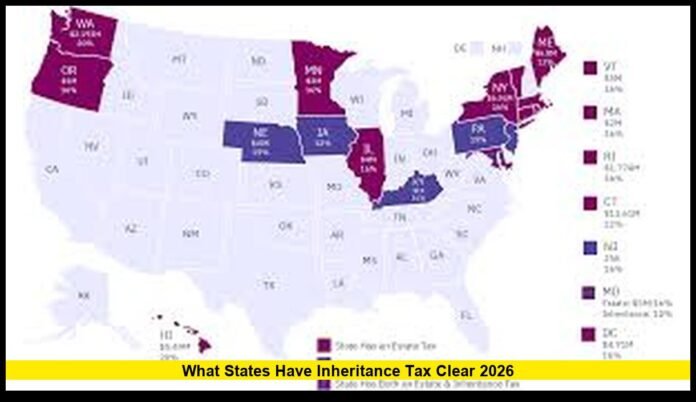

What states have inheritance tax is a critical question for Americans in 2026 as families plan estates, manage property transfers, and prepare for generational wealth changes. While most states no longer tax inheritances, a small group still does, and the rules vary widely depending on location and family relationship.
This in-depth article delivers a fully current, factual, and clearly structured overview of inheritance taxes in the United States, helping readers understand where these taxes apply and how they work today.
Understanding Inheritance Tax in Simple Terms
An inheritance tax is charged to the individual who receives assets after someone dies. The amount owed depends on state law, the value of the inheritance, and the heir’s relationship to the deceased.
This tax is different from an estate tax, which is paid by the estate before assets are distributed. Many Americans mistakenly believe inheritance taxes apply nationwide, but that is not the case.
In 2026, inheritance tax is the exception, not the rule.
How Many States Have an Inheritance Tax in 2026
As of today, only four U.S. states impose an inheritance tax. The number has steadily declined over the past two decades due to legislative repeals.
The states that still levy an inheritance tax are:
- Pennsylvania
- Kentucky
- Nebraska
- Maryland
No other states currently tax inheritances, and no new inheritance taxes have been enacted this year.
Pennsylvania: Tiered Rates Based on Family Relationship
Pennsylvania has one of the most clearly defined inheritance tax systems in the country. The rate depends entirely on how closely related the heir is to the deceased.
Current Pennsylvania inheritance tax rates include:
- Surviving spouse: 0%
- Children and grandchildren: 4.5%
- Siblings: 12%
- All other beneficiaries: 15%
Most assets are taxable, including real estate, vehicles, and investment accounts. Transfers to spouses are fully exempt, and certain agricultural and family business assets may qualify for relief.
Kentucky: Class-Based Inheritance Tax System
Kentucky organizes heirs into three classes, each with different exemptions and tax responsibilities.
Kentucky heir classifications:
- Class A: Immediate family members
- Class B: Extended relatives such as nieces and nephews
- Class C: Unrelated individuals
Class A beneficiaries owe no inheritance tax. Class B and Class C heirs receive small exemptions, then pay graduated tax rates ranging from 4% to 16%.
This structure means two heirs can receive identical inheritances yet owe very different tax amounts.
Nebraska: A County-Level Inheritance Tax
Nebraska’s inheritance tax stands out because it is administered at the county level. Each county applies the tax using state-authorized limits.
Recent reforms reduced the tax burden for close relatives.
Nebraska inheritance tax details:
- Immediate relatives are exempt
- Remote relatives receive a $40,000 exemption
- Unrelated heirs receive a $15,000 exemption
Tax rates can reach up to 11% for remote relatives and up to 18% for unrelated beneficiaries, depending on county rules.
Maryland: The Only State With Both Taxes
Maryland is unique because it maintains both an estate tax and an inheritance tax, although most heirs do not pay both.
Maryland’s inheritance tax applies only to non-exempt beneficiaries.
Maryland inheritance tax facts:
- Spouses, children, grandchildren, and parents are exempt
- Other heirs generally pay a flat 10% tax
- The tax applies to property transferred through an estate
This structure protects immediate family members while taxing more distant beneficiaries.
States That No Longer Have Inheritance Tax
Many states once taxed inheritances but repealed those laws to remain competitive and simplify estate planning.
States that eliminated inheritance tax include:
- Iowa, which fully repealed its tax in 2025
- New Jersey, which ended its inheritance tax earlier
- Indiana, which repealed its tax years ago
As of 2026, no state outside the current four imposes an inheritance tax.
Why Most States Eliminated Inheritance Tax
Inheritance taxes are often unpopular with voters and difficult to administer. Over time, lawmakers cited several reasons for repeal:
- Encouraging retirees to remain in-state
- Reducing administrative complexity
- Promoting family wealth transfers
- Aligning with neighboring states
The trend has strongly favored repeal rather than expansion.
Who Is Responsible for Paying the Tax
Inheritance tax is paid by the beneficiary, not the estate. This distinction matters because:
- Each heir is taxed individually
- Some heirs may owe nothing
- Others may owe significant amounts
Deadlines and filing procedures vary by state, and late payments can trigger penalties.
Assets Commonly Subject to Inheritance Tax
Inheritance tax typically applies to a wide range of assets, including:
- Real estate
- Cash and bank accounts
- Stocks and retirement assets
- Personal property with measurable value
Some states exempt life insurance proceeds, but rules depend on beneficiary designation and ownership structure.
How Residency and Property Location Affect Tax
Inheritance tax usually depends on the deceased person’s state of residence or where the property is located.
For example:
- An heir living in Florida may still owe tax on a Pennsylvania inheritance
- Real estate is taxed based on the state where it sits
Multi-state families often face more complex tax obligations.
No Federal Inheritance Tax in the U.S.
The federal government does not impose an inheritance tax. Federal estate tax applies only to very large estates that exceed a high exemption threshold.
Most Americans will never owe federal estate tax, and no federal inheritance tax exists.
State inheritance taxes operate independently of federal law.
Planning Considerations for Families
Families in inheritance tax states often plan ahead to manage tax exposure.
Common approaches include:
- Lifetime gifting strategies
- Trust structures
- Careful beneficiary designations
- Coordinated estate planning
Rules vary widely, so state-specific planning is essential.
Common Myths About Inheritance Tax
Several misunderstandings continue to circulate:
- All states tax inheritances
- Spouses always owe inheritance tax
- The estate pays the inheritance tax
In reality, only four states impose this tax, and many close relatives are exempt.
Why This Issue Matters More in 2026
As wealth transfers accelerate with an aging population, understanding inheritance tax laws has become more important.
With so few states still taxing inheritances, location now plays a decisive role in estate outcomes.
Clear information helps families avoid surprises during emotionally difficult times.
Quick Reference: States With Inheritance Tax
| State | Inheritance Tax Status |
|---|---|
| Pennsylvania | Yes |
| Kentucky | Yes |
| Nebraska | Yes |
| Maryland | Yes |
| All others | No |
This reflects the most current verified information available today.
Looking Ahead at Inheritance Tax Trends
No additional states have announced plans to adopt inheritance taxes. Legislative trends suggest continued stability or further repeals rather than expansion.
Families should still monitor changes, as tax laws can evolve.
Final Takeaway
Understanding what states have inheritance tax can help families plan more effectively and reduce uncertainty. While most Americans will never face this tax, those connected to the remaining four states should stay informed and prepared.
Do you think inheritance taxes will disappear entirely, or should states keep them? Share your thoughts and stay informed as tax policies continue to evolve.