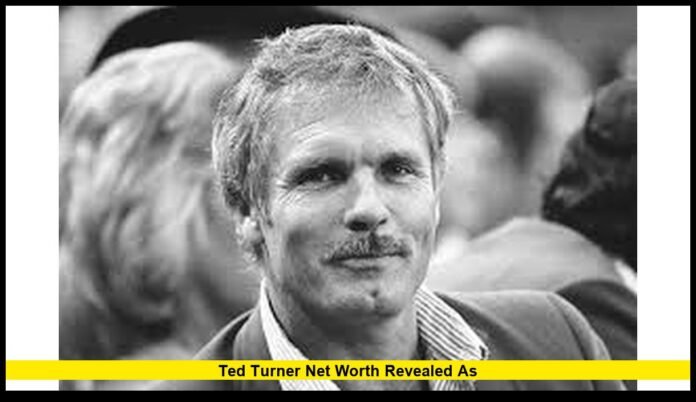

The discussion surrounding ted turner net worth has gained fresh momentum as Americans revisit the extraordinary career, business empire, and cultural influence of the legendary broadcaster who transformed global television news forever. Ted Turner built one of the most recognizable media brands in history through relentless ambition, daring investments, and an ability to predict where the entertainment industry was headed long before competitors understood the opportunity.
For decades, Turner stood at the center of American media innovation. From launching CNN to building a massive cable television empire, the businessman became known for taking enormous risks that eventually reshaped journalism, sports broadcasting, and entertainment. His financial success reflected those groundbreaking decisions, with estimates placing his fortune in the multi-billion-dollar range even after years of market shifts, corporate mergers, and extensive philanthropy.
Interest in Turner’s wealth has grown again following renewed attention on his life, health history, media contributions, and lasting influence across multiple industries. His story continues to attract readers because it combines entrepreneurship, television history, sports ownership, conservation efforts, and humanitarian work into one remarkable American success story.
Readers fascinated by influential billionaires, television pioneers, and business legends continue to follow the latest updates connected to Turner’s financial legacy and enduring impact on modern media.
If you enjoy stories about iconic entrepreneurs and industry-changing business leaders, keep following for more deep coverage of major figures who transformed American culture and commerce.
From Billboard Business to Media Empire
Ted Turner’s journey toward immense wealth began with a family advertising company.
Born in Ohio and raised partly in the South, Turner eventually inherited his father’s billboard business after a devastating family tragedy. While many expected the company to remain a modest regional operation, Turner had much larger ambitions.
He quickly expanded the business and demonstrated a willingness to take financial risks that many executives avoided during that era. Instead of remaining focused solely on outdoor advertising, Turner looked toward broadcasting and television as the future of communication.
During the 1970s, he purchased struggling television stations and transformed them into profitable operations. One of his most significant moves involved converting an Atlanta-based station into a national superstation distributed through cable television systems.
At the time, cable television remained a developing industry. Traditional broadcasters still dominated American households, and many industry insiders doubted that cable could become a mainstream entertainment force.
Turner ignored those concerns and aggressively expanded his broadcasting footprint.
That decision laid the foundation for the fortune that later became associated with ted turner net worth and his standing among America’s wealthiest media entrepreneurs.
CNN Changed Television News Forever
The defining moment of Turner’s career arrived in 1980 with the launch of CNN.
The Cable News Network became the first television channel dedicated entirely to 24-hour news coverage. The idea sounded risky and even unrealistic to critics who believed audiences would never watch news programming continuously throughout the day and night.
Turner believed otherwise.
He pushed forward despite skepticism from major media competitors and financial analysts. The early years brought enormous pressure and financial uncertainty, but Turner remained committed to the vision.
CNN eventually became one of the most influential media brands in the world.
Its reputation grew dramatically during major international events, especially live war coverage and breaking news situations that unfolded in real time. The network offered something viewers had never experienced before: continuous global reporting available around the clock.
That innovation permanently changed journalism and television broadcasting.
Competing networks later followed CNN’s model, but Turner’s network remained the industry pioneer. The success of CNN dramatically increased Turner’s wealth and elevated him into the highest ranks of American media power.
Turner Broadcasting Became a Cable Television Giant
CNN represented only one piece of Turner’s rapidly growing empire.
Turner Broadcasting expanded into multiple cable channels and entertainment brands that reached millions of households across the United States. The company developed into a dominant force in cable television through networks that included TNT, TBS, Cartoon Network, and Turner Classic Movies.
Each addition strengthened Turner’s influence over entertainment and advertising.
His company also secured valuable film and television libraries, giving Turner Broadcasting a steady stream of recognizable programming content. Those acquisitions helped attract advertisers and audiences while strengthening the company’s position against competitors.
By the late 1980s and early 1990s, Turner had become one of the most recognized media executives in America.
His outspoken personality also made headlines regularly. Turner often challenged competitors publicly and embraced bold statements that reinforced his image as an unconventional businessman willing to challenge industry norms.
At the peak of his media success, his personal fortune surged into the billions.
The eventual merger between Turner Broadcasting and Time Warner represented one of the biggest entertainment deals of its time. The transaction significantly boosted the value of Turner’s holdings and connected his company to one of the largest media corporations in the world.
However, future corporate restructuring and later mergers eventually reduced Turner’s direct control over the empire he created.
Even so, his wealth remained substantial because of investments, stock holdings, ranch properties, and land ownership across the country.
Massive Land Ownership Strengthened His Wealth
Outside television, Turner became famous for another reason: land ownership.
Over several decades, he purchased enormous ranch properties across multiple states, eventually becoming one of the largest private landowners in the United States.
His holdings stretched across millions of acres and included properties used for ranching, wildlife conservation, and environmental preservation.
Turner strongly supported conservation efforts and frequently discussed environmental issues throughout his career. He became especially known for restoring bison populations on his ranches, helping preserve one of America’s most iconic animals.
Many financial experts viewed his land acquisitions as one of the smartest long-term components of his fortune.
While media companies faced changing market conditions and corporate volatility, land values continued providing stability and long-term appreciation. Those ranch properties became an important part of the broader financial picture connected to ted turner net worth.
Turner’s ranches also reflected his personal interests beyond business. He often emphasized sustainability, wildlife management, and ecological protection while operating large agricultural and conservation-focused properties.
Sports Ownership Elevated Turner’s National Profile
Ted Turner’s influence reached far beyond broadcasting.
He also became a major figure in professional sports through ownership of the Atlanta Braves baseball team and the Atlanta Hawks basketball franchise.
Under Turner’s leadership, the Braves gained nationwide exposure because games aired across his superstation network. Fans outside Georgia suddenly had regular access to Braves broadcasts, helping transform the team into a national brand.
That exposure played a major role in growing the franchise’s fan base during the 1980s and 1990s.
The Braves eventually won the World Series in 1995, delivering one of the defining sports moments connected to Turner’s ownership era.
Turner himself often attracted attention during games and public appearances because of his energetic and outspoken style. His personality became deeply connected to Atlanta sports culture during those decades.
Sports ownership also helped strengthen Turner Broadcasting by providing valuable live programming for television audiences.
At a time when live sports increasingly drove television ratings, Turner understood the long-term value of combining media ownership with professional sports franchises.
Philanthropy Became a Major Part of His Legacy
In later decades, Turner became equally recognized for philanthropy.
One of the biggest moments came when he announced a historic $1 billion commitment to support humanitarian programs associated with the United Nations. The pledge became one of the largest charitable donations ever made by an individual at that point in history.
The move shocked the business world and inspired broader conversations about billionaire giving in America.
Turner later helped establish major initiatives focused on global health, environmental issues, and nuclear threat reduction.
His charitable work reflected concerns about international conflict, climate change, conservation, and humanitarian crises. Those efforts became increasingly central to his public image as he spent less time running television operations directly.
Many observers believed Turner’s philanthropy significantly influenced future generations of wealthy entrepreneurs who later embraced large-scale charitable giving.
His environmental advocacy also remained a major focus throughout his later years.
Health Challenges Drew Public Attention
In recent years, public attention shifted toward Turner’s health.
He openly discussed living with Lewy body dementia, a progressive neurological condition that affects memory, movement, and cognitive function. By speaking publicly about the disease, Turner helped raise awareness among Americans unfamiliar with the condition.
As his health declined, he appeared less frequently in public events and interviews.
Still, his influence remained deeply connected to modern broadcasting. CNN continued operating as one of the world’s largest news organizations, while the broader cable television industry continued benefiting from the business model Turner pioneered decades earlier.
News of Turner’s death at age 87 prompted tributes from across media, sports, politics, and entertainment. Many public figures reflected on the extraordinary risks he took during the early years of cable television.
Executives repeatedly credited him with changing journalism forever through continuous live news broadcasting.
Why Ted Turner’s Financial Story Still Fascinates Americans
Public fascination with Ted Turner’s fortune extends beyond celebrity curiosity.
His career represented a uniquely American story of ambition, innovation, risk-taking, and reinvention. Turner entered industries that established corporations already controlled, yet he still managed to disrupt traditional broadcasting and build entirely new business models.
He achieved success during a period when media technology was rapidly evolving, and his willingness to embrace change allowed him to stay ahead of competitors.
Unlike many billionaires associated primarily with technology companies today, Turner built his wealth through television, advertising, entertainment, sports, and land ownership.
That diversified approach helped preserve his fortune across changing economic conditions and industry transitions.
His story also illustrates the challenges tied to corporate mergers and rapid expansion. Although Turner eventually lost direct control over many of the businesses he created, his original innovations continued influencing the media world long afterward.
Few entrepreneurs have left fingerprints across as many industries as Ted Turner.
From cable television and sports broadcasting to environmental conservation and philanthropy, his impact stretched far beyond business headlines.
Even today, discussions surrounding his wealth continue because his career changed the way Americans consume news, watch sports, and engage with television entertainment.
The legacy connected to Ted Turner remains deeply tied to innovation, bold leadership, and a relentless drive to challenge conventional thinking.
What do you think about Ted Turner’s lasting influence on television, sports, and modern media? Share your thoughts and stay connected for more updates on legendary business figures and cultural icons.