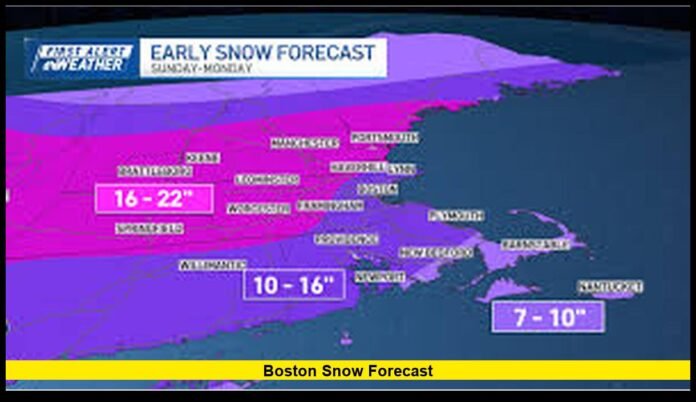

The boston snow forecast is now in sharp focus as a powerful winter storm moves toward New England, bringing the potential for some of the heaviest snowfall of the season and dangerous cold to the Boston area. Meteorologists are tracking a large, fast-strengthening system expected to deliver prolonged snowfall, strong winds, and rapidly dropping temperatures, creating major impacts on travel, daily routines, and public safety across eastern Massachusetts.
This storm is part of a broad winter pattern affecting much of the eastern United States, but its effects on coastal New England, including Boston, are expected to be especially intense. Snow will arrive in stages, intensify quickly, and remain in place long enough to produce significant accumulation across the city and surrounding suburbs.
When the Snow Will Begin and How Long It Will Last
Snow is expected to begin during the daytime hours, initially light but steadily increasing in coverage and intensity. By late afternoon and evening, the storm is forecast to organize into a widespread, heavy snow event, with steady snowfall continuing overnight and into the following day.
The most intense period is expected during the evening and overnight hours, when snowfall rates could become heavy enough to rapidly reduce visibility and cover roadways in a short amount of time. The system is projected to move slowly enough to allow snow to fall for many consecutive hours, increasing the likelihood of deep accumulation across the region.
Lingering snow showers and blowing snow may continue even after the main body of the storm begins to exit, extending hazardous travel conditions into the following day.
Expected Snowfall Totals Across the Boston Area
Forecast guidance indicates that much of the Boston metropolitan area could see substantial snow totals. Widespread accumulations in the one-foot range are expected, with some neighborhoods and nearby communities potentially receiving significantly more depending on where the heaviest bands set up.
Coastal locations, inland suburbs, and areas just north and west of the city are all within the zone of heavy snow. In these areas, prolonged snowfall combined with cold temperatures will allow snow to accumulate efficiently, with little melting during the storm.
The possibility of localized higher totals exists where snowfall rates remain strongest for the longest period of time. These heavier bands can produce rapid accumulation, making road conditions deteriorate quickly and placing added strain on snow removal operations.
Wind, Blowing Snow, and Reduced Visibility
In addition to heavy snowfall, gusty winds are expected to accompany the storm. While this may not reach blizzard criteria in all locations, wind speeds will be strong enough to cause blowing and drifting snow, especially in open areas and along major roadways.
These winds will reduce visibility, particularly during the heaviest snowfall, making driving dangerous and, at times, nearly impossible. Drifting snow can also quickly re-cover roads that have already been plowed, slowing cleanup efforts and extending travel disruptions.
Dangerous Cold and Wind Chills
Behind the storm, a surge of Arctic air is forecast to settle over the region. Temperatures will remain well below seasonal averages, and when combined with wind, will produce dangerously low wind chill values.
This prolonged cold will harden snow and ice on untreated surfaces, making sidewalks, parking lots, and secondary roads especially slippery. The bitter air will also increase the risk of frostbite and hypothermia for anyone spending extended time outdoors.
Impact on Travel and Transportation
Road travel is expected to be significantly affected. Heavy snowfall rates, reduced visibility, and icy conditions will likely lead to slow speeds, spin-outs, and potential road closures during the height of the storm.
Air travel across the Northeast may also face delays and cancellations, as airports deal with snow-covered runways, de-icing operations, and weather-related scheduling challenges. Rail and bus services could experience delays as crews work to keep tracks and roadways clear.
Commuters are urged to plan for extra time, monitor service updates, and avoid unnecessary travel during periods of peak snowfall.
City Preparations and Snow Removal Operations
Local and state agencies are preparing for a large-scale response. Snowplows, salt trucks, and emergency crews are being positioned to begin operations as soon as accumulation starts.
Snow emergencies and parking restrictions are commonly implemented during major storms to allow plows to clear streets more efficiently and prevent vehicles from being buried or blocking snow removal equipment. Residents are encouraged to follow all posted restrictions and move vehicles as directed to help crews keep roads passable.
Sidewalk clearing, treatment of bridges and overpasses, and the protection of critical infrastructure are also key priorities during a storm of this magnitude.
Potential Power and Utility Concerns
Although the snow is expected to be relatively dry due to the cold air, strong winds and heavy accumulation can still stress trees and power lines. Isolated power outages are possible, particularly in areas where branches are weighed down by snow or where drifting creates uneven loads.
Residents should be prepared with flashlights, extra batteries, and basic emergency supplies in case of temporary service interruptions. Keeping mobile devices charged and having a plan to stay warm are especially important during extended cold spells.
How This Storm Fits into the Larger Winter Pattern
This event is part of a broader winter weather pattern affecting much of the eastern half of the country. A strong jet stream dip has allowed cold Arctic air to plunge southward, while storm systems track along the boundary between frigid northern air and milder southern air.
Such setups are known for producing large, high-impact winter storms, particularly along the East Coast. For Boston, this means a combination of heavy snow, strong winds, and prolonged cold that can have lasting effects even after the snow stops falling.
Safety Tips for Residents
To stay safe during and after the storm:
- Avoid unnecessary travel during the heaviest snowfall.
- Keep walkways and driveways clear to prevent ice buildup.
- Dress in layers and limit time outdoors in extreme cold.
- Check on elderly neighbors and those who may need assistance.
- Follow local advisories regarding parking, school schedules, and public services.
Taking these precautions can help reduce risks and make recovery smoother once conditions improve.
What to Expect in the Days After the Storm
Even after snowfall tapers off, the effects of the storm will linger. Snow removal will continue for days in some areas, especially where accumulation is deepest. The persistent cold will slow melting, allowing snow and ice to remain on the ground longer than usual.
Morning and evening commutes may remain challenging due to refreezing, and sidewalks may stay slippery without proper treatment. Residents should remain cautious and continue monitoring weather updates as the region transitions from the storm into an extended period of cold weather.
Share how the storm is affecting your area and stay connected for continuing coverage as Boston digs out from this powerful winter system.