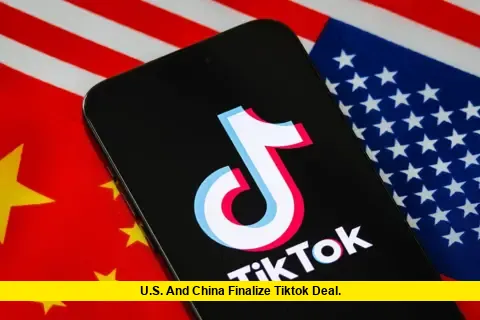

In a significant development for global technology and geopolitics, U.S. and China finalize TikTok deal, formally concluding years of regulatory tension and national security scrutiny surrounding one of the world’s most influential social media platforms. The agreement secures TikTok’s continued operation in the United States through a new ownership and governance structure that places control of its American business in the hands of U.S.-based investors, while addressing longstanding concerns over data security and foreign influence.
The deal brings stability to more than 170 million American users, millions of content creators, and countless businesses that rely on the platform for marketing, community building, and revenue. It also establishes a new model for how foreign-owned digital platforms may operate within the United States under heightened national security oversight.
Background: Why TikTok Faced a Divestment Order
For several years, U.S. officials raised concerns that TikTok’s ownership by China-based ByteDance could expose American user data to foreign government access or influence. These concerns centered on data privacy, algorithm control, and the potential for subtle manipulation of content distribution.
In response, U.S. lawmakers passed legislation requiring apps deemed to be under the control of foreign adversaries to divest their U.S. operations or face removal from American app stores and digital infrastructure. TikTok was the most prominent platform affected by this law due to its scale, reach, and data footprint.
Legal challenges, temporary enforcement delays, and intensive negotiations followed. During this period, TikTok continued operating while working toward a structural solution that would meet U.S. legal and security requirements without fully dismantling the platform’s global ecosystem.
Key Terms of the Finalized Agreement
The newly approved deal restructures TikTok’s U.S. operations into a separate, American-controlled entity. Under the agreement:
- TikTok’s U.S. business will operate as an independent company incorporated in the United States.
- A consortium of U.S. investors will hold a controlling ownership stake, ensuring that strategic decisions, governance, and data oversight fall under American jurisdiction.
- ByteDance will retain a minority, non-controlling stake, with no authority over day-to-day operations, data management, or content governance within the U.S. market.
- The board of directors will be majority American, with security-cleared executives overseeing compliance, technology infrastructure, and privacy controls.
This structure is designed to ensure that American user data remains stored and managed within the United States and that operational control aligns with U.S. laws and regulatory standards.
What Changes for TikTok Users in the United States
For everyday users, the most immediate outcome is continuity. TikTok remains available across all platforms in the U.S., with no interruption to accounts, content libraries, or monetization tools.
However, behind the scenes, several important changes are taking effect:
- Data Security: U.S. user data will be managed by the American entity, subject to U.S. privacy regulations and oversight.
- Algorithm Governance: The recommendation system that determines what users see will be operated under U.S. supervision, reducing concerns about external influence.
- Content Moderation: Policies and enforcement will be governed by U.S.-based leadership, aligned with domestic legal and regulatory frameworks.
Creators and advertisers can continue operating without disruption, and brands can maintain their marketing strategies on the platform with greater regulatory certainty.
Impact on the Creator Economy and Digital Advertising
TikTok has become a central pillar of the American creator economy, supporting full-time influencers, small businesses, musicians, educators, and independent media outlets. The finalized agreement preserves this ecosystem by removing the threat of a nationwide shutdown.
For advertisers, the deal provides long-term clarity. Marketing budgets that depend on TikTok’s reach and engagement can now be planned with confidence, knowing the platform’s legal status in the U.S. is secure. E-commerce integrations, livestream shopping, and brand partnerships are expected to continue expanding under the new ownership structure.
Small businesses that rely on TikTok for customer acquisition, especially in retail, food, fitness, and local services, also benefit from the platform’s continued stability.
National Security and Regulatory Significance
From a policy perspective, the agreement represents a milestone in how the United States balances digital innovation with national security.
The deal:
- Establishes a precedent for requiring structural separation and domestic control of sensitive digital platforms.
- Demonstrates that forced divestment can occur through negotiation rather than outright bans.
- Signals to other foreign-owned technology firms that access to the U.S. market may require governance models that align with American security standards.
At the same time, the agreement reflects a rare point of cooperation between Washington and Beijing, showing that complex technology disputes can be resolved through commercial and legal frameworks rather than escalation.
Economic and Strategic Implications
The creation of a U.S.-controlled TikTok entity introduces a powerful new player into the American technology and media landscape. With its massive user base, advertising infrastructure, and cultural influence, the platform will now operate alongside major U.S. social networks under domestic corporate governance.
This shift could influence:
- Competition in digital advertising.
- Standards for data localization and privacy.
- Future policy debates over artificial intelligence, recommendation algorithms, and platform accountability.
For investors, the transaction secures a stake in one of the fastest-evolving digital ecosystems in the world, while for policymakers, it provides a framework for managing similar cases in the future.
Global Ripple Effects
The outcome of this deal will be closely watched by governments and tech companies worldwide. Other countries evaluating the role of foreign-owned platforms may look to the U.S. model as a reference point, particularly when national security, data sovereignty, and market access intersect.
For TikTok’s global operations, the U.S. restructuring may influence how the company organizes its regional businesses, potentially leading to more localized governance in other major markets.
Looking Ahead
With the ownership transition now approved, attention turns to implementation. Regulatory compliance, board appointments, operational restructuring, and technical migration processes will unfold over the coming months. While users are unlikely to notice immediate surface-level changes, the long-term impact will shape how TikTok operates in the U.S. for years to come.
As the dust settles, one fact is clear: U.S. and China finalize TikTok deal has moved from a headline into a defining moment in the intersection of technology, law, and international relations.
Join the conversation below and stay connected as this historic transformation of one of America’s most-used apps continues to unfold.