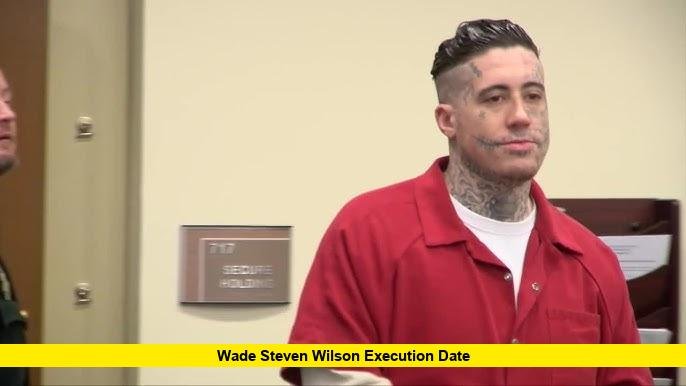

The search for the wade steven wilson execution date continues as of today, with no execution warrant issued and no official schedule in place. Although Wilson has received a death sentence for two first-degree murder convictions in Florida, the state has not yet announced when the sentence will be carried out. He remains on death row while the legal process moves through mandatory appellate review.
Who Is Wade Steven Wilson?
Wade Steven Wilson was born on May 20, 1994. He was convicted in Florida for the murders of two women in October 2019. The case drew widespread attention because of the brutality of the crimes and the speed with which the investigation unfolded after his arrest.
Wilson was found guilty of killing Kristine Melton, 35, and Diane Ruiz, 43, in separate incidents that occurred within hours of each other in Cape Coral, Florida. Both victims died by strangulation, and the second killing also involved being run over with a vehicle. The jury later determined that the aggravating factors warranted the death penalty.
The Crimes That Led to a Death Sentence
Court testimony and investigative records show that the series of events unfolded over a short and violent span of time, beginning with Wilson’s encounter with Kristine Melton. The two met at a local bar and later went to her residence. In the early morning hours, Melton was killed inside her home. Prosecutors described the scene as one of extreme violence, and forensic evidence indicated that the attack was deliberate and sustained. Neighbors later reported hearing disturbances, but by the time authorities were alerted, Melton had already died.
After leaving that location, Wilson’s movements placed him in another part of the city, where he crossed paths with Diane Ruiz as she was walking to work. According to the prosecution, Ruiz was ambushed without warning. Medical testimony detailed that she was assaulted and strangled, and that a vehicle was then used to run her over multiple times. The sequence of injuries, investigators said, showed an intent to ensure death rather than an accident or momentary loss of control. Surveillance footage, physical evidence from the roadway, and autopsy findings were presented to support this account.
The investigation quickly focused on Wilson following a series of phone calls he made to his biological father in the aftermath of the killings. In those conversations, which were later introduced in court, he made statements that investigators interpreted as admissions and expressions of distress over what he had done. Detectives traced the calls, used them to narrow down his location, and coordinated a search that ultimately led to his apprehension.
Confronted by law enforcement, Wilson did not attempt to flee further and eventually surrendered. During subsequent questioning, prosecutors said, his statements were consistent with the timeline established by physical and digital evidence. DNA analysis, vehicle examinations, and witness testimony were combined to reconstruct his movements from the bar to Melton’s home and then to the area where Ruiz was attacked.
At trial, the prosecution argued that the brutality of the two killings, committed within a short time frame and involving separate victims, demonstrated a pattern of extreme violence that met the legal standards for the harshest possible punishment under Florida law. The defense challenged aspects of intent and mental state, but jurors ultimately found the evidence overwhelming. The combination of forensic findings, recorded phone calls, and eyewitness and expert testimony formed the foundation of the case that led to Wilson’s conviction and the imposition of a death sentence.
Trial and Sentencing in 2024
Wilson’s case moved to trial in 2024 in Lee County, Florida, drawing intense public and media attention because of the severity of the crimes and the notoriety that had already built up around his name. Over the course of several weeks, prosecutors presented a detailed timeline of events, supported by forensic evidence, surveillance footage, recorded phone calls, and testimony from law enforcement officers, medical examiners, and other expert witnesses. The state argued that the killings were premeditated and carried out with extreme brutality, meeting the legal threshold for first-degree murder under Florida law.
The defense focused on challenging the prosecution’s narrative of intent and mental state, calling its own experts and witnesses in an effort to introduce mitigating factors. Jurors heard arguments related to Wilson’s background, psychological history, and behavior before and after the crimes. Despite these efforts, the jury ultimately found the evidence presented by the state compelling and returned unanimous guilty verdicts on two counts of first-degree murder.
The trial then moved into the penalty phase, a separate proceeding in which jurors were tasked with determining whether the sentence should be life imprisonment without the possibility of parole or death. During this stage, prosecutors outlined aggravating factors, including the nature of the crimes, the number of victims, and the manner in which the killings were carried out. The defense presented mitigating evidence, urging the jury to consider factors such as upbringing, mental health, and the possibility of rehabilitation.
After deliberation, the jury recommended the death penalty. Under Florida’s capital sentencing process, that recommendation was forwarded to the presiding judge for final consideration. The judge reviewed the jury’s findings, the aggravating and mitigating circumstances, and the legal standards required for imposing the ultimate punishment. Concluding that the aggravating factors outweighed any mitigation, the court accepted the jury’s recommendation.
In a formal sentencing hearing, Wilson was sentenced to death in 2024. Following the judgment, he was remanded into the custody of the Florida Department of Corrections and transferred to Union Correctional Institution in Raiford, the facility that houses the state’s male death row inmates. There, he was placed under maximum-security conditions, beginning the lengthy post-conviction and appeals process that typically follows a capital sentence in Florida.
Why There Is No Execution Date Yet
In Florida, a death sentence does not translate into an immediate or automatically scheduled execution. Capital punishment cases follow a lengthy and highly structured legal process designed to ensure that convictions and sentences meet strict constitutional standards. Once a defendant is sentenced to death, the case enters a multi-layered appellate phase that can take years, and sometimes decades, to complete.
The first step is an automatic direct appeal to the Florida Supreme Court. This review is mandatory in every death penalty case and does not depend on whether the defense files a request. Justices examine the entire trial record to determine whether any legal errors occurred, whether the evidence was sufficient to support the convictions, and whether the death sentence was imposed in accordance with state and federal law. Issues such as jury instructions, admissibility of evidence, prosecutorial conduct, and the weighing of aggravating and mitigating factors are all scrutinized.
After the direct appeal, defendants are entitled to pursue post-conviction relief in state courts, often raising claims of ineffective assistance of counsel, newly discovered evidence, or constitutional violations that were not fully addressed on direct appeal. These proceedings can involve evidentiary hearings, expert testimony, and additional rulings that may themselves be appealed. In many cases, the process then moves into the federal court system through habeas corpus petitions, adding another layer of review.
Only after all required appeals and post-conviction motions have been resolved, and the sentence has been upheld at every level, can the case move into the final administrative phase. At that point, the governor of Florida has the sole authority to issue an execution warrant. This warrant is a formal legal document that sets a specific execution window and authorizes the Department of Corrections to carry out the sentence. Without it, no execution can be scheduled or prepared.
As of now, no such warrant has been signed in Wilson’s case. He remains on death row while the appellate process moves forward, a period that is often marked by legal filings, court reviews, and procedural motions rather than any fixed timetable. The absence of an execution date does not indicate a change in sentence; it reflects the built-in safeguards of the capital punishment system, which require exhaustive judicial review before the state can proceed with an execution.
How the Appeals Process Works
In Florida, a death sentence automatically triggers a complex and multi-stage appeals process intended to safeguard against legal error and ensure that every constitutional requirement has been met. This process is not optional; it is built into the state’s capital punishment system and begins immediately after sentencing.
The first stage is a direct appeal to the Florida Supreme Court. In this phase, the justices review the entire trial record, including jury selection, evidentiary rulings, witness testimony, jury instructions, and the sentencing procedure. The court evaluates whether the law was applied correctly, whether the defendant received a fair trial, and whether the death sentence was supported by legally sufficient aggravating factors. This review also examines whether the jury properly considered mitigating evidence and whether the sentencing decision was proportionate under Florida law.
If the convictions and sentence are upheld on direct appeal, the case then moves into post-conviction proceedings in state court. These filings often raise claims that could not be fully addressed on direct appeal, such as ineffective assistance of counsel, undisclosed evidence, juror misconduct, or violations of constitutional rights. These proceedings may involve additional hearings, expert testimony, and fact-finding by a trial judge, followed by further appeals if relief is denied.
After exhausting state remedies, a condemned inmate may seek review in the federal court system through habeas corpus petitions. Federal judges examine whether the state court proceedings complied with the U.S. Constitution, focusing on issues such as due process, fair trial rights, and protections against cruel and unusual punishment. This layer of review can involve multiple levels of federal courts, including appellate courts and, in rare cases, the U.S. Supreme Court.
Throughout this process, each ruling can generate additional motions, briefs, and appeals, creating a legal pathway that is deliberately thorough and often lengthy. The goal is not speed, but accuracy and constitutional compliance. Courts are tasked with ensuring that the conviction is reliable, the sentence was lawfully imposed, and no substantial rights were violated.
Wilson is currently within this extended appellate framework. His case must move through these mandatory stages before it can reach the point where an execution warrant could even be considered. Until all state and federal reviews are completed and the governor determines that the legal process has run its full course, no execution date can be set. As a result, the timeline remains open-ended, reflecting the extensive judicial scrutiny required in capital cases.
Public Attention and Online Interest
The case has continued to attract public interest due to its shocking details and the broader national conversation about capital punishment. Online searches for the wade steven wilson execution date have increased as people follow developments in Florida’s death row cases.
While social media and true-crime discussions have kept the story visible, the official status of the case is determined strictly by court rulings and executive action, not public speculation.
Current Status on Death Row
Wilson is currently incarcerated under death row conditions, which involve high-security confinement and limited contact with the general prison population. His daily routine and privileges differ significantly from those of inmates serving life sentences.
Death row inmates in Florida typically remain in this status for many years. The length of time depends on how long appeals and post-conviction proceedings take, as well as when, or if, an execution warrant is ultimately signed.
What to Watch Going Forward
The next major legal milestone would be the completion of the direct appeal and any subsequent rulings. If the courts uphold the conviction and sentence, the governor would then have the authority to issue an execution warrant.
Until that happens, there is no official execution schedule. Any confirmed date would be announced only after the warrant is signed and processed through the Department of Corrections.
For now, the case remains in the appellate stage, and Wilson continues to await further court decisions that will determine the future course of the sentence.
Readers following this case can share their thoughts or stay alert for future developments as the legal process moves forward.