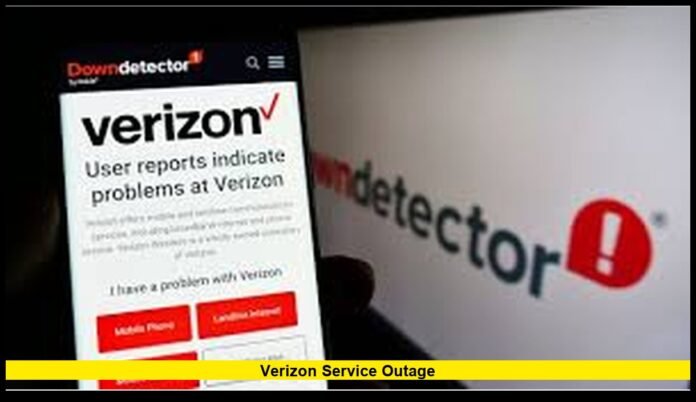

On January 14, 2026, a verizon service outage disrupted mobile communication for a massive number of users across the United States, leaving many phones stuck in “SOS” mode and cutting off access to voice calls, text messages, and mobile data. The sudden breakdown affected both urban and rural areas, creating widespread concern as people struggled to connect with family, workplaces, and emergency services.
The outage quickly became one of the most talked-about technology disruptions of the day, as customers from coast to coast reported similar problems. From major metropolitan hubs to smaller towns, users described losing signal entirely, even in areas where Verizon normally provides strong coverage.
The Scale of the Network Disruption
The outage began in the morning hours and expanded rapidly. Reports flooded in from across the country, indicating that the issue was not isolated to a single city or region. Large clusters of affected users appeared in the Northeast, Midwest, South, and West Coast, suggesting a broad network-level problem rather than localized tower failures.
Customers reported complete loss of cellular service, including:
- Inability to make or receive phone calls
- Failure to send or receive SMS messages
- No access to mobile data services
- Devices displaying “SOS only” instead of normal signal bars
Home internet services linked to Verizon infrastructure were also impacted in some areas, further increasing the scope of disruption.
What “SOS Mode” Meant for Users
A key sign of the outage was the appearance of “SOS” or “SOS only” on many smartphones. This indicator means the device cannot connect to its primary carrier network but may still reach emergency services through alternative connections.
For most affected customers, this meant:
- Regular calls could not go through
- Text messages failed to send or arrive
- Apps depending on mobile data stopped working
- Only emergency dialing functions remained available
While some users could rely on Wi-Fi connections to communicate through internet-based apps, those without stable Wi-Fi were effectively cut off from normal communication.
Cities and Regions Most Affected
The disruption was reported across a wide geographic area, including:
- Major East Coast cities such as New York, Boston, and Washington, D.C.
- Midwest hubs including Chicago and surrounding suburbs
- Southern states with reports from large metropolitan areas and smaller communities
- West Coast locations, including parts of California and the Pacific Northwest
The nationwide pattern of complaints indicated a systemic issue within the network rather than a regional maintenance problem.
Verizon’s Acknowledgment and Response
Verizon confirmed that it was experiencing widespread issues affecting wireless voice, text, and data services. The company stated that technical teams were actively working to identify the cause and restore service as quickly as possible.
Engineers focused on stabilizing the network and bringing affected systems back online. While restoration efforts began soon after the outage was confirmed, customers in many regions continued to experience intermittent or complete service loss for several hours.
No detailed technical explanation was released during the initial response period, but Verizon emphasized that resolving the disruption was its top priority.
Impact on Daily Life and Business
The outage highlighted how deeply mobile connectivity is woven into everyday routines.
Communication and Work
Millions of Americans rely on their phones for:
- Remote work and business calls
- Two-factor authentication and secure logins
- School and university communication
- Ride-sharing, delivery, and navigation services
When service went down, many workers and students found themselves unable to access essential tools or coordinate schedules.
Commerce and Digital Payments
Small businesses and mobile-dependent services reported interruptions in:
- Customer communication
- Mobile payment processing
- Delivery coordination
- Appointment scheduling
For gig-economy workers and field employees, the loss of mobile data created immediate operational challenges.
Safety and Emergency Concerns
Although emergency calling remained possible through SOS functionality, the outage raised concerns for users in areas with weak Wi-Fi coverage or limited alternative connectivity. Reliable cellular access is a critical component of public safety, and even short disruptions can have serious implications.
How Users Coped During the Outage
While waiting for service to be restored, customers turned to several workarounds:
- Using Wi-Fi calling and messaging apps
- Connecting through public or workplace Wi-Fi networks
- Restarting devices once partial service returned
- Monitoring network status updates for restoration progress
In some locations, service returned gradually, with intermittent connectivity before full stabilization.
Why This Outage Stood Out
Verizon operates one of the largest and most advanced wireless networks in the United States, supporting tens of millions of subscribers and extensive 4G and 5G coverage. Large-scale nationwide outages are rare, which is why this event drew immediate attention from both consumers and industry observers.
The disruption underscored the growing dependence on uninterrupted mobile service for communication, commerce, navigation, and safety. It also highlighted the complexity of modern telecom infrastructure, where even a single large-scale failure can affect millions simultaneously.
What to Expect Going Forward
Following the restoration of service, Verizon is expected to conduct internal reviews to determine the root cause of the outage and implement safeguards to reduce the risk of similar incidents in the future. Network resilience, redundancy, and rapid response systems will likely be key areas of focus.
For customers, the event serves as a reminder of the importance of having backup communication options, such as Wi-Fi calling, secondary carriers, or offline access to critical information.
Have you been affected by the Verizon outage? Share your experience or stay tuned for ongoing updates as the network continues to stabilize.