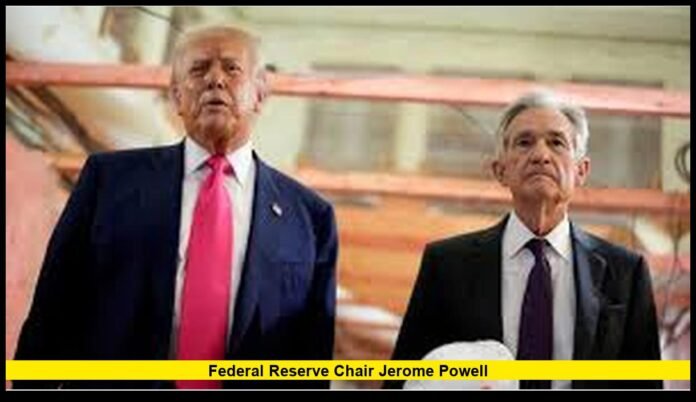

Federal Reserve Chair Jerome Powell is the head of the U.S. central bank, responsible for guiding interest-rate policy and safeguarding financial stability.
Federal Reserve Chair Jerome Powell stands at the center of America’s economic decision-making as the United States navigates a complex mix of slowing inflation, resilient employment, financial-market volatility, and intense political scrutiny in 2026. His leadership of the world’s most influential central bank continues to shape interest-rate expectations, consumer confidence, business investment, and global capital flows, making every statement, policy signal, and congressional appearance closely watched by markets and policymakers alike.
Powell’s Role in Today’s Economic Landscape
As chair of the Federal Reserve, Jerome Powell oversees the institution responsible for setting monetary policy, supervising major banks, and maintaining financial stability. The Federal Open Market Committee, which he leads, determines the benchmark federal funds rate that influences borrowing costs across mortgages, credit cards, auto loans, corporate debt, and government financing.
In the current environment, Powell’s task is delicate. Inflation has cooled from its recent peaks but remains a concern. At the same time, economic growth has shown resilience, and the labor market continues to generate jobs, even as some sectors experience slower hiring. Balancing these forces requires careful calibration: easing policy too quickly could reignite price pressures, while keeping conditions too tight for too long could slow growth and raise unemployment.
Interest Rates and the Fight Against Inflation
Under Powell’s leadership, the Federal Reserve implemented one of the most aggressive tightening cycles in decades to contain inflation that surged in the aftermath of pandemic-era stimulus, supply-chain disruptions, and energy price shocks. Rate increases were designed to cool demand, stabilize expectations, and bring price growth back toward the Fed’s long-term target.
As inflation readings have gradually moderated, markets have shifted their focus to when and how quickly the Fed might begin reducing rates. Powell has repeatedly emphasized that policy decisions will remain data-dependent, guided by trends in consumer prices, wage growth, productivity, and overall financial conditions. He has cautioned against premature easing that could undo progress, while also acknowledging that restrictive policy cannot remain in place indefinitely without economic costs.
Communication Strategy and Market Sensitivity
One of Powell’s defining features as chair has been his emphasis on transparency and clear communication. Press conferences, policy statements, and testimony before Congress are crafted to guide expectations and reduce uncertainty. Even subtle changes in wording can move stock indexes, bond yields, and currency markets within minutes.
Investors listen closely for clues about the future path of rates, the balance between inflation control and growth support, and the Fed’s assessment of financial stability risks. Powell’s challenge is to provide enough guidance to anchor expectations without committing the central bank to a rigid course that might not fit evolving conditions.
Political Pressure and Central Bank Independence
Federal Reserve Chair Jerome Powell operates in an environment where monetary policy decisions often carry political implications. Interest rates influence housing affordability, business expansion, government borrowing costs, and consumer sentiment — all of which can affect electoral dynamics and public approval.
Powell has consistently defended the principle that the Federal Reserve must remain independent from short-term political considerations. He has stressed that policy choices are driven by economic analysis and the institution’s dual mandate: maximum employment and stable prices. Maintaining this independence is widely viewed as essential to preserving market confidence and preventing inflation expectations from becoming unanchored.
Oversight, Accountability, and Public Scrutiny
As the public face of the Federal Reserve, Powell regularly appears before lawmakers to explain policy decisions, regulatory actions, and economic outlooks. These sessions often involve pointed questions about interest-rate strategy, banking supervision, and the broader impact of Fed policies on households and businesses.
Lawmakers from different political perspectives scrutinize the central bank’s actions, sometimes expressing concern about the pace of rate changes, the distributional effects of inflation, or the stability of the financial system. Powell’s responses aim to demonstrate accountability while reinforcing the Fed’s institutional role and analytical framework.
Financial Stability and the Banking System
Beyond interest rates, Powell also plays a central role in safeguarding the stability of the U.S. financial system. This includes oversight of large banks, stress testing, liquidity provisions, and coordination with other regulators. Recent years have underscored how quickly confidence can shift in financial markets and how interconnected institutions can transmit stress.
Powell has highlighted the importance of strong capital buffers, sound risk management, and vigilant supervision to ensure that the banking system can withstand economic shocks. He has also emphasized the Fed’s readiness to act as a backstop in times of market dysfunction, while maintaining a long-term focus on preventing excessive risk-taking.
Global Impact of U.S. Monetary Policy
Decisions made by Federal Reserve Chair Jerome Powell resonate far beyond U.S. borders. The dollar’s role as the world’s primary reserve currency means that changes in U.S. interest rates affect capital flows, exchange rates, and financial conditions in emerging and advanced economies alike.
Central banks around the world monitor the Fed’s policy stance when setting their own rates, and global investors adjust portfolios based on expectations of U.S. monetary tightening or easing. Powell frequently engages with international counterparts, underscoring the interconnected nature of today’s financial system and the importance of coordination in times of stress.
Inflation Expectations and Public Confidence
A critical part of the Fed’s mission is anchoring inflation expectations — the beliefs held by consumers, businesses, and investors about future price trends. If these expectations remain stable, it becomes easier for the central bank to achieve its goals without extreme policy measures.
Powell has emphasized that credibility is built through consistent actions and clear explanations. By demonstrating a firm commitment to price stability, the Fed seeks to prevent a cycle in which rising expectations lead to higher wages and prices, creating self-reinforcing inflation.
Labor Market Dynamics
Employment remains a key pillar of the Fed’s mandate. Powell has often described the U.S. labor market as strong, with solid job creation and relatively low unemployment, even as certain industries face restructuring and technological change.
Monitoring wage growth, labor-force participation, and productivity trends helps the Fed assess whether the economy is running too hot, too cold, or near balance. Powell’s policy approach aims to cool inflation without causing unnecessary harm to workers, a goal often referred to as achieving a “soft landing.”
Housing, Consumers, and Business Investment
Interest-rate decisions directly affect housing affordability and construction activity. Mortgage rates influence home buying, refinancing, and the broader real-estate market, while business borrowing costs shape investment in equipment, technology, and expansion.
Powell has acknowledged the sensitivity of these sectors to monetary policy and the lag with which rate changes influence the real economy. This lag complicates decision-making, as the full effects of past actions may not be visible for months.
Looking Ahead: Policy Path and Economic Outlook
As 2026 unfolds, attention remains focused on the trajectory of inflation, the sustainability of growth, and the timing of any potential policy adjustments. Powell has reiterated that the Federal Reserve will remain flexible, prepared to respond to new data and evolving risks.
Key factors shaping the outlook include:
- The pace at which inflation continues to moderate.
- The strength and durability of consumer spending.
- Developments in global energy markets and supply chains.
- Financial-market conditions and credit availability.
- Geopolitical events that could affect trade and investment.
Leadership Style and Institutional Continuity
Jerome Powell’s leadership style is often described as pragmatic, consensus-oriented, and grounded in economic analysis. He works closely with other members of the Federal Open Market Committee, seeking broad agreement while guiding discussions toward clear policy outcomes.
Continuity and predictability are central to the Fed’s effectiveness. By maintaining a steady framework and avoiding abrupt shifts without strong justification, Powell aims to preserve confidence among investors, businesses, and the public.
The Broader Significance of Powell’s Tenure
Federal Reserve Chair Jerome Powell’s tenure is unfolding at a time when the global economy is being reshaped by powerful long-term forces. Rapid advances in artificial intelligence and automation are transforming productivity and labor markets, while supply chains are being reconfigured due to geopolitical tensions and a shift toward domestic manufacturing and strategic resilience. At the same time, aging populations in major economies, changing immigration patterns, and evolving workforce participation are altering the balance between labor supply and demand, with direct implications for wage growth, inflation trends, and potential economic output.
These structural shifts are influencing how inflation behaves, how quickly economies can grow without overheating, and how sensitive financial markets are to interest-rate changes. For Powell, this means monetary policy must account not only for short-term data but also for deeper changes in how goods are produced, how services are delivered, and how capital and labor interact in a more digital and interconnected world. The traditional relationships between employment, wages, and prices are evolving, making policy calibration more complex than in past cycles.
Beyond the technical challenges, Powell has increasingly emphasized the social dimension of economic policy. He has highlighted the importance of sustaining a labor market that offers opportunities across income levels, regions, and demographic groups, noting that a strong and inclusive job market can support long-term stability and consumer confidence. Issues such as access to credit, the resilience of small businesses, and the ability of households to withstand economic shocks have become central to discussions about financial stability and growth.
Under Powell’s leadership, the Federal Reserve has also focused on ensuring that the financial system remains capable of supporting innovation and expansion while managing risks associated with new technologies, evolving payment systems, and shifting patterns of investment. His tenure is therefore defined not only by the fight against inflation but by the broader task of guiding the U.S. economy through a period of structural transformation, with policies aimed at preserving stability, fostering sustainable growth, and maintaining public trust in the central bank’s role.
Conclusion: A Central Figure in a Pivotal Era
As the head of the U.S. central bank, Federal Reserve Chair Jerome Powell remains one of the most influential figures in global finance. His decisions shape borrowing costs, investment flows, and economic expectations across the United States and around the world.
In a time marked by the aftermath of high inflation, shifting growth patterns, and heightened political attention, Powell’s commitment to data-driven policy and institutional independence continues to define the Federal Reserve’s role. How effectively the central bank manages the transition toward stable prices and sustainable growth will have lasting implications for households, businesses, and the broader economy in the years ahead.
FAQs
1. Who is Federal Reserve Chair Jerome Powell?
Jerome Powell is the head of the U.S. central bank and leads the Federal Open Market Committee, which sets interest rates and oversees monetary policy to promote stable prices and maximum employment.
2. Why is Jerome Powell important to the U.S. economy?
His decisions influence inflation, borrowing costs, financial markets, housing, and overall economic growth, making him one of the most influential economic policymakers in the world.
3. How do Powell’s policies affect everyday Americans?
Interest-rate changes impact mortgages, credit cards, auto loans, business investment, job growth, and the cost of living, directly affecting household finances and economic opportunities.
Disclaimer
This article is intended for general informational purposes only and does not constitute financial, legal, or investment advice. The content reflects publicly available information and economic conditions at the time of writing and may change as new data or policy decisions emerge. While efforts are made to ensure accuracy, the publisher does not guarantee the completeness or reliability of the information provided. Readers should conduct their own research and consult qualified professionals before making any financial or economic decisions based on this content.