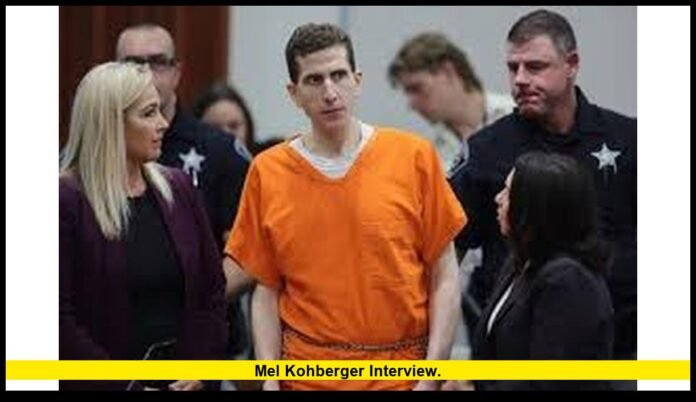

The Mel Kohberger interview is her first public account explaining her family’s shock, lack of prior knowledge, and the lasting emotional impact following her brother’s conviction in the Idaho murders case.
Mel Kohberger interview coverage has drawn nationwide attention after Bryan Kohberger’s sister broke her silence and spoke publicly for the first time following the conclusion of one of the most closely watched criminal cases in recent U.S. history. Her account offers a rare look into how a family experienced shock, disbelief, and long-term consequences after learning a loved one committed a crime that changed countless lives.
The interview arrived after the legal case reached its final resolution, allowing Mel Kohberger to speak without impacting court proceedings. Her words addressed public curiosity, corrected persistent misinformation, and shed light on the emotional aftermath that followed her brother’s conviction for the murders of four University of Idaho students.
Why the Mel Kohberger Interview Drew Immediate Attention
The Mel Kohberger interview became a major point of discussion because it addressed questions that had circulated since the earliest days of the investigation. For years, public speculation focused not only on Bryan Kohberger’s actions but also on whether anyone close to him suspected his involvement before his arrest.
Mel addressed those assumptions directly. She stated clearly that she and her family had no knowledge of Bryan’s guilt prior to his arrest and would have acted immediately if they had suspected otherwise. Her comments challenged online narratives that had taken hold in the absence of direct testimony from family members.
The interview shifted the conversation from rumor-driven speculation to confirmed personal experience, offering clarity where silence once allowed theories to grow.
Who Is Mel Kohberger
Mel Kohberger is one of Bryan Kohberger’s sisters and had largely remained out of public view throughout the investigation, trial, and sentencing. Before the case became national news, she lived a private life focused on family and career goals.
At the time of her brother’s arrest, Mel was preparing for professional work in the mental health field. That trajectory changed abruptly once her family became the subject of intense public attention. Her interview provided context for how quickly her personal life was altered by events she neither caused nor anticipated.
Life Before the Arrest
In her interview, Mel described her relationship with her brother as ordinary and unremarkable in the years leading up to his arrest. While she acknowledged that Bryan could be socially withdrawn and intense at times, she said nothing in his behavior suggested he was capable of extreme violence.
Family interactions followed normal routines. Conversations revolved around everyday topics, future plans, and shared concerns rather than anything that hinted at criminal activity. Mel emphasized that hindsight should not be confused with foresight.
The Moment Everything Changed
Mel described learning about Bryan’s arrest as a moment of total disbelief. The information reached her suddenly, and her initial reaction was to assume there had been a mistake. Only after confirmation did the reality begin to settle in.
She said the shock was physical as well as emotional. The transition from ordinary life to national scrutiny happened almost instantly, leaving little time to process what had occurred.
This moment marked the beginning of a new reality — one defined by questions, accusations, and public exposure.
A Conversation That Later Took on New Meaning
One of the most striking moments Mel described involved a conversation she had with Bryan shortly after news of the Idaho murders first broke. At that time, the perpetrator had not been identified publicly.
Concerned about safety, she warned her brother to be careful because a dangerous individual was believed to be at large. Bryan reassured her and said he would stay safe.
Only later did the weight of that conversation become clear. Mel described the realization as deeply unsettling, highlighting how ordinary interactions can take on haunting significance in retrospect.
No Prior Knowledge or Suspicion
A central message of the Mel Kohberger interview was her firm assertion that no family member suspected Bryan’s involvement before his arrest. She stated that if she had believed he was responsible, she would have contacted authorities immediately.
Mel explained that claims suggesting the family knew or protected Bryan are false and deeply harmful. Those accusations, she said, added unnecessary pain to an already devastating situation.
Her statements aligned with the investigative timeline and court findings, reinforcing that law enforcement identified Bryan through evidence rather than family involvement.
The Impact of Public Speculation
Following Bryan’s arrest, Mel said her family became the subject of intense online scrutiny. Social media speculation, conspiracy theories, and harassment escalated rapidly.
She described how strangers analyzed family photos, social interactions, and past statements in an attempt to build narratives unsupported by facts. This scrutiny extended into private spaces, affecting daily life and emotional well-being.
Mel emphasized that public curiosity, when unchecked, can cross into cruelty — particularly when directed at people who had no role in the crime.
Professional and Personal Consequences
The effects of the case extended into Mel’s professional life. She explained that opportunities she had been preparing for were no longer viable due to public attention tied to her last name.
The association with a widely publicized criminal case created obstacles she could not easily overcome. She chose to step back from certain paths rather than continue under constant scrutiny.
Her experience illustrates how crimes can generate ripple effects far beyond legal outcomes.
Grief Without Comparison
Throughout the interview, Mel was careful to acknowledge the suffering of the victims’ families. She stated clearly that their loss is permanent and incomparable.
At the same time, she described a different kind of grief — one rooted in betrayal, disbelief, and the collapse of a familiar reality. Loving someone who commits a horrific act creates emotional conflict without resolution.
Mel emphasized that acknowledging her own pain does not diminish the tragedy experienced by the victims’ loved ones.
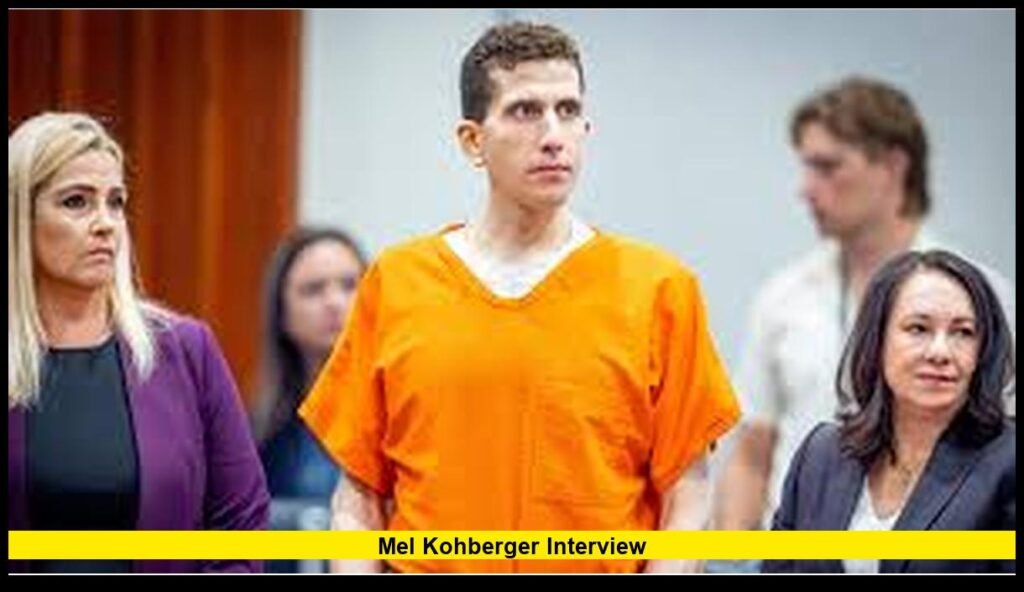
Reflections on Holidays and Family Gatherings
Mel spoke about how holidays and family gatherings have changed since the conviction, explaining that occasions once centered on routine traditions now carry a deeper emotional weight. Moments that used to feel ordinary — shared meals, conversations, and seasonal rituals — are now layered with reflection and silence. The absence created by the case is present, even when it is not openly discussed.
She acknowledged that Bryan’s absence is felt during these times, but emphasized that her thoughts often shift toward the families of the four students whose lives were taken. Their loss, she said, reshaped entire futures and altered family traditions permanently. Keeping that perspective helps her place her own emotions within the larger reality of the tragedy.
Mel described grief as unpredictable rather than tied to a calendar. Certain moments during holidays — a familiar song, a passing comment, or a quiet pause — can unexpectedly bring emotions back to the surface. She noted that public attention around anniversaries and seasonal milestones can intensify these feelings, making healing an uneven process.
Her reflections illustrate how the impact of the crime extends into everyday life long after sentencing. Holidays no longer mark simple celebrations but serve as reminders of how profoundly one act of violence can alter families on all sides, leaving emotional imprints that persist well beyond the courtroom.
Bryan Kohberger’s Earlier Struggles
Mel also discussed her brother’s earlier life, describing periods marked by bullying, struggles with self-esteem, and substance addiction during his teenage years.
The family feared for his safety during that time and focused on helping him survive those challenges. Eventually, Bryan sought treatment and appeared to stabilize.
His recovery and renewed focus on academics gave the family hope that he had moved beyond his most difficult years.
Academic Pursuits and Perceived Stability
Bryan’s academic path reinforced the family’s belief that he had rebuilt his life. He studied criminal justice and later pursued advanced education in criminology.
Mel said his behavior during this period reflected discipline and focus. Nothing in his demeanor suggested violent intent or criminal planning.
The contrast between this period and the crimes he later committed remains one of the most difficult aspects for the family to reconcile.
Addressing True Crime Culture
Another major theme of the Mel Kohberger interview involved criticism of how true crime content can affect real people.
Mel said that while public interest in crime is understandable, it often ignores the humanity of those connected to the case. Speculation can become entertainment at the expense of families who never sought public attention.
She urged audiences to approach such stories with empathy rather than suspicion.
Consistency With the Legal Record
Legal observers noted that Mel’s statements were consistent with the known facts of the case and aligned with the official timeline of events established during the investigation and trial. She did not attempt to reinterpret evidence, challenge scientific findings, or shift responsibility away from her brother. Instead, her account remained grounded in personal experience and recollection, distinguishing her narrative from speculation or legal analysis.
Her interview focused on the human side of the story — what it was like to learn of an arrest, how ordinary family interactions took on new meaning in hindsight, and how online narratives often diverged from what she and her relatives actually experienced. By avoiding commentary on evidentiary details or courtroom strategy, Mel’s remarks reinforced perceptions of credibility and restraint, even among viewers who questioned her motives. This grounded approach helped separate her voice from the swirl of online theories that had followed the case for years.
The legal chapter of the case is closed, with Bryan Kohberger’s guilty plea and sentence finalized. However, the emotional consequences continue to unfold, both for the families of the victims and for those connected to the perpetrator. Mental health professionals observing public reaction have noted that coming to terms with a crime’s impact can take years, especially for individuals who must reconcile love for a family member with the reality of their actions.
Mel’s consistency with the legal record — and her decision to keep her reflections personal rather than argumentative — offers a stable point of reference in a story that was long dominated by public speculation. Her statements do not alter what happened in court, but they add dimension to how those events are understood by the broader public. The way she navigated her interview — acknowledging pain, affirming facts, and resisting sensationalism — mirrors the care with which the case itself was handled by prosecutors and defense, and illustrates how personal testimony can complement, rather than contradict, judicial outcomes.
Why She Spoke Publicly
Mel explained that remaining silent allowed false narratives to take root. Speaking publicly was a way to reclaim her identity from assumptions she did not choose.
She did not frame the interview as a defense of her brother but as an effort to correct misinformation and explain the personal toll of the case.
Timing played a key role, as the conclusion of legal proceedings removed concerns about influencing outcomes.
Public Response
Public reaction to the interview varied. Many readers expressed empathy and appreciation for her honesty. Others remained skeptical, reflecting the polarized nature of online discourse surrounding high-profile crimes.
Mental health professionals noted that her reactions aligned with trauma responses commonly seen in families blindsided by violent acts.
The interview shifted portions of the conversation toward understanding rather than accusation.
How This Fits Into the Case’s Broader Legacy
The University of Idaho murders prompted widespread national discussion about criminal investigations, forensic evidence, and campus safety. The case drew attention to the use of modern investigative tools, the role of digital and physical evidence, and the speed at which a quiet college town was thrust into the national spotlight. It also served as a reminder of how quickly violence can disrupt ordinary lives, altering communities, institutions, and families in lasting ways.
Beyond investigative lessons, the case reshaped conversations around the long-term impact of violent crime. Universities across the country reassessed safety measures, while the public grappled with the emotional weight of a tragedy that unfolded largely out of sight until it became headline news. The scale of attention underscored how deeply such cases resonate beyond their immediate setting.
The Mel Kohberger interview added a personal and rarely heard dimension to this broader legacy. By documenting the experience of those closest to the perpetrator, her account expanded the public’s understanding of how crime affects not only victims and communities but also families who are suddenly linked to acts they did not commit or foresee. Importantly, her perspective did not shift focus away from the victims’ families or lessen their suffering.
Instead, her words became part of the historical record surrounding the case, capturing the wider human consequences that extend beyond courtrooms and verdicts. As time passes, the Mel Kohberger interview stands as a reminder that the legacy of the Idaho murders is not confined to legal outcomes, but continues to shape lives, conversations, and collective memory long after the case reached its formal conclusion.
A Story That Continues Beyond the Courtroom
Although the legal process has ended, the story continues to affect those connected to it in profound and unexpected ways. For Mel, healing is ongoing and uneven — a journey that does not move in a straight line. She explained that some days feel manageable, while others are unexpectedly heavy, especially around anniversaries, holidays, and moments when the case resurfaces in the news. The emotional aftermath, she said, is not something that simply fades with time.
The Mel Kohberger interview does not offer closure in the traditional sense, but it does provide greater understanding of the long-term consequences that ripple outward from acts of violence. Her words reveal the complexity of grief experienced by individuals who once shared ordinary life with someone later convicted of heinous crimes. She acknowledged that while the courtroom chapter is finished, the psychological and social impacts continue to shape everyday life — from personal relationships to professional opportunities and public perception.
Mel also highlighted how reminders of the case can arrive unexpectedly, whether through media coverage, online commentary, or conversations with people who remain curious about details long after the sentence was handed down. These reminders can reignite old emotions, bringing back feelings of shock, confusion, or unresolved pain. Yet, she also shared that moments of resilience and connection with loved ones help sustain her through these ongoing challenges.
The interview, therefore, stands as a rare and valuable perspective on how crime reshapes lives far beyond verdicts and sentences. It underscores that the end of legal proceedings marks only one phase of a much longer process of reckoning, reflection, and adaptation for those who lived through the experience from the inside.
The Mel Kohberger interview invites readers to reflect on the unseen consequences of violent crime and consider the human cost that extends long after headlines fade.