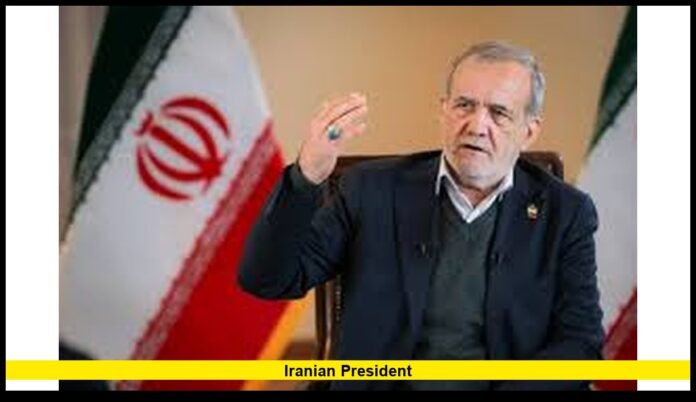

The Iranian president stands at the center of a rapidly evolving political and economic landscape as 2025 draws to a close, with President Masoud Pezeshkian confronting mounting domestic pressures alongside intensifying international tensions. His recent public statements, firm policy positioning, and response to economic hardship have placed Iran under renewed global attention while shaping how the country navigates relations with the United States, Europe, and regional rivals.
As the year ends, Pezeshkian’s leadership reflects a period of consolidation, confrontation, and recalibration. Iran is managing inflation, sanctions, security risks, and diplomatic isolation at the same time, making the presidency one of the most consequential roles in the Middle East today.
Masoud Pezeshkian’s Presidency in Context
Masoud Pezeshkian assumed office in mid-2024, inheriting a nation already under economic strain and diplomatic pressure. By late 2025, those challenges have intensified. His presidency operates within Iran’s complex power structure, yet his public role has become increasingly prominent as he addresses both internal frustrations and external threats.
Pezeshkian has positioned himself as a leader focused on national resilience. His speeches emphasize sovereignty, economic survival, and resistance to pressure, while acknowledging that Iran’s citizens are facing daily hardships.
Strong Messaging From the Iranian President
Confrontational Language and Strategic Signaling
In recent weeks, the Iranian president has used unusually direct language to describe Iran’s relationship with Western powers. He stated that Iran is confronting a broad, sustained confrontation that spans economic pressure, security challenges, and political influence.
This messaging marks a noticeable shift toward assertiveness. Rather than focusing solely on diplomacy, Pezeshkian has framed Iran’s position as one of endurance and readiness, signaling that the country will not retreat under pressure.
The language serves two purposes. Domestically, it reinforces unity during hardship. Internationally, it communicates that Iran views current tensions as structural rather than temporary.
Why the Rhetoric Matters
Presidential rhetoric in Iran carries weight beyond symbolism. Statements from the Iranian president influence:
- Military readiness and deterrence posture
- Diplomatic calculations by regional governments
- Economic expectations inside the country
- U.S. and European policy discussions
While no formal declaration of war exists, the framing underscores how Tehran interprets ongoing sanctions, military pressure, and diplomatic isolation.
Economic Reality Shaping Presidential Decisions
Inflation and Currency Pressure
Iran’s economy remains under intense stress. Inflation continues at elevated levels, eroding household purchasing power. Food, housing, healthcare, and transportation costs have risen sharply, forcing many families to reduce spending and rely on state assistance.
The Iranian president has acknowledged that economic pressure now represents the most immediate threat to social stability. Currency weakness has compounded the issue, increasing the cost of imports and limiting consumer confidence.
Budget Policy and Wage Constraints
One of the most controversial aspects of Pezeshkian’s presidency has been his stance on public sector wages. While workers demand increases aligned with inflation, the government has stated that fiscal capacity is limited.
The administration’s budget strategy focuses on:
- Preventing runaway inflation
- Avoiding unsustainable deficits
- Maintaining subsidies for essentials
- Offering targeted tax relief
These measures aim to slow economic decline rather than deliver rapid improvement, a reality the president has openly communicated.
Public Discontent and Social Pressure
Labor Actions and Street-Level Frustration
Throughout 2025, economic hardship has fueled labor actions across multiple sectors. Shopkeepers, transport workers, healthcare staff, and service employees have all expressed frustration with rising costs and stagnant wages.
These actions have not coalesced into a unified movement, but they reflect widespread dissatisfaction. The Iranian president has attempted to balance enforcement with dialogue, urging patience while promising gradual improvement.
Managing Stability
Maintaining social stability has become a core responsibility of the presidency. Pezeshkian’s government has prioritized preventing unrest while keeping economic policy intact, a balancing act that defines his leadership style.
Foreign Policy Under Masoud Pezeshkian
Relations With the United States
Relations between Iran and the United States remain deeply strained. The Iranian president has accused Washington of economic warfare and political interference, framing sanctions as tools designed to weaken Iran internally.
There are no active comprehensive negotiations underway. Communication occurs indirectly and sporadically, with both sides maintaining firm positions.
For U.S. policymakers, Pezeshkian’s tone reinforces the perception that Tehran is preparing for prolonged confrontation rather than rapid reconciliation.
European Relations
Iran’s relationship with European governments has cooled further during 2025. European support for sanctions and nuclear oversight measures has drawn criticism from Tehran.
The Iranian president has expressed disappointment with Europe’s approach, arguing that it prioritizes alignment over dialogue. This has reduced prospects for economic cooperation and diplomatic mediation.
Israel and Regional Security
Israel remains a focal point of Iran’s security messaging. Pezeshkian has accused Israel of destabilizing actions and warned that Iran would respond decisively to future attacks.
Although direct conflict is not ongoing, the risk of escalation remains part of the regional security environment, influencing defense planning across the Middle East.
Strategic Partnerships Beyond the West
Deepening Ties With Russia
Iran has strengthened long-term cooperation with Russia, expanding collaboration in energy, defense, trade, and infrastructure. This partnership provides Iran with alternative economic channels and political backing amid Western pressure.
The Iranian president views these partnerships as essential for reducing dependence on Western systems and maintaining strategic autonomy.
Regional Engagement
Despite tensions with Western powers, Iran continues diplomatic engagement across the Middle East and neighboring regions. The presidency has supported dialogue with Gulf states, focusing on security coordination and economic stability.
This dual approach—confrontation with some actors and engagement with others—defines Iran’s current foreign policy posture.
Security and Military Posture
Deterrence Without Declaration
Iran’s military posture in late 2025 emphasizes readiness without formal escalation. Defense messaging remains deliberate, signaling capability while avoiding actions that could trigger direct conflict.
The Iranian president has consistently stated that Iran does not seek war but will defend itself if challenged.
Maritime Actions and Strategic Waters
Iran’s control over key maritime routes remains a strategic priority. Recent naval actions have underscored Tehran’s willingness to assert authority in sensitive waterways, reinforcing its role as a regional power.
For global markets and U.S. strategic planners, these actions highlight the continued importance of maritime security in the region.
Nuclear Issue and Sanctions Pressure
Ongoing Dispute
The nuclear issue remains unresolved. Iran maintains that its program is peaceful, while sanctions tied to nuclear activity continue to limit economic growth.
The Iranian president has argued that pressure undermines diplomacy and delays potential solutions, while reaffirming Iran’s commitment to national rights.
Impact on the Presidency
Sanctions influence nearly every aspect of presidential decision-making, from budget planning to foreign relations. Pezeshkian’s administration has focused on economic self-reliance and regional trade to offset restrictions.
Why the Iranian President Matters to U.S. Readers
For U.S. audiences, the actions of the Iranian president affect:
- Middle East security and military planning
- Energy markets and shipping routes
- Global nonproliferation efforts
- Diplomatic strategies in Washington
Understanding Pezeshkian’s leadership provides insight into how Iran may act in future crises and negotiations.
Leadership Style and Political Position
Masoud Pezeshkian governs during a period of constraint. His leadership style blends realism with defiance, emphasizing endurance over rapid reform while navigating ongoing economic pressure and international isolation. He has chosen direct communication, acknowledging hardship while projecting confidence, and has frequently framed Iran’s challenges as the result of external pressure rather than internal weakness. This approach resonates with some citizens who appreciate his frank tone and emphasis on national resilience, but it also draws criticism from others who seek faster improvements in living standards and more openness to diplomatic engagement. As 2026 approaches, Pezeshkian’s political positioning continues to balance nationalist rhetoric with cautious policy adjustments, aiming to maintain cohesion amid uncertainty at home and abroad.
He has chosen direct communication, acknowledging hardship while projecting confidence. This approach resonates with some citizens while drawing criticism from others who seek faster change.
Looking Ahead
As 2025 ends, the Iranian president faces unresolved economic challenges, sustained sanctions, and fragile regional stability. His administration appears focused on managing pressure rather than pursuing dramatic shifts, emphasizing cautious economic measures and strategic resistance to external demands. Into 2026, Tehran is expected to maintain a firm diplomatic posture while exploring limited engagement with regional neighbors and non-Western partners to diversify economic ties. Domestic pressure for improved living conditions and gradual reform will continue to shape policy choices, while emerging security developments in the Gulf and nuclear negotiations could influence the direction of Iran’s foreign relations. The coming year will test whether this strategy can preserve stability, respond to public expectations, and open pathways for future diplomacy.
The coming year will test whether this strategy can preserve stability and open pathways for future diplomacy.
How do you see the Iranian president’s approach shaping the region in the year ahead? Share your thoughts and stay connected for continuing coverage.