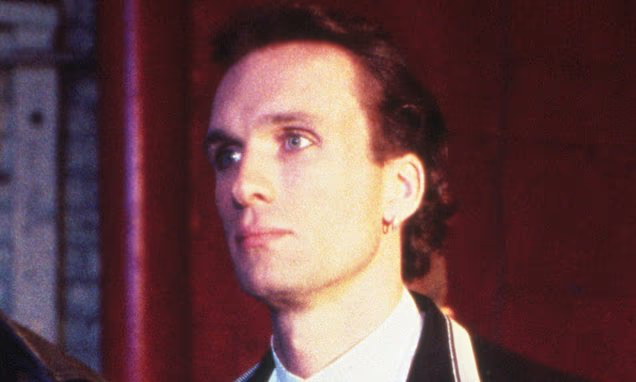

The entertainment world reels from devastating news as beloved character actor Peter Greene was discovered deceased in his Manhattan apartment on Friday afternoon. The peter greene cause of death has not yet been officially released, with New York City medical examiners continuing their investigation into what led to the 60-year-old actor’s untimely passing. Authorities confirmed they do not suspect any criminal activity in connection with his death, though toxicology reports and additional testing remain pending.
Greene’s body was found inside his Lower East Side residence on Clinton Street around 3:25 p.m. on December 12, 2025. Emergency responders arrived after concerned neighbors requested a wellness check, having noticed unusual circumstances surrounding the actor’s apartment. Medical personnel pronounced Greene dead at the scene, bringing a tragic end to a career that spanned more than three decades and touched millions of filmgoers worldwide.
Wellness Check Leads to Heartbreaking Discovery
Residents living near Greene’s ground-floor apartment became alarmed when they heard Christmas music playing on repeat for an extended period. Multiple neighbors reported the same holiday songs cycling continuously for what they estimated to be more than a full day. The persistent audio prompted building residents to contact authorities, fearing something might be wrong with the typically private actor.
When officials entered the residence, they made the grim discovery that has since sent shockwaves through Hollywood. Greene’s longtime manager Gregg Edwards spoke publicly about the loss, describing the actor as not only a talented performer but also a dear friend. Edwards had maintained regular contact with Greene and said he had conversed with the actor just days before his death, noting nothing seemed amiss during their conversation.
From Street Life to Silver Screen Success
Peter Greene’s journey to Hollywood stardom followed an unconventional path marked by hardship, determination, and raw talent. Born in Montclair, New Jersey on October 8, 1965, Greene experienced a turbulent youth that would later inform many of his most powerful performances. He left home during his teenage years and found himself navigating the harsh realities of street life in New York City.
During those difficult years, Greene survived by any means necessary while battling substance abuse issues that would haunt him for decades. He discovered theater as a refuge, literally hiding in performance spaces to escape dangerous situations related to drug debts. This accidental introduction to acting ignited a passion that would eventually transform his life completely.
Greene committed himself to studying the craft seriously, enrolling at the renowned Lee Strasberg Theatre and Film Institute. The intensive training provided him with classical acting techniques that he would later blend with his own gritty life experiences to create unforgettable screen personas. His dedication to method acting and psychological realism set him apart from other aspiring actors competing for similar roles.
Breakthrough Performances in Independent Cinema
The early 1990s marked Greene’s emergence as a formidable talent in independent film circles. His first major role came in 1992 with Laws of Gravity, a low-budget crime drama that showcased his natural ability to portray working-class criminals with startling authenticity. Critics immediately recognized something special in Greene’s screen presence, noting his ability to convey danger and vulnerability simultaneously.
His performance in 1993’s Clean, Shaven elevated his reputation to new heights. Greene portrayed Peter Winter, a man suffering from schizophrenia searching for his daughter while suspected of murder. The role required Greene to delve into extreme psychological territory, depicting mental illness with a rawness that made audiences profoundly uncomfortable. Film scholars still regard this performance as one of cinema’s most accurate and disturbing portrayals of severe mental health conditions.
Greene’s commitment to the role went beyond typical method acting preparation. He immersed himself in research about schizophrenia, working to understand the fractured reality experienced by those living with the condition. The resulting performance felt less like acting and more like witnessing genuine psychological distress, cementing Greene’s reputation as an actor willing to explore the darkest corners of human experience.
Becoming Hollywood’s Most Terrifying Villain
The year 1994 transformed Peter Greene from respected independent film actor into one of Hollywood’s most recognizable character performers. His appearance in Quentin Tarantino’s Pulp Fiction, though brief, left viewers shaken. As Zed, the security guard who commits unspeakable acts in a pawn shop basement, Greene created a character so disturbing that audiences still discuss the performance decades later.
Tarantino specifically sought Greene for the role after seeing his work in independent films. The director recognized that Greene possessed a unique quality that made viewers genuinely afraid of his characters rather than simply entertained by villainous antics. Greene’s ability to suggest violence and depravity without excessive dialogue or action made his scenes all the more impactful.
That same year, Greene took on a vastly different type of antagonist in The Mask opposite Jim Carrey. As Dorian Tyrell, Greene played a smooth, sophisticated mob boss whose elegant exterior masked ruthless brutality. The role required balancing menace with charm, creating a villain who felt genuinely dangerous despite the film’s comedic tone. Greene’s intensity provided perfect counterbalance to Carrey’s manic energy, helping ground the fantasy elements in real stakes.
Mastering the Art of the Character Actor
Unlike many performers who chase leading roles and mainstream stardom, Greene found his niche playing supporting characters that audiences never forgot. His appearance in 1995’s The Usual Suspects as Redfoot demonstrated his ability to make memorable impressions with limited screen time. The character served as a crucial plot catalyst while showcasing Greene’s talent for creating fully realized personalities in just a few scenes.
Greene understood that character actors succeed by making bold, specific choices that distinguish each role. He never phoned in performances or treated smaller parts as beneath his abilities. Whether playing a corrupt detective, violent criminal, or menacing enforcer, Greene approached every role with the same intensity and preparation he brought to his independent film breakthroughs.
His work ethic earned respect throughout the industry, even from those who found him challenging to work with. Directors and producers knew that casting Peter Greene guaranteed a performance that would elevate their project, regardless of budget or screen time. This reputation kept him working consistently even as Hollywood trends and tastes shifted.
Memorable Turns in Major Studio Films
The late 1990s and 2000s saw Greene appear in numerous high-profile productions. His role in 2001’s Training Day reunited him with themes of police corruption and urban violence. Playing Jeff, a crooked narcotics detective, Greene delivered one of the film’s most memorable sequences. His character’s shooting scene, designed to fabricate a cover story, showcased Greene’s ability to blend dark humor with genuine menace.
Greene also appeared in action films like Under Siege 2: Dark Territory and comedies such as Blue Streak with Martin Lawrence. These mainstream appearances demonstrated his versatility and willingness to work across genres. While he remained typecast as criminals and villains, Greene brought enough variation to each performance that his characters never felt repetitive or predictable.
His filmography eventually grew to include over 90 credited roles spanning theatrical releases, television series, direct-to-video productions, and music videos. Greene appeared in hip-hop videos for artists including Mobb Deep and House of Pain, bringing the same authentic street credibility to music visuals that made his film performances so compelling.
Television Work and Later Career
As film opportunities evolved in the 2010s, Greene transitioned smoothly into television work. He appeared in critically acclaimed series including Justified, where his guest appearance demonstrated his ability to adapt to episodic storytelling formats. His weathered face and imposing presence made him ideal for crime dramas and period pieces requiring authentic tough-guy characters.
Greene’s role in The Continental, the John Wick prequel series, represented one of his final television appearances. Even in supporting capacity, Greene commanded attention whenever he appeared on screen. His decades of experience showed in the economy of his performances, conveying character history and motivation through minimal dialogue and subtle physicality.
Throughout his later career, Greene never stopped working or lost his passion for acting. Unlike some performers who become bitter about not achieving A-list status, Greene seemed genuinely content with his career path. He took pride in his craft and the body of work he built through consistent effort rather than chasing fame or fortune.
Battling Personal Demons
Greene’s professional success contrasted sharply with personal struggles that threatened to derail his career multiple times. He fought heroin and cocaine addiction throughout the 1990s, facing arrests in 1998 and 2007 for drug-related offenses. These legal troubles and substance abuse issues limited opportunities during periods when his career might have reached even greater heights.
In interviews, Greene spoke candidly about attempting suicide in 1996 before finally seeking treatment for his addictions. The actor credited rehabilitation programs and supportive colleagues with saving his life and career. Director Jordan Alan notably put Greene through treatment to complete their second collaboration, demonstrating the loyalty Greene inspired despite his difficulties.
Edwards, his manager, emphasized that Greene overcame these challenges and maintained sobriety in his later years. The actor’s ability to conquer addiction while continuing to work steadily spoke to tremendous personal strength. Many in Hollywood saw Greene’s recovery as inspirational, proof that second chances could lead to long, productive careers.
Recent Health Challenges
In the weeks preceding his death, Greene dealt with health issues that required medical attention. Edwards revealed the actor had been scheduled for surgery to remove a benign tumor located near his lungs. While the growth was not cancerous, its location required surgical intervention that Greene had been preparing to undergo.
Despite health concerns, Greene remained physically active and maintained what Edwards described as good shape for his age. The actor regularly rode his bicycle throughout New York City and stayed engaged with his craft. He was scheduled to begin filming an independent thriller called Mascots alongside Mickey Rourke in January 2025, demonstrating that work opportunities continued flowing despite his age and health challenges.
The peter greene cause of death remains unclear as medical examiners work to determine what led to his passing. Investigators are examining all aspects of his health history, including the tumor and any medications or treatments he may have been receiving. Toxicology results, which can take several weeks to complete, will provide additional information about the circumstances of his death.
Industry Mourns Tremendous Loss
News of Greene’s death prompted immediate reactions from throughout the entertainment community. Director Kerry Mondragon, who had cast Greene in the upcoming Mascots, reportedly broke down upon hearing the news. Edwards described receiving an outpouring of messages from colleagues, fans, and industry professionals expressing shock and sadness.
Many tributes emphasized not just Greene’s talent but his kindness and generosity toward fellow performers. While his on-screen persona projected menace and danger, those who knew him personally described a gentle soul with enormous compassion. This dichotomy between his public image and private personality fascinated fans and made his performances all the more impressive.
Greene is survived by his siblings, a brother and sister, who are now planning memorial services to celebrate his life and career. Edwards indicated that family members were still processing the sudden loss and finalizing arrangements for a proper farewell to the beloved actor.
An Enduring Legacy
Peter Greene’s death leaves a void in Hollywood’s character actor ranks that will prove difficult to fill. His willingness to explore humanity’s darkest aspects with unflinching honesty created performances that continue resonating with audiences. Films like Pulp Fiction, The Mask, Clean, Shaven, and Training Day remain testaments to his remarkable talent and fearless approach to difficult roles.
Greene’s career trajectory offers inspiration for actors who refuse to compromise their artistic integrity for mainstream success. He built a lasting legacy by staying true to his strengths and accepting the typecasting that allowed him to work consistently for over 30 years. His estimated net worth of $1.5 million reflected steady employment rather than blockbuster paydays, a tradeoff Greene seemed to embrace willingly.
As investigators work to determine the exact circumstances of his passing, fans and colleagues remember Greene for the indelible marks he left on cinema. His villains terrified audiences not through caricature or exaggeration but through psychological realism that suggested genuine danger. Few actors have created such memorable antagonists with such apparent ease and consistency.
Share your memories of Peter Greene’s most unforgettable performances and how his unique talent shaped the films that defined a generation of cinema.