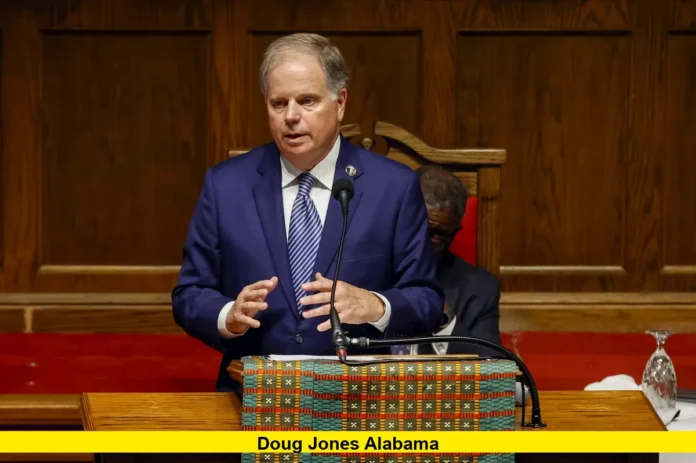

Former U.S. Senator Doug Jones Alabama officially entered the 2026 governor’s race, setting up one of the most closely watched political contests in the Deep South. The announcement, made during a campaign kickoff event in Birmingham, confirms that Jones is seeking a return to statewide office in a state where Democrats have struggled for decades. His decision immediately reshapes Alabama’s political landscape and draws national attention to a race that will test whether crossover appeal and issue-focused campaigning can still break through in a deeply Republican state.
Jones is the most recent Democrat to win a statewide election in Alabama, and his new campaign is built on experience, name recognition, and a platform centered on health care, economic opportunity, and civic inclusion. As the 2026 election cycle begins to take shape, his candidacy brings renewed energy to Democratic voters while signaling a competitive and high-profile race ahead.
Campaign Launch Marks a Defining Moment
Doug Jones formally launched his gubernatorial campaign during a packed evening event in Birmingham, surrounded by supporters, longtime allies, and community leaders. The choice of Birmingham carried symbolic weight, reflecting both the state’s civil rights legacy and Jones’s own history as a federal prosecutor and public servant.
In his remarks, Jones framed the campaign as a choice about the future direction of Alabama. He emphasized unity over division and positioned himself as a leader focused on solving practical problems rather than fueling partisan conflict. The campaign launch comes years after his narrow but historic Senate victory and underscores his belief that Alabama voters remain open to candidates who prioritize everyday concerns.
A Familiar Name With a Unique Political Record
Jones rose to national prominence in 2017 when he won a special election to the U.S. Senate, becoming the first Democrat elected statewide in Alabama in a generation. His victory was widely viewed as an upset and demonstrated his ability to build a coalition that included Democrats, independents, and moderate Republicans.
Before his time in the Senate, Jones served as U.S. Attorney for the Northern District of Alabama. In that role, he led high-profile prosecutions tied to long-unresolved civil rights cases, earning a reputation for persistence and a strong commitment to justice. That background continues to shape how supporters and critics view his leadership style.
After losing his Senate seat in 2020, Jones remained active in public life, often speaking on voting rights, democracy, and the importance of civic engagement. His return to electoral politics now places him at the center of Alabama’s next major political battle.
Core Message: Health, Opportunity, and Inclusion
At the heart of Jones’s gubernatorial campaign is a message focused on improving quality of life for Alabamians across all regions of the state. His platform emphasizes policies he argues will strengthen families, stabilize communities, and support long-term economic growth.
Health Care Access and Medicaid Expansion
Health care is one of the central pillars of Jones’s campaign. He is advocating for expanded access to affordable care, including Medicaid expansion, which he says would help hundreds of thousands of residents and provide financial stability for struggling hospitals, particularly in rural areas.
Jones argues that health care access is not a partisan issue but a basic necessity that affects workforce participation, family security, and community well-being. He has framed expansion as both a moral and economic issue, pointing to the strain faced by hospitals and clinics across Alabama.
Reproductive and Family Health Protections
Jones has also pledged to protect access to a broad range of reproductive and family health services. His campaign highlights the importance of safeguarding treatments such as in-vitro fertilization, contraception, and maternal care. He has described these protections as essential for families planning their futures and for maintaining a strong health care system statewide.
Economic Growth and Workforce Development
Economic opportunity is another key focus of the Jones campaign. He has emphasized the need to attract new industries, support small businesses, and invest in workforce training programs that prepare residents for high-demand jobs.
Jones argues that Alabama’s economic success depends on expanding opportunities beyond major metro areas. His platform includes investments in infrastructure, broadband access, and education, particularly in rural communities that have faced long-term economic challenges.
He has positioned himself as a candidate who understands both the needs of working families and the importance of creating a business-friendly environment that encourages sustainable growth.
Voting Access and Civic Participation
Jones has made voting access and civic participation a central theme of his campaign. He has pledged to support policies that make it easier for eligible voters to participate in elections, arguing that broad participation strengthens democracy and public trust.
Rather than focusing on partisan advantages, Jones frames voting access as a fundamental right and a way to ensure that government reflects the voices of all communities. This message resonates strongly with his long-standing emphasis on inclusion and fairness.
An Uphill Battle in a Republican State
Alabama remains one of the most reliably Republican states in the country, particularly in statewide races. Democrats have not won the governor’s office in more than two decades, and Republican candidates typically begin general elections with a significant advantage.
Jones enters the race fully aware of these realities. His strategy relies on high turnout among Democratic voters, strong support from Black communities, and the ability to appeal to independents and moderate conservatives who may be open to a different style of leadership.
The Republican field is expected to be competitive, with well-known figures already positioning themselves for the race. Jones’s campaign team has acknowledged the challenge but argues that his experience, credibility, and focus on practical issues give him a viable path forward.
Grassroots Organization and Early Momentum
Following the campaign launch, Jones’s team began building a statewide grassroots operation. Volunteers are organizing community events, voter outreach efforts, and digital engagement campaigns designed to connect with voters in both urban and rural areas.
The campaign is also focused on early fundraising and organizational development, recognizing that sustained effort will be necessary to compete effectively through the primary and into the general election. Jones’s supporters point to his previous statewide win as evidence that disciplined campaigning can overcome long odds.
Why This Race Matters Beyond Alabama
While the governor’s race will ultimately be decided by Alabama voters, the contest has implications beyond state borders. Political observers across the country are watching closely to see whether a Democrat with statewide experience can compete effectively in a deeply conservative environment.
Jones’s candidacy serves as a test case for issue-based campaigning in polarized times. His approach emphasizes policy outcomes, bipartisan appeal, and civic unity rather than ideological confrontation. The outcome may influence how future candidates approach races in similarly aligned states.
The Road Ahead to 2026
With the campaign officially underway, Jones faces a long and demanding road to Election Day. The Democratic primary will determine whether he advances to the general election, where turnout, messaging, and economic conditions will all play critical roles.
Jones has made it clear that he plans to campaign across all parts of the state, listening to voters and tailoring his message to local concerns. His supporters believe that consistent engagement and a focus on shared priorities can shift the conversation, even in challenging political territory.
A Campaign Built on Experience and Conviction
Doug Jones’s decision to run for governor represents more than a personal political comeback. It reflects a broader effort to redefine what statewide leadership can look like in Alabama. His campaign blends experience with a forward-looking agenda centered on health, opportunity, and participation.
As the 2026 election approaches, the race is expected to draw increasing attention and debate. Whether Jones can once again defy expectations remains to be seen, but his entry ensures that Alabama voters will face a clear and consequential choice.
What do you think about Doug Jones entering the Alabama governor’s race? Share your perspective and follow along as the campaign unfolds.