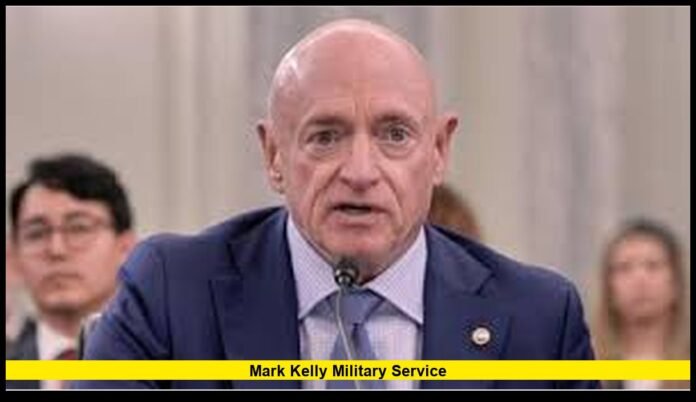

The mark kelly military service record stands as one of the most multifaceted and distinguished among modern American public officials. His decades-long journey—from naval aviator and combat veteran to test pilot, astronaut, and eventually United States senator—reflect the type of career defined by discipline, technical mastery, and public commitment. As national conversation continues to highlight the service backgrounds of elected leaders, Kelly’s military years offer an in-depth look at the experiences that shaped his leadership style, world perspective, and future political path.
This expanded report examines every major chapter of his military career, providing a detailed picture of his service, achievements, responsibilities, and the lasting imprint it has left on his role in public life.
Early Foundations and Entry Into the Navy
Mark Kelly’s path toward military aviation began long before he took the oath as a Navy officer. Raised in a family that valued public service, he grew up with an interest in engineering, exploration, and aviation—fields that ultimately converged during his professional career.
He graduated from the U.S. Merchant Marine Academy, where he developed foundational skills in maritime engineering and nautical science. Soon after earning his degree, Kelly pursued his long-standing interest in aviation by entering the United States Navy. From the beginning, he was drawn to the demanding world of naval aviation, where technical knowledge and high-pressure decision-making define the work.
Upon entering the Navy, he began months of intensive flight training. This included learning military navigation, carrier landing techniques, instrument flight, and combat preparedness. Kelly demonstrated early aptitude, advancing through the training pipeline and earning his place as a naval aviator.
Becoming a Carrier-Based Attack Pilot
After receiving his wings, Kelly was assigned to fly the A-6E Intruder, one of the Navy’s primary attack aircraft during the late Cold War and Gulf War era. Flying the A-6 required precision and courage: the aircraft’s missions often took pilots into adverse conditions, low-altitude environments, and high-threat zones.
Serving aboard an aircraft carrier added another layer of complexity. Carrier operations require exceptional concentration and technical skill, especially during nighttime landings and rough-sea conditions. Kelly executed hundreds of carrier landings during his career, demonstrating consistent proficiency in one of the most challenging tasks in military aviation.
His early deployments took him to the Pacific and other regions, where he trained extensively for both peacetime and combat missions.
Combat Missions During the Gulf War
A defining chapter of mark kelly military service occurred during Operation Desert Storm, where he flew 39 combat missions. These missions required navigating hostile airspace, coordinating with allied forces, and delivering precision strikes under intense pressure.
Kelly’s combat flights took him over areas where anti-aircraft threats were significant. Every mission required careful planning, seamless team communication, and fast decision-making. Many service members who flew during the Gulf War continue to highlight the operational challenges of the region, and Kelly’s experience stands as a testament to his training and resilience.
His combat service earned him multiple decorations, including air medals, recognizing the risk and responsibility carried during wartime operations.
Advancing Through Naval Test Pilot School
Following his combat deployments, Kelly’s strong performance and technical capabilities led him to attend the U.S. Naval Test Pilot School. Admission to this program is highly competitive, with only a select group of aviators chosen each year.
Training at the test pilot school pushed Kelly into the technical core of military aviation. He learned advanced aerodynamics, engineering applications, aircraft evaluation, and experimental flight protocols. Test pilots help the Navy determine whether new systems, aircraft upgrades, or performance improvements meet operational standards.
Completing this program placed Kelly among an elite group of pilots with both operational and experimental expertise. It was a significant milestone that later played a major role in his selection as a NASA astronaut.
Decorations and Flight Accomplishments
Kelly’s military service includes an impressive list of achievements:
- More than 5,000 flight hours logged
- Over 375 carrier landings
- Multiple Air Medals
- Distinguished Flying Crosses
- Defense Superior Service Medal
- Legion of Merit
- Naval Commendation recognitions
These honors reflect not only combat excellence but also leadership, precision, and long-term dedication to service.
Transition to NASA and the Intersection With Military Experience
One of the most unique aspects of mark kelly military service is how directly it paved the way for his second career: becoming an astronaut.
NASA selected Kelly in 1996, and his background as a test pilot and combat aviator made him an ideal fit. He went on to fly four Space Shuttle missions:
- STS-108 (2001)
- STS-121 (2006)
- STS-124 (2008)
- STS-134 (2011), where Kelly served as the mission commander
His spaceflight experience contributed to scientific research, International Space Station support, and U.S. space program advancements during a transformative period. The skills he learned in the Navy—team coordination, engineering precision, emergency management—proved invaluable during space missions that demanded absolute discipline.
Retirement From the Navy and Continued Public Service
Kelly officially retired from the Navy in 2011 with the rank of Captain. His retirement marked the end of his formal military career but not the end of his public involvement.
Following his retirement from both the Navy and NASA, Kelly increasingly stepped into public advocacy roles, speaking on issues connected to veterans’ welfare, science and engineering education, national security, and public policy.
In 2020, he was elected to the U.S. Senate, representing Arizona. His military background became a central part of his campaign and public identity, shaping his approach to defense legislation, veteran support initiatives, and national security debates.
Why His Military Service Continues to Draw Attention
In recent times, Kelly’s military record has been discussed extensively because of his active role in national politics. Military service remains a key part of how he presents himself to constituents, and it shapes how voters and colleagues view him.
Several factors contribute to ongoing public interest:
- His unique combination of military and space credentials
- The senior officer rank he achieved before retirement
- His Senate committee work related to defense
- His involvement in recent conversations about military ethics and leadership
- His identity as both a veteran and policymaker
Few American leaders have combined combat missions, test pilot work, spaceflight command, and senatorial duties in one career. This rare combination ensures that Kelly’s military service remains part of nearly every national conversation involving him.
Impact on His Senate Role and National Policy Positions
Kelly frequently draws on his military experience when shaping policy, particularly on:
- Defense spending
- Veterans’ healthcare
- Military housing
- National security
- Space policy
- Research and innovation within the armed services
His military background also informs his stance on international security matters and the responsibilities placed on active-duty personnel. He brings firsthand knowledge to policy discussions involving flight operations, combat readiness, and technology modernization.
A Legacy of Service, Discipline, and Public Commitment
The full picture of mark kelly military service reflects a career defined by growth, resilience, and courage. From the deck of an aircraft carrier to the cockpit of a space shuttle, Kelly’s professional life represents a form of service that spans multiple arenas of national importance.
Whether flying high-risk combat missions, testing cutting-edge aircraft, commanding space operations, or crafting legislation for millions of Americans, Kelly’s identity remains rooted in the principles he learned during his years in uniform.
His military service is not just a historical detail—it continues to influence every aspect of his public leadership today.
If you’ve followed Mark Kelly’s journey through military service and public life, feel free to share your thoughts on how his experience shapes his role today.