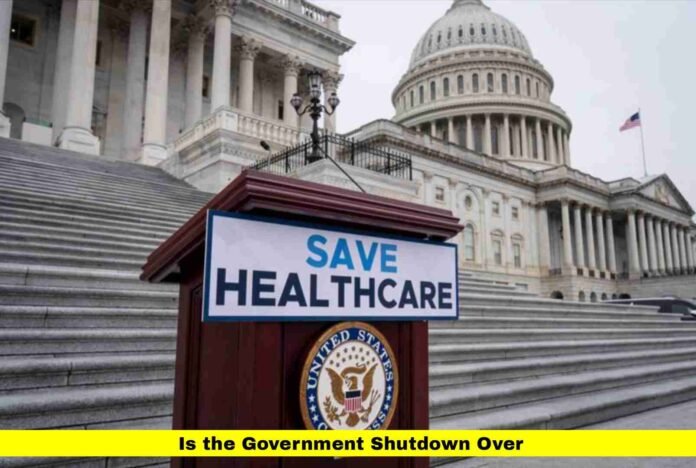

The question “is the government shutdown over” has finally been answered — yes, the shutdown officially ended after President Donald Trump signed the funding bill on November 12, 2025. This marks the conclusion of the longest federal government shutdown in U.S. history, lasting a record 43 days. Federal operations have now resumed, but the aftereffects of the shutdown are still being felt across the nation.
How the Government Shutdown Finally Ended
After weeks of tense negotiations, both chambers of Congress reached an agreement to end the shutdown. The U.S. Senate passed the government funding package first, followed by the House of Representatives, which approved it in a 222–209 vote. President Trump signed the bill into law late on November 12, restoring federal funding and reopening government offices across the country.
The legislation provides a temporary spending extension through January 30, 2026, preventing another immediate lapse in funding. The deal represents a political compromise — one that restores stability for now but leaves unresolved disputes over major policy issues.
What the Funding Bill Includes
The newly signed funding package restores government operations and includes several crucial measures to stabilize federal services and support workers affected by the shutdown.
It authorizes back pay for hundreds of thousands of furloughed employees, ensuring that federal workers receive compensation for missed paychecks during the shutdown. It also reverses more than 4,000 layoffs proposed by agencies during the closure.
However, the bill does not include an extension of the Affordable Care Act (ACA) tax-credit subsidies, which was a key demand by Democrats throughout the funding standoff. This omission remains a major point of contention and is expected to spark another legislative battle in December.
Why the Shutdown Happened
The 2025 shutdown began on October 1, 2025, after Congress failed to approve a new budget or a continuing resolution to keep government operations running. The primary dispute centered on healthcare funding, with Democrats insisting that any funding measure must include the ACA subsidy extensions, while Republicans opposed tying healthcare policy to budget approvals.
As negotiations dragged on, government agencies ran out of funding, leading to widespread furloughs and the suspension of essential public services. The standoff became deeply political, with both sides blaming each other for the record-breaking shutdown that stretched into its seventh week.
Impact on Federal Employees and Services
The shutdown had a massive impact across the federal workforce and public services. Around 900,000 government employees were either furloughed or forced to work without pay. Many families struggled with bills and delayed payments, despite assurances that back pay would eventually be provided.
Essential services were hit hardest:
- The Federal Aviation Administration (FAA) faced major staffing shortages, resulting in flight cancellations and delays at airports nationwide.
- Food assistance programs, including SNAP (Supplemental Nutrition Assistance Program), operated on limited reserves and risked running out of funds for millions of low-income Americans.
- National parks, museums, and public institutions closed or limited access, affecting tourism and local economies.
Economic experts estimate that the 43-day shutdown cost the U.S. economy between $7 billion and $11 billion in lost output, making it one of the most damaging shutdowns in modern history.
Reopening and Recovery
Now that the government shutdown is over, federal departments and agencies are gradually resuming full operations. Paychecks are being processed, and workers are returning to their posts. However, the recovery process will take time.
Air traffic control and TSA operations are expected to take several weeks to fully stabilize, as employees return and systems are recalibrated. Social service agencies are also working through backlogs caused by weeks of inactivity. While federal websites, helplines, and grant programs have resumed, the administrative delays created by the shutdown may continue to affect processing times for months.
Unresolved Issues and the Road Ahead
While the immediate crisis has ended, the political and fiscal debates behind the shutdown are far from over. The Affordable Care Act subsidy extension — the very issue that triggered the funding stalemate — remains unresolved.
Democrats are pushing for a separate vote on the ACA provision before the end of December 2025, but Republicans have yet to agree on the terms. The January 30, 2026 funding deadline also looms large, meaning lawmakers must once again come to the table soon to negotiate long-term appropriations.
If no new budget agreement is reached by that date, the country could once again face another partial government shutdown — though most analysts believe Congress will try to avoid another political and economic crisis.
Economic and Political Consequences
The shutdown has already had major political implications. Public approval ratings for both parties declined during the standoff, but the administration faced particularly sharp criticism for its handling of the crisis.
Economically, the shutdown caused measurable disruptions in consumer confidence, travel, and small business operations. Many contractors who provide services to federal agencies may never recover their financial losses. Analysts predict that while the economy will rebound, some effects — like the delay in infrastructure projects and regulatory approvals — may persist for quarters to come.
What Americans Can Expect Next
With the government now back in operation, attention turns to long-term fiscal stability. Agencies are working to clear backlogs in benefits, tax processing, and permits. Federal employees are receiving back pay, though some have reported delays due to system overloads.
For the public, services like airport operations, food safety inspections, and social security offices are once again functioning at full capacity. However, the political tension in Washington suggests that the reprieve could be temporary if new spending disputes emerge early next year.
Conclusion
In short, the answer to “is the government shutdown over” is yes — it officially ended on November 12, 2025, after President Trump signed the bipartisan funding bill. While this brings immediate relief to millions of Americans and federal workers, the challenges ahead remain significant. The government’s reopening is just the first step toward rebuilding public trust, restoring economic stability, and preventing another crisis in 2026.
If you experienced the effects of the shutdown — from delayed services to missed paychecks — share your thoughts in the comments below and let your voice be heard.