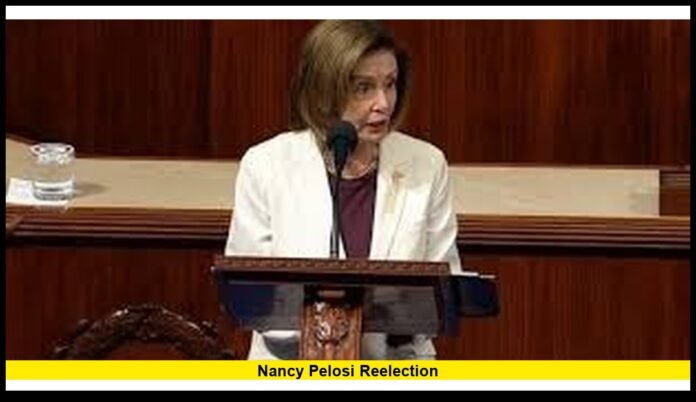

Pelosi’s Announcement Marks a Historic Turning Point in U.S. Politics
Nancy Pelosi, one of the most influential figures in American politics and the first woman to serve as Speaker of the House, has officially announced she will not seek reelection to Congress. This decision puts an end to any plans for a Nancy Pelosi reelection campaign, closing a remarkable chapter in U.S. political history that spans nearly four decades.
Pelosi, who has represented San Francisco’s 11th Congressional District since 1987, made her announcement on November 6, 2025. At 85 years old, she stated that she will complete her current term but will not be on the ballot in 2026. Her decision comes as the Democratic Party undergoes a generational transition and prepares for new leadership in both Congress and the state of California.
A Four-Decade Career Defined by Power, Persistence, and Progress
Nancy Pelosi’s political career is unmatched in its scope and longevity. Since first entering Congress in the 1980s, she has served under multiple presidents, steered landmark legislation, and guided the Democratic Party through some of its most turbulent times. Her leadership style — tough, strategic, and disciplined — earned her both admiration and criticism across party lines.
As Speaker, Pelosi oversaw pivotal moments in U.S. history:
- Passage of the Affordable Care Act under President Barack Obama.
- Two impeachment proceedings against former President Donald Trump.
- Economic relief efforts during the COVID-19 pandemic.
- Infrastructure and climate legislation under President Joe Biden.
She broke barriers as the first woman to wield the Speaker’s gavel and became a symbol of Democratic resilience. Throughout her tenure, Pelosi maintained a strong focus on health care, environmental reform, and social equity — issues that defined her public service.
Why Pelosi’s Decision Matters Now
The end of any Nancy Pelosi reelection campaign represents more than one lawmaker’s retirement — it signals a profound generational shift within the Democratic Party. Pelosi’s exit paves the way for a new era of leadership, one that will likely be shaped by younger voices and more progressive policies.
Key reasons behind her decision include:
- Age and longevity: At 85, Pelosi has served nearly 40 years in Congress — longer than most active members.
- Leadership transition: She stepped down from her role as House Democratic Leader in 2022 but remained a strong influence.
- Family and legacy: Pelosi has expressed a desire to spend more time with her family while continuing to support public service efforts outside of elected office.
Her announcement has prompted emotional reactions from both allies and opponents. President Joe Biden called her “the most effective Speaker in American history,” while Republican leaders acknowledged her unmatched influence, even as they disagreed with her policies.
What Happens Next for San Francisco’s 11th District
With Pelosi not seeking reelection, her long-held seat in California’s 11th District will become one of the most closely watched contests in the 2026 midterm elections.
Key points to watch:
- The district is heavily Democratic, but Pelosi’s departure opens the door for a new generation of local leaders.
- Several California politicians are expected to announce their candidacy in the coming months.
- The election could serve as a test of how progressive or centrist the future of San Francisco politics will be.
Pelosi has pledged to help ensure a “smooth transition” and to support candidates who reflect her district’s values. However, she will not endorse anyone publicly until closer to the primary season.
The National Impact of Pelosi’s Exit
Beyond her district, Pelosi’s decision will reshape the balance of power within the Democratic Party. Her unmatched fundraising ability, deep institutional knowledge, and extensive political network have been crucial for maintaining Democratic control in the House.
Her retirement could mean:
- New leadership opportunities: Younger Democrats may now rise into senior committee and leadership positions.
- Strategic shifts: The Democratic Party could reexamine its message ahead of the 2026 and 2028 elections.
- Legacy politics: Pelosi’s legislative achievements will likely be studied and debated for years, influencing how future leaders define effective governance.
Many observers note that while she is leaving elected office, Pelosi’s influence will continue behind the scenes — through mentorship, policy advocacy, and involvement in philanthropic and civic causes.
The Legacy of Nancy Pelosi’s Reelection Campaigns
Over her decades in office, Nancy Pelosi’s reelection bids were rarely competitive — a reflection of both her popularity and her district’s deep Democratic loyalty. Yet, every campaign reinforced her image as a disciplined and effective politician.
Her legacy includes:
- Earning respect across generations: From younger progressives to longtime party stalwarts, Pelosi maintained the ability to unify Democrats under common goals.
- Proving that experience matters: Her command of procedure and strategy redefined what it means to lead in the House.
- Inspiring women in politics: Pelosi opened doors for countless women who would later serve in Congress, state legislatures, and city councils across the nation.
As she exits, Pelosi leaves behind not only legislation but also a political roadmap — one that shows how resilience, intellect, and negotiation can shape American democracy.
What Pelosi’s Retirement Symbolizes for U.S. Politics
The absence of a Nancy Pelosi reelection campaign underscores a major shift in Washington. It highlights the gradual passing of the torch from older generations of lawmakers to younger voices eager to define the next chapter of American governance.
Her decision also reflects the realities of modern politics: heightened partisanship, media scrutiny, and public fatigue with long-serving officials. In this context, Pelosi’s departure serves as both a conclusion and a new beginning — closing the door on one of the most consequential political careers in U.S. history.
Looking Ahead: The Future Without Pelosi in Congress
As Pelosi prepares to retire in January 2027, attention turns to who will carry her legacy forward. Her influence will linger in policy debates, campaign strategy, and the Democratic Party’s identity.
For constituents in San Francisco, this marks a chance to reimagine local representation. For Democrats nationwide, it’s an opportunity to chart a fresh direction while honoring the foundation Pelosi built.
And for Pelosi herself, this moment represents a full-circle return to the core of her public service philosophy: leadership grounded in community, conviction, and continuity.
Final Thoughts
Nancy Pelosi’s choice not to seek reelection is both a personal and political milestone. It signifies the end of one of the most storied congressional careers in U.S. history and sets the stage for a new era of Democratic politics.
Her departure reminds Americans that leadership evolves — and that every political era eventually gives way to the next.
Share your thoughts below: What do you think Pelosi’s retirement means for the Democratic Party and the future of Congress?