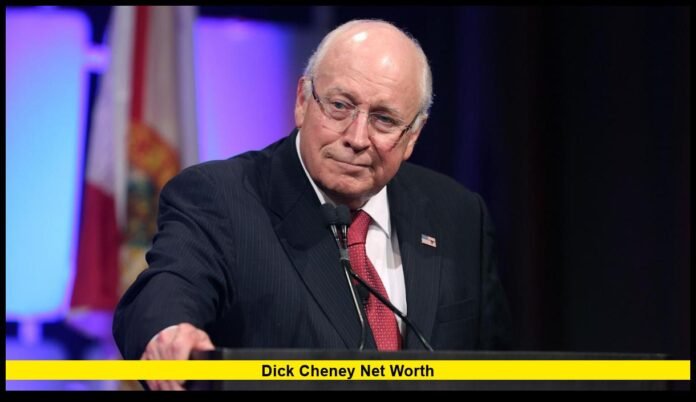

Dick Cheney net worth continues to draw attention more than a decade after his time in the White House. As of 2025, the former U.S. vice president’s estimated fortune stands at around $90 million, built through decades of public service, private-sector leadership, and long-term investments. His financial journey mirrors a broader story of power, business, and strategic decision-making in modern America.
Early Foundations of a Political Power Player
Richard Bruce Cheney was born on January 30, 1941, in Lincoln, Nebraska, and raised in Casper, Wyoming. His early life reflected middle-class modesty, but his ambition was evident from a young age. After attending Yale University and later earning both bachelor’s and master’s degrees in political science from the University of Wyoming, Cheney set his sights on Washington, D.C.
His entry into politics began in the late 1960s when he joined the staff of Donald Rumsfeld, then a rising figure in the Nixon administration. This mentorship helped shape Cheney’s approach to governance and strategy, paving the way for a career that would span both government and private enterprise — and ultimately build the foundation of his substantial net worth.
Climbing the Political Ladder
Throughout the 1970s and 1980s, Cheney built an impressive political résumé. He served as White House Chief of Staff under President Gerald Ford from 1975 to 1977, a role that placed him among the youngest individuals ever to hold that position. Later, he represented Wyoming’s at-large congressional district for over a decade, chairing the House Republican Conference and earning a reputation as a disciplined, pragmatic policymaker.
His early government service provided steady income but, more importantly, established powerful connections across the defense and energy industries — sectors that would later play crucial roles in expanding his financial profile.
Secretary of Defense: Experience Meets Strategy
When President George H. W. Bush appointed Cheney as Secretary of Defense in 1989, his national prominence — and earning potential — grew. He oversaw Operation Desert Storm in 1991, managing one of the most efficient U.S. military operations in history. While federal salaries for Cabinet members were modest compared to corporate earnings, Cheney’s leadership on defense and security issues enhanced his stature in global circles.
This reputation opened lucrative post-government opportunities that would later define the largest portion of his net worth.
The Halliburton Chapter: Where Wealth Accelerated
In 1995, Cheney transitioned from public office to the private sector, accepting the position of CEO at Halliburton Company, a leading multinational in oilfield services and energy infrastructure.
During his five years at Halliburton, Cheney’s compensation included a base salary, performance bonuses, and millions in stock options. Under his leadership, Halliburton expanded internationally and increased revenues by more than 30%.
When Cheney left the company in 2000 to join George W. Bush’s presidential ticket, he had earned roughly $36 million in total compensation — a pivotal financial milestone. Much of his wealth today can be traced to this era, even after he placed his deferred compensation and stock options into a charitable trust to prevent conflicts of interest while serving as vice president.
Key Financial Highlights from Halliburton Tenure:
- CEO from 1995–2000
- Total compensation estimated at $36–40 million
- Stock options and investments grew substantially during tenure
- Continued to receive deferred payments in early 2000s
Halliburton remains central to the conversation about Dick Cheney net worth, as it represents the turning point where his government experience translated into major corporate wealth.
Vice Presidency and Public Service Income
From 2001 to 2009, Cheney served as Vice President of the United States under President George W. Bush, shaping national security and foreign policy during a period defined by the September 11 attacks, the War on Terror, and the invasions of Afghanistan and Iraq.
His official vice-presidential salary was about $230,000 per year, but Cheney’s long government tenure entitled him to federal pensions and benefits that continue to contribute to his annual income. These pensions, along with royalties and investment returns, form a steady financial backbone in his retirement years.
Despite leaving Halliburton before taking office, Cheney’s previous executive success meant that, by the end of his vice presidency, his total net worth had already placed him among the wealthiest living U.S. politicians.
Investments, Royalties, and Real Estate Holdings
Beyond his Halliburton wealth, Cheney’s fortune is diversified across stocks, bonds, and real estate. Financial disclosures and public reports suggest ownership in:
- Primary residences in Jackson Hole, Wyoming, and McLean, Virginia
- Investment portfolios focused on blue-chip and energy sector stocks
- Royalties from multiple books, including In My Time (2011) and Exceptional (2015)
He has also benefited from speaking engagements, private consulting, and appearances that align with his areas of expertise — national security, defense, and global energy policy. These activities, while secondary to his corporate wealth, help sustain his multimillion-dollar financial status.
Health Challenges and Personal Resilience
Cheney’s financial success unfolded alongside decades of serious health issues. Diagnosed with coronary artery disease in his 30s, he survived five heart attacks, multiple surgeries, and received a heart transplant in 2012.
His health story adds depth to his legacy: even amid major medical challenges, he continued to serve in high-pressure roles and later advocated for advancements in cardiac care. Cheney has contributed to medical research organizations and heart health charities, linking his philanthropic work to his personal journey.
Philanthropy and Charitable Contributions
Despite his reputation as a tough political strategist, Cheney has long supported a range of philanthropic causes, often away from the spotlight. His donations have supported:
- Veterans’ organizations and military family assistance programs
- Medical and heart disease research foundations
- Educational initiatives in Wyoming and across the United States
Through both direct giving and charitable trusts established during his Halliburton exit, Cheney has funneled millions toward public causes, further reflecting the broad impact of his accumulated wealth.
Family and the Next Generation of Leadership
Cheney’s family has also maintained a prominent place in American political life. His daughter, Liz Cheney, served as Wyoming’s at-large member of Congress from 2017 to 2023 and gained national attention for her leadership on the House Select Committee investigating the January 6 attack on the U.S. Capitol.
While Liz Cheney’s career has taken a different political direction from her father’s, the Cheney name continues to carry influence in both political and policy circles — a legacy supported by the financial resources that Dick Cheney net worth provides.
How Cheney’s Wealth Compares to Other Former Vice Presidents
A clearer picture of Cheney’s fortune emerges when compared to other U.S. vice presidents of the modern era:
| Vice President | Estimated Net Worth (2025) | Primary Source of Wealth |
|---|---|---|
| Dick Cheney | ~$90 million | Energy sector, investments |
| Al Gore | ~$300 million | Media ventures, green tech |
| Joe Biden | ~$10 million | Books, speaking fees |
| Mike Pence | ~$4 million | Salary, writing |
| Kamala Harris | ~$7 million | Legal career, public salary |
Cheney’s wealth stands out because it was largely self-made through corporate leadership, rather than inherited wealth or post-office opportunities in entertainment or publishing. His financial strategy emphasized long-term investments and stable industries, a contrast to other public figures who capitalized on media and technology trends.
Influence on Energy and Defense Economics
Cheney’s deep ties to energy and defense have continued to influence policy discussions even after his departure from office. He remains a symbolic figure representing the intersection of government policy and private enterprise — a combination that has long shaped American economic power.
His financial success demonstrates how decades of experience in both spheres can result in sustained wealth, particularly for those who understand the overlap between national priorities and global markets.
Public Perception and Legacy
Few American politicians evoke as much debate as Dick Cheney. To some, he embodies strategic brilliance and strong leadership during turbulent times; to others, he represents the controversial face of post-9/11 foreign policy.
Yet, beyond ideology, Cheney’s career illustrates a consistent theme: discipline, discretion, and financial foresight. His ability to navigate between public service and private enterprise has secured not only political impact but lasting financial independence.
Life After Washington
Since leaving public office, Cheney has embraced a quieter lifestyle focused on family and reflection. He continues to appear at select public events, contributes to think-tank discussions, and occasionally offers commentary on defense and energy issues.
In his personal time, Cheney enjoys life in Wyoming, maintaining the same practical and measured demeanor that characterized his decades in politics. While no longer a daily presence in the public eye, his name remains associated with power, policy, and prosperity.
A Wealth Built on Strategy, Timing, and Endurance
The evolution of Dick Cheney net worth underscores how strategic positioning and timing can shape both influence and wealth. From navigating national crises to leading one of the world’s largest energy corporations, Cheney’s story is one of adaptation, foresight, and determination.
His $90 million fortune represents not just financial achievement but also the culmination of a career defined by high stakes and historic impact. Whether admired or criticized, Cheney’s financial standing in 2025 remains a testament to how a blend of political skill and corporate acumen can create lasting wealth in American public life.
What do you think about Dick Cheney’s rise to wealth and his enduring influence on U.S. politics and business? Share your thoughts below and stay informed about future updates.