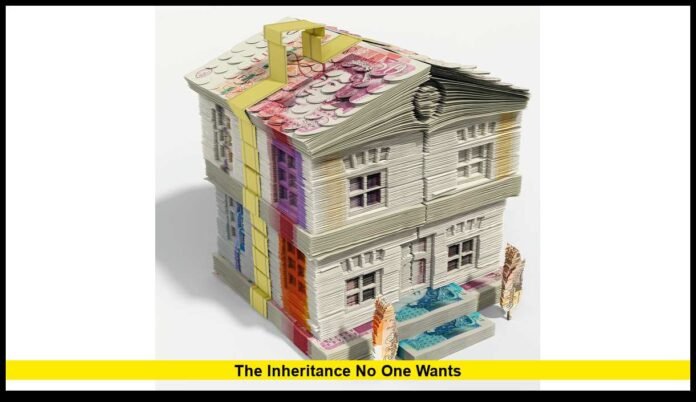

When most people imagine an inheritance, they think of a comforting nest egg — a home passed down through generations, a savings account built over a lifetime, or heirlooms filled with sentimental value. But in 2025, that picture looks very different for millions of Americans.
Across the country, families are confronting the inheritance no one wants — not wealth, but burdens: unpaid debts, dilapidated homes, overwhelming clutter, and even environmental costs that stretch beyond one lifetime.
With the baby boomer generation aging rapidly and younger Americans facing record financial pressures, this uncomfortable reality is reshaping the very meaning of inheritance in the United States.The Inheritance No One Wants
A Massive Wealth Transfer — and the Problems Hidden Within
Experts call it the largest wealth transfer in U.S. history. By 2045, more than $84 trillion is expected to pass from baby boomers and older generations to their heirs. But beneath the headline numbers lies a troubling truth: not all of that “wealth” is truly beneficial.
In 2025, the Federal Reserve reports that total household debt has reached $17.8 trillion, driven by mortgages, car loans, medical bills, and credit cards. When parents pass away, many of these obligations don’t disappear overnight. Instead, they complicate or even erase what might have been left behind.
“Families often expect an inheritance to solve financial problems,” says estate attorney Rachel Mendoza of Dallas. “But more often than not, they’re shocked to find that the estate has more liabilities than assets.”
Inheriting an older home, for example, might sound like a windfall — until you add up the property taxes, insurance, and $30,000-plus in needed repairs.
For many heirs, inheriting debt-laden property is like being handed a ticking time bomb. Some walk away entirely, leaving homes abandoned or surrendered to local governments. Others sell quickly, even at a loss, to escape the costs.
The New Face of Inheritance: Less Cash, More Complexity
In previous generations, inheritances often meant liquidity — savings accounts, investments, or pensions. Today, they’re far more complicated.
Financial analysts point to several reasons:
- Rising life expectancy means retirees spend down savings before passing away.
- Medical expenses remain the largest out-of-pocket cost for seniors.
- Property values have risen dramatically in some regions but stagnated or declined in others.
- Student loan co-signing and private debt can tie younger generations to financial obligations they never incurred.
As a result, more Americans are finding that what they inherit isn’t money — it’s responsibility.
Estate cleanout companies, probate lawyers, and tax professionals all confirm a surge in cases where beneficiaries choose to “disclaim” inheritances, legally refusing assets that would cost more to maintain than they’re worth.
The Emotional Weight of Possessions
Not every unwanted inheritance involves money. Often, it’s the physical and emotional weight of a lifetime’s belongings.
Across the U.S., adult children are faced with the daunting task of sorting through their parents’ homes — garages stuffed with decades of boxes, attics filled with forgotten furniture, and basements overflowing with “just-in-case” items.
The National Association of Professional Organizers estimates that Americans now spend over $38 billion annually on storage — much of it for items that future generations neither want nor need.
“People are attached to their stuff,” explains professional organizer Julia Cobb of Denver. “But when they’re gone, it becomes a logistical and emotional burden for their children.”
For millennials and Gen Z — who prioritize digital minimalism and smaller living spaces — this clutter feels overwhelming. Surveys show that nearly 60% of Americans under 40 don’t want to inherit family belongings, especially antiques, china sets, and bulky furniture.
In some cases, heirs are forced to spend thousands on cleanout services just to prepare a home for sale. For others, the process triggers emotional exhaustion. “It’s like going through someone’s life one drawer at a time,” says Cobb. “Every item tells a story — but you can’t keep every story.”
Environmental Debt: The Global Inheritance No One Asked For
While many families deal with financial or material inheritances, there’s another, much larger one facing all Americans — environmental inheritance.
In 2025, the National Oceanic and Atmospheric Administration (NOAA) confirmed that the U.S. has already experienced 28 billion-dollar weather disasters this year, the most ever recorded. From wildfires in California to hurricanes in Florida and droughts in the Southwest, the financial and emotional toll of climate change has become impossible to ignore.
“Young Americans are inheriting more than their parents’ homes or savings,” says environmental economist Dr. Sarah Langford of UC Davis. “They’re inheriting the cost of a warming planet — insurance premiums, rebuilding efforts, and even health impacts from pollution and extreme weather.”
In states like Florida, Louisiana, and California, families are increasingly walking away from inherited coastal properties, unable to afford skyrocketing flood insurance or repairs from recurring storm damage. Some have even coined a grim term for these legacies: “toxic inheritances.”
Abandoned Properties and the Rise of “Heirless Homes”
One visible outcome of the inheritance no one wants is the growing number of abandoned or “heirless” homes across the U.S.
In 2025, property data shows over 1.3 million homes nationwide sitting vacant due to unresolved estates or heirs who declined ownership. These properties often fall into disrepair, attracting vandalism or requiring government intervention for cleanup.
The problem is especially pronounced in older industrial regions — Ohio, Michigan, Pennsylvania — where property values have declined, and the cost of upkeep exceeds potential profits.
Local governments face tough decisions: demolish, resell, or repurpose these properties. Some have started land bank programs to reclaim and rehabilitate abandoned homes, while others face mounting costs to maintain or secure them.
In coastal and wildfire-prone states, the problem takes on a more urgent tone. Heirs frequently refuse damaged or condemned properties after natural disasters, leaving municipalities with unpaid taxes and mounting cleanup expenses.
The Cultural Divide: Baby Boomers vs. Millennials
Perhaps the starkest contrast in today’s inheritance landscape is the generation gap between those leaving assets and those receiving them.
For baby boomers, who still control more than 50% of U.S. wealth, leaving behind a home or possessions is a matter of pride — a symbol of success and family continuity. For millennials and Gen Z, who face record housing prices and student debt, it often feels like an impossible responsibility.
A recent Bankrate survey found that:
- 64% of Americans under 40 would sell an inherited home rather than move in.
- 45% said they would use the proceeds to pay off debt.
- Only 12% would keep a property as a long-term investment.
“The American dream used to be about homeownership,” says sociologist Dr. Michael Harriman of Georgetown University. “Now, for many young adults, it’s about freedom from financial anchors. They don’t want a house they can’t afford to fix or a mortgage they didn’t choose.”
This generational rift reflects broader changes in values — from ownership to flexibility, from accumulation to experience. And it’s redefining what inheritance means for the next era.
The Role of Estate Planning: Avoiding the Burden
With the inheritance no one wants becoming increasingly common, financial planners stress the importance of proactive estate planning.
Yet, as of 2025, only 34% of U.S. adults have an estate plan — meaning most families will face confusion, disputes, and potential financial strain when a loved one dies.
Estate lawyers recommend three crucial steps:
- Document Everything Clearly
Create a will, update beneficiaries, and outline who gets what — and what should be sold or donated. - Plan for Debts and Taxes
Identify outstanding loans, property taxes, or medical bills. The estate can’t distribute assets until these are resolved. - Talk About It Early
Open conversations between parents and children can prevent conflict later. It’s better to discuss uncomfortable realities now than fight about them later in probate court.
“Estate planning isn’t just about money,” says attorney Melissa Carter of New York. “It’s about giving your loved ones clarity and peace of mind. The goal is to prevent your family from inheriting chaos.”
The Hidden Digital Inheritance
In the digital age, inheritance doesn’t stop at property or possessions. It extends into cyberspace.
Americans now own vast digital assets — from social media accounts and cloud photos to cryptocurrency wallets and online businesses. When someone dies without a digital estate plan, families face enormous challenges accessing or deleting these accounts.
Tech platforms are slowly adapting:
- Google’s Inactive Account Manager allows users to designate a data-sharing contact.
- Apple’s Legacy Contact feature lets heirs access iCloud data.
- Coinbase and other crypto platforms now provide estate transfer options — but only if users prearrange access.
Without these steps, heirs may lose valuable digital assets permanently — or worse, face identity theft risks if accounts remain open.
Digital law experts recommend including account access information and passwords in estate documents. “It’s the 21st-century version of leaving a house key,” says cybersecurity attorney Leo Jameson.
The Psychological Cost of Unwanted Inheritance
For many, the inheritance no one wants is not a financial issue but an emotional one.
Sorting through a lifetime of a parent’s possessions, managing bills, or selling a family home can stir up grief, guilt, and anxiety. Psychologists describe this as “inherited emotional labor” — the psychological work that comes with managing a loved one’s life after death.
“Grief and responsibility are a painful combination,” says grief counselor Dr. Alicia Grant of Boston. “People often feel torn between honoring memories and facing reality. They feel guilty selling or discarding items, even when keeping them isn’t practical.”
Experts recommend that families start decluttering and discussing plans early, long before a crisis. Downsizing, donating, or digitizing meaningful items can make the eventual process far less painful for loved ones.
The Legal Right to Say ‘No’
What many don’t realize is that heirs have the right to refuse an inheritance.
This process, called “disclaiming”, allows someone to legally decline property, money, or assets. It’s often done when the costs of taxes, repairs, or debt outweigh the benefits.
In 2025, estate law professionals report a steady increase in disclaimers — especially for real estate in high-tax or disaster-prone areas.
To disclaim, heirs must:
- Submit a written statement within nine months of the death.
- Avoid using or benefiting from the property.
- Follow state-specific probate rules.
Refusing an inheritance may feel emotionally difficult, but in many cases, it’s the most financially responsible choice.
By the Numbers: America’s Inheritance Landscape (2025)
| Category | Statistic (2025) |
|---|---|
| Total projected wealth transfer (2020–2045) | $84 trillion |
| Total U.S. household debt | $17.8 trillion |
| Americans with estate plans | 34% |
| Homes abandoned or disclaimed annually | 1.3 million |
| Americans with medical debt | 20 million |
| Millennials who don’t want family heirlooms | 59% |
| Average estate settlement time | 12–18 months |
| Average estate cleanout cost | $5,000–$15,000 |
Looking Ahead: Rethinking What We Leave Behind
As the U.S. population ages, the inheritance no one wants is forcing Americans to rethink what legacy really means.
Financial experts say the key to reversing this trend lies in intentional planning, transparency, and sustainability — leaving behind not just assets, but clarity.
That means teaching financial literacy, reducing debt, addressing climate impact, and simplifying possessions. It also means redefining inheritance itself — not as the transfer of material things, but as the preservation of values, stories, and emotional well-being.
“Our true inheritance isn’t in what we own,” says sociologist Dr. Harriman. “It’s in the lessons we leave — about responsibility, compassion, and preparing for the future.”
Have you or someone you know dealt with an inheritance that turned out to be more of a burden than a blessing? Share your story in the comments below and join the discussion about how America can build a smarter, more sustainable legacy for the generations ahead.
FAQ: The Inheritance No One Wants
1. What does “the inheritance no one wants” mean?
It refers to inheritances that bring financial, emotional, or environmental burdens — such as debt, property costs, or excessive possessions.
2. Can someone refuse an inheritance?
Yes. Through a legal process called disclaiming, heirs can reject property or money that would cost more to keep.
3. What are the most common unwanted inheritances in the U.S.?
Homes needing repairs, unpaid debt, medical bills, or cluttered estates filled with unwanted possessions.
4. How can families prevent inheritance problems?
By creating estate plans, discussing wishes openly, reducing debt, and simplifying assets.
5. What role does climate change play in inheritance issues?
Rising disasters and insurance costs make some properties too expensive or risky to maintain — especially coastal and wildfire-prone homes.
Disclaimer:-This article uses verified information from government reports, financial studies, and estate law data current as of November 2025. It is for informational purposes only and not legal or financial advice. Readers should consult qualified professionals for guidance on individual estate or inheritance matters.