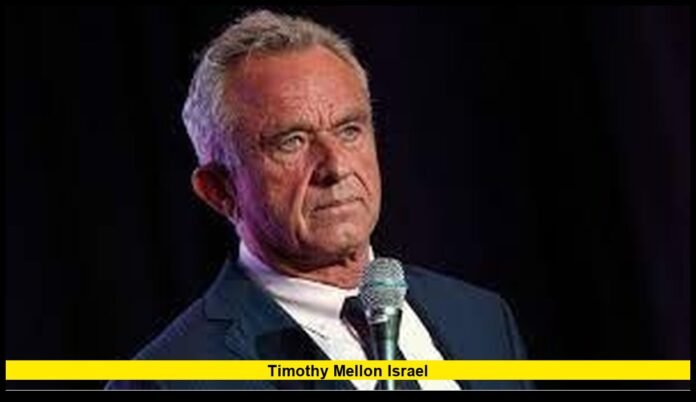

The phrase Timothy Mellon Israel has been appearing more frequently in public and political discussions, especially as attention grows around the role wealthy donors play in shaping U.S. domestic and foreign policy. Timothy Mellon, a billionaire investor and heir to the Mellon family banking legacy, has become one of the most prominent private political donors in recent years. His financial contributions, public positions, and philanthropic decisions have prompted questions about his influence, especially where it may intersect with U.S. strategic relationships, including the country’s long-standing partnership with Israel.
This article explains who Timothy Mellon is, why his actions have drawn national attention, and how his political involvement is being discussed in connection with U.S. policy toward Israel.
Who Is Timothy Mellon?
Timothy Mellon, born in 1942, is the grandson of financier and former U.S. Treasury Secretary Andrew Mellon. He built his career in transportation and investment, maintaining a generally private lifestyle. Despite his preference for privacy, he became a central figure in national conversations because of the sheer scale of his political donations.
Over the past decade, Mellon has contributed hundreds of millions of dollars to political causes, organizations, and campaigns—primarily aligned with conservative platforms. This level of giving has placed him among the top political donors in the United States, granting him significant influence within certain policy circles.
While Mellon rarely speaks publicly or grants interviews, his contributions reveal clear patterns in the areas of government, economic regulation, border policy, and defense.
Why Timothy Mellon’s Name Appears Alongside Israel
The association between Timothy Mellon and Israel does not stem from direct public statements or specific disclosed donations made to Israeli institutions. Instead, the connection arises from three key dynamics within U.S. politics:
- Many of the political organizations and candidates Mellon supports are strong advocates of continued U.S.-Israel strategic cooperation.
These include policies related to military assistance, intelligence coordination, and diplomatic alignment. - Mellon has shown particular interest in national defense policy.
The United States and Israel share deep defense ties, including military funding, joint technology development, and security coordination. - In political commentary and analysis, major donors are often discussed in relation to foreign policy outcomes shaped by the candidates they support.
Because U.S.-Israel relations are a central foreign policy topic, donors associated with influential policy shaping often enter the conversation.
It is important to note that there is currently no confirmed documentation publicly linking Mellon to direct financial contributions to the Israeli government or Israeli nonprofit institutions. The connection discussed in media and public conversation is political and strategic, not transactional.
Recent Developments Elevating Mellon’s Public Profile
Timothy Mellon gained renewed nationwide attention after making a major private donation intended to support U.S. government functions during a funding disruption. While the exact operational and legal details surrounding that donation continue to be discussed by analysts and government observers, it brought Mellon into sharper public focus.
This event revealed how a single donor can temporarily stabilize or influence national operations during political stalemate—raising debate about the extent to which private individuals should be able to intervene in matters traditionally handled by Congress and federal agencies.
The increased visibility also revived discussion of Mellon’s larger role:
Is a billionaire donor shaping national and foreign policy outcomes through financial influence?
This question is central to the current public dialogue around Timothy Mellon.
How Mellon’s Influence Shows Up in Policy Alignment
While Mellon does not appear in congressional hearings or diplomatic delegations, his influence shows up in several ways:
1. Campaign Financing
His donations help support candidates and political groups that shape U.S. foreign and defense priorities. These candidates often advocate for strong global alliances, including with Israel.
2. Issue-Based Advocacy
Mellon-directed funding has supported platforms emphasizing:
- Military readiness
- Border security
- Strategic alliances abroad
- Limited government spending in non-defense areas
These priorities align with policy frameworks that include sustained defense cooperation with Israel.
3. Public Narrative Reinforcement
Well-funded political messaging influences public sentiment and legislative pressure. While Mellon does not directly broadcast messages himself, groups funded through his donations do.
Debate Surrounding Wealth, Influence, and Global Policy
The discussion around Timothy Mellon Israel highlights a broader American debate:
How much power should wealthy individuals have in shaping national and international policy?
Supporters argue:
- Mellon is exercising his democratic right to support the causes he believes in.
- His contributions help maintain government functions, strength, and stability.
- Wealthy donors have always been part of the political fabric of the United States.
Critics argue:
- Large-scale donations give individuals disproportionate influence compared to ordinary citizens.
- Private funding in areas like defense or foreign policy can bypass democratic checks.
- Lack of transparency makes it difficult for the public to evaluate donor motivations.
These differing viewpoints are shaping how Timothy Mellon is discussed—not only in political circles, but in everyday conversations about fairness and democracy.
The U.S.-Israel Context Moving Forward
Israel remains one of the United States’ closest international partners, especially in defense and intelligence cooperation. Political donors who support strong national defense typically align with this partnership even if they do not publicly promote it directly.
As Mellon continues to support political causes that prioritize strategic security, his name is likely to continue appearing in public discussions that connect domestic political influence to international relationships.
Whether his role expands in ways directly tied to Israel is something analysts and journalists will continue to watch.
Conclusion
The ongoing narrative surrounding Timothy Mellon Israel is less about a specific transaction and more about the intersection of wealth, power, and policy. Mellon has become one of the most influential private donors in American politics, and with influence comes questions—especially when it touches on geopolitical alliances like the one between the United States and Israel.
Understanding his role means looking at the broader currents of political funding, foreign policy alignment, and the evolving nature of public power in America.
As the story develops, Americans will continue watching how Mellon’s influence shapes both national priorities and global partnerships. Feel free to share your thoughts below on what this means for the future of U.S. policy.