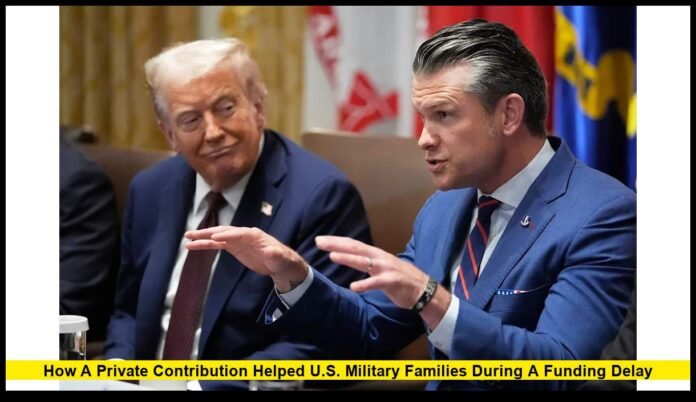

The 130 million donation that was used to support U.S. military service members during a federal funding delay has become one of the most talked-about developments in recent national news. The contribution ensured that active-duty military personnel continued to receive pay while lawmakers worked to resolve a temporary suspension of federal budget flow. For many military families, the donation brought relief at a moment when uncertainty was rising.
Service members do not have the ability to pause their work when government funding stalls. Their missions, responsibilities, and operations continue every day—regardless of politics. Because of this, their paychecks are not simply payments. They are essential to housing stability, family routines, childcare arrangements, and long-term planning.
The fact that a private individual stepped in with a 130 million donation to cover that pay during a funding gap has sparked both gratitude and reflection across the United States. For some, it stands as an extraordinary act of generosity. For others, it raises serious questions about government reliability and national priorities. Yet, most Americans agree on one thing: military families deserve steady and dependable support.
Why This Donation Happened
When federal funding is delayed, government agencies must temporarily change how they allocate resources. Critical defense operations continue, but certain administrative systems—including payroll—can become disrupted. If a shutdown or funding gap occurs at the wrong moment in the payment cycle, service members may face delays in receiving their income.
This is what raised concern. Military families were watching the calendar closely. Bills do not stop because politics take time.
The 130 million donation arrived specifically to prevent a paycheck interruption. It served as a bridge—helping maintain normal pay until the government finalized accountability measures.
For thousands of service members and their families, this donation did more than fill a financial gap. It prevented a crisis of uncertainty.
The Real Impact on Military Families
Military families often carry additional emotional and logistical strain compared to civilian households. Frequent relocations, deployments, unpredictable schedules, and long separations are common. Stability in income can make the difference between feeling grounded and feeling overwhelmed.
If paycheck delays had gone into effect, families may have faced:
- Late mortgage or rent payments
- Disruptions in childcare or after-school care
- Delayed medical or therapy appointments
- Immediate stress during periods of separation
Instead, because of the 130 million donation, families were able to continue their routines—even as the national funding situation remained unresolved.
The significance of that stability cannot be overstated. Stress inside military households affects emotional well-being, relationship health, and mental resilience. Financial security supports the strength of the service member—and by extension, the mission itself.
What Makes This Donation Unusual
Large private donations to organizations that support service members—such as veteran assistance groups or military relief charities—are not uncommon. However, a donation directly supplementing Department of Defense payroll systems is extremely rare.
The uniqueness of the 130 million donation comes from several characteristics:
| Factor | Meaning |
|---|---|
| The Amount | $130 million is an exceptionally large private contribution. |
| The Purpose | It covered military payroll—not equipment or programs. |
| The Timing | It occurred during a federal budget delay, when families were at risk of missing pay. |
| The Donor | The contribution was anonymous, signaling no personal publicity motive. |
This was not symbolic charity.
It was direct financial intervention in a core government responsibility.
How Americans Responded
The donation sparked strong emotional reactions because it touched on sensitive national values: respect for service members and expectations of government reliability.
Many people responded with deep appreciation. They expressed gratitude that someone stepped in during a moment of uncertainty. To them, the 130 million donation reflected honor, commitment, and compassion toward those who serve the country.
At the same time, others felt uneasy. They raised thoughtful questions:
If essential salaries require private rescue, what does that say about the strength of the systems meant to support them?
Here is how both perspectives can be understood:
Positive view:
- The donation showed gratitude for those who protect the nation.
- It was an immediate response to a real, urgent need.
- It helped families avoid unnecessary hardship.
Cautious view:
- Essential government duties should not rely on private funding.
- Depending on donations for payroll sets a concerning precedent.
- Service members should not be financially vulnerable to political delays.
These viewpoints differ, but they share the same foundation:
support for military families.
The Emotional Meaning Beyond the Money
For many military families, the donation did something deeply significant: it communicated that their well-being mattered.
When service members are deployed, stationed overseas, or separated from family, financial security becomes more than numbers. It becomes emotional safety.
A paycheck is steady ground.
The 130 million donation gave families the ability to breathe, to stay focused, to avoid fear about whether they could pay for groceries or utilities or gas to commute to base.
In uncertain times, feeling seen and valued can mean everything.
The Larger Conversation About Government Responsibility
The donation also opened a broader civic discussion:
- Should military pay ever depend on congressional timing?
- Should service member salaries be exempt from funding delays?
- Should emergency backup funding systems be made permanent?
Many people believe that military pay should remain protected regardless of political negotiation timelines. The role of service members is too important, and the demands placed on their families are too great, to allow financial instability to enter the picture.
Others argue that while the 130 million donation was helpful, the long-term solution must come from legislative and structural policy—not from private intervention.
Most agree on the core message:
Those who serve the nation should not have to worry about whether their paychecks will arrive.
Looking Ahead
The donation addressed an urgent need. But the larger lesson is clear:
Supporting service members requires predictable systems, not occasional rescue.
Military service is built on commitment, discipline, and sacrifice. The strength of a service member rests on the strength and safety of their home life. When families are stable, service members can focus on their duties with clarity—not worry.
Ensuring this stability must be a national priority.
Final Thought
The 130 million donation is both a powerful act of generosity and a meaningful reminder of what military families navigate every day. It prevented a moment of hardship and showed that compassion can appear in unexpected ways. At the same time, it highlights the need for consistent, reliable systems of support—so families do not have to rely on extraordinary measures.
If this story resonates with you or connects to your own experience, feel free to share your perspective. Someone else may feel the same and be grateful to know they’re not alone.