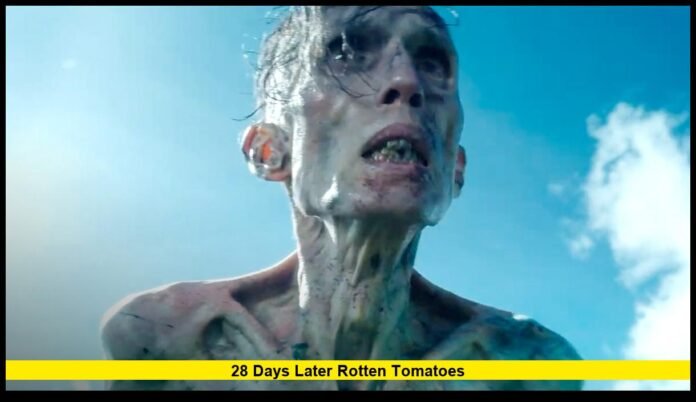

The 28 Days Later Rotten Tomatoes score has stood the test of time. More than twenty years after Danny Boyle’s 2002 release shocked audiences, the film continues to hold a strong 87% approval rating from critics. That number isn’t just a statistic—it’s a sign of how the movie redefined modern horror and still resonates with audiences in 2025.
With the recent arrival of 28 Years Later, the first new entry in the franchise in nearly two decades, the conversation around the original film has returned to center stage. For longtime fans and new viewers alike, the Rotten Tomatoes rating remains a benchmark of why 28 Days Later is considered one of the greatest horror films of its generation.
Rotten Tomatoes Explained: What the Score Means
Before diving deeper, it’s important to understand what the 28 Days Later Rotten Tomatoes score represents. Rotten Tomatoes aggregates critic reviews and assigns a percentage based on how many are positive. An 87% score means that nearly nine out of ten critics praised the movie.
The film also has an average rating of about 7.4/10, which reflects the quality of those positive reviews. When a movie maintains such a score for over two decades, it signals a legacy that has outlasted most of its contemporaries.
Why Critics Loved 28 Days Later
The strong 28 Days Later Rotten Tomatoes score is rooted in several key qualities that critics praised when it debuted in 2002:
- Reinvention of the Zombie Genre: Instead of slow, lumbering zombies, Boyle introduced terrifyingly fast “infected” humans. This innovation set the tone for modern zombie storytelling.
- Atmosphere and Cinematography: Shot on digital video, the movie’s bleak, gritty visuals gave it a haunting realism that critics recognized as groundbreaking.
- Human Storytelling: Beyond the scares, the film explored themes of survival, morality, and human connection in times of collapse.
- Relevance: Even in 2002, its themes of viral infection and societal breakdown felt unsettlingly possible, adding weight to the horror.
These factors combined to make the movie more than just another horror release—it became a cultural event.
Comparisons Within the 28 Franchise
To truly understand 28 Days Later Rotten Tomatoes performance, it helps to see how it stacks up against its sequels:
| Film | Release Year | Rotten Tomatoes Score | Notes |
|---|---|---|---|
| 28 Days Later | 2002 | 87% | Critically acclaimed, credited with reinventing zombie horror. |
| 28 Weeks Later | 2007 | ~73% | Well-received but less iconic; more action-driven than emotional. |
| 28 Years Later | 2025 | ~95% | Current release earning rave reviews, hailed as a powerful continuation. |
Even as the franchise has grown, the original maintains a unique position. It’s the foundation, the one that proved the concept could work and inspired the sequels. While 28 Years Later currently enjoys even higher praise, its success only enhances the reputation of the original.
Audience Reception and Legacy
The 28 Days Later Rotten Tomatoes critic score is important, but so is the audience perspective. Interestingly, audience scores have consistently matched critic approval, showing rare agreement.
Fans frequently cite:
- The terrifying realism of empty London streets.
- The emotional performances, especially by Cillian Murphy in one of his breakout roles.
- The balance between action and psychological horror.
Even younger viewers discovering the film today often note that, despite early 2000s technology, the story feels timeless.
Why 28 Days Later Still Resonates in 2025
The fact that 28 Days Later Rotten Tomatoes numbers remain strong in 2025 isn’t accidental. Several reasons explain its ongoing relevance:
- Pandemic Parallels
In the wake of global health crises over the past few years, the film’s themes of viral outbreak and fear of contagion feel chillingly familiar. - Influence on Modern Media
From television shows like The Walking Dead to blockbuster films, the DNA of 28 Days Later is evident. Many creators openly acknowledge its impact. - Streaming Culture
With the rise of streaming platforms, classics like 28 Days Later are more accessible than ever. This brings new waves of viewers, each contributing to its enduring popularity. - Franchise Revival
The release of 28 Years Later has naturally brought the original back into public discussion, boosting interest in its Rotten Tomatoes performance.
Strengths and Weaknesses Noted by Critics
No film is without criticism, even one as highly rated as 28 Days Later.
Strengths most often cited:
- Innovative use of fast-moving infected.
- Haunting, minimalist score by John Murphy.
- Strong performances by Cillian Murphy, Naomie Harris, and Brendan Gleeson.
- Raw cinematography that amplified realism.
Weaknesses occasionally mentioned:
- Some felt the final act shifted too much toward conventional action tropes.
- Certain digital visuals appear dated by today’s standards.
Yet, even these critiques rarely diminish overall appreciation. Instead, they highlight how ambitious the film was for its time.
How Rotten Tomatoes Shapes Its Legacy
The 28 Days Later Rotten Tomatoes score isn’t just a number—it has become part of how the film is marketed, remembered, and recommended. Streaming services often highlight the Certified Fresh badge, using it as a mark of quality. Fans also use the score as a shorthand to argue for its status as one of the best horror films of all time.
Comparison to Other Early 2000s Horror
To understand the weight of that 87% score, consider the horror landscape of the early 2000s. Many films from that period—such as remakes and formulaic slashers—received mixed or poor reviews. 28 Days Later stood out as one of the rare critically acclaimed entries, setting itself apart from the competition.
This distinction explains why its Rotten Tomatoes score still matters in discussions about the evolution of modern horror.
Timeline of Rotten Tomatoes Relevance
- 2002: Release year, immediate positive reviews push score into the 80s.
- 2007: 28 Weeks Later prompts renewed interest; original maintains its strong rating.
- 2010s: Streaming platforms introduce the film to new audiences, keeping reviews fresh.
- 2020–2021: Global pandemic brings eerie parallels, sparking new discussions and viewership spikes.
- 2025: With 28 Years Later in theaters, fans revisit the original, reaffirming its Certified Fresh status.
Quick Facts: 28 Days Later Rotten Tomatoes
| Detail | Information |
|---|---|
| Critic Score | 87% |
| Audience Score | ~85% |
| Status | Certified Fresh |
| Average Rating | 7.4/10 |
| Release Year | 2002 |
| Franchise Legacy | Spawned sequels in 2007 and 2025 |
Final Thoughts
The 28 Days Later Rotten Tomatoes score of 87% continues to highlight the film’s remarkable legacy. It’s rare for a horror movie to hold critical and audience respect decades after release, but Danny Boyle’s vision has achieved exactly that.
Even as 28 Years Later captures headlines with higher ratings and modern filmmaking, the original remains the cornerstone of the franchise—a film that set the standard for what zombie horror could be in the 21st century.
If you’ve never seen it, the Rotten Tomatoes score is proof that 28 Days Later is more than just another horror film—it’s a modern classic that still deserves your attention. What do you think? Does 87% reflect its true impact, or has its influence earned it an even higher place in horror history?