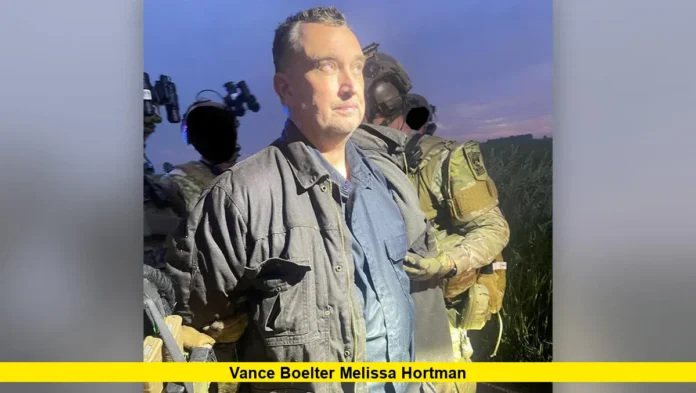

The shocking events surrounding Vance Boelter Melissa Hortman continue to dominate Minnesota’s political and public life. With court hearings, indictments, and leadership transitions, the case remains at the center of statewide and national discussions.
Latest Updates
Vance Boelter has been indicted on state and federal charges connected to the June 14 shootings that left former House Speaker Melissa Hortman and her husband Mark dead. The same incident also seriously injured State Senator John Hoffman and his wife Yvette.
Federal prosecutors have confirmed that Boelter faces charges of murder, attempted murder, impersonating a police officer, and weapons violations. Some of these counts may carry the death penalty, although no final decision has been announced. At present, he is being held in federal custody and has signaled his intent to plead not guilty.
The Night of June 14
The tragic chain of events that shook Minnesota began in the early hours of June 14, 2025. At approximately 2:00 a.m., Senator John Hoffman and his wife Yvette were confronted at their home in Champlin. A man dressed to resemble a police officer arrived at their door, claiming to be law enforcement. Suspicion quickly arose when his story did not align with standard police procedure. When Hoffman attempted to close the door, the intruder opened fire, striking both John and Yvette multiple times. Despite the severity of their injuries, both survived, though their recovery would require extensive medical care and rehabilitation. Their daughter, who was present during the attack, was unharmed but deeply shaken.
Less than two hours later, violence spread to Brooklyn Park, where Representative Melissa Hortman and her husband Mark were targeted in their own home. The attacker used similar tactics, reportedly impersonating an officer to gain access before unleashing a deadly barrage of gunfire. Both Melissa and Mark were killed instantly, and their family dog was also shot during the assault. The precision and brutality of the attack shocked even seasoned investigators, as it became clear this was not an isolated act of violence but part of a coordinated plan.
In the aftermath, investigators discovered chilling evidence that pointed to deliberate preparation. Vehicles found at Vance Luther Boelter’s property had been modified to resemble police cruisers, complete with lights and markings intended to deceive. Alongside the vehicles, authorities recovered tactical gear and body armor, suggesting the suspect had equipped himself for an extended campaign of violence. Perhaps most disturbing was the discovery of notebooks containing names and addresses of political figures, primarily Democratic lawmakers and abortion providers. This evidence reinforced the view that the shootings were politically motivated and that more lives could have been at risk if law enforcement had not intervened.
The events of that night left Minnesota reeling. The calculated impersonation of police, the targeting of public officials in their private homes, and the apparent hit lists pointed to a level of planning that elevated the shootings from isolated murders to an act of domestic political terrorism. For survivors, families, and colleagues of the victims, June 14 will forever be remembered as a night of fear, loss, and irreversible change in the state’s political landscape.
The Manhunt and Arrest
Following the attacks that killed Melissa and Mark Hortman and gravely injured Senator John Hoffman and his wife, law enforcement launched one of the largest manhunts in Minnesota’s history. Within hours, investigators identified Vance Luther Boelter as the prime suspect, linking him to the modified vehicles and tactical gear recovered at the crime scenes. The discovery of notebooks containing names and addresses of lawmakers and abortion providers confirmed that the shootings were not random but part of a broader, targeted plan.
An emergency alert was issued across multiple counties warning residents that Boelter was armed, dangerous, and impersonating a police officer. This warning came with urgent instructions not to open doors to anyone claiming to be law enforcement without verification. Communities across Minnesota were placed on edge as heavily armed tactical teams, helicopters, and local police coordinated to track his movements.
Over the next day, investigators traced Boelter’s whereabouts through surveillance footage, eyewitness accounts, and signals from vehicles linked to him. He reportedly visited additional lawmakers’ homes during this period, heightening fears that more attacks could be imminent. State and federal agencies, including the FBI, became directly involved, underscoring the gravity of the situation and the perceived threat to public officials statewide.
The manhunt came to an end on June 15, when authorities located Boelter near his home in Green Isle, Minnesota. After surrounding the property, law enforcement executed a tactical operation that resulted in his arrest without further loss of life. At the time of his capture, investigators recovered more evidence tying him to the shootings, including weapons and additional documents suggesting long-term planning.
Boelter’s arrest brought a measure of relief to a state still reeling from the unprecedented violence, but it also raised profound questions about security, extremism, and the risks faced by public officials in their own homes. For many Minnesotans, the manhunt underscored both the vulnerability of democratic institutions and the resilience of a community determined to seek justice.
Court Proceedings and Charges
After his arrest on June 15, 2025, Vance Luther Boelter was swiftly transferred into federal custody, where he remains as court proceedings move forward. Prosecutors have filed a sweeping set of charges that reflect both the severity and the premeditated nature of the June 14 attacks. At the state level, he has been indicted for first-degree murder in the deaths of Melissa and Mark Hortman, attempted murder for the shootings of Senator John Hoffman and his wife Yvette, and animal cruelty for killing the Hortmans’ dog. These charges alone carry the possibility of life imprisonment without parole.
At the federal level, prosecutors have gone further, adding counts of stalking, firearms violations, and impersonating a police officer. The stalking charges stem from his documented efforts to track Democratic lawmakers and abortion providers, while the impersonation charges relate to his use of modified vehicles designed to mimic police cruisers. Firearms charges were added based on his possession and use of weapons in connection with these crimes. The federal indictment also leaves open the possibility of pursuing the death penalty, though prosecutors have not yet stated whether they will seek it.
In court, Boelter has signaled his intent to plead not guilty, setting the stage for a long and complex legal battle. His defense team has begun challenging the prosecution’s characterization of his motives, arguing that while the attacks were violent and deliberate, they may not have been driven by political ideology. Prosecutors, however, continue to stress the discovery of notebooks containing names of Democratic officials and abortion providers as evidence of a politically motivated plan to terrorize opponents.
So far, Boelter has waived certain preliminary hearings, including bond and probable cause hearings, in order to expedite proceedings. This decision has kept him firmly in federal detention while limiting his immediate legal options for release. The overlapping jurisdiction of state and federal courts means his trial schedule will likely extend over many months, with each set of charges requiring separate proceedings.
For Minnesota, the court process is more than a legal matter—it is also a symbolic pursuit of accountability after one of the darkest nights in the state’s political history. Families of the victims, survivors, and colleagues of Melissa Hortman have all expressed their determination to see justice served, even as they continue to grapple with the loss and trauma of the attacks.
Political Fallout and Leadership Transition
The June 14 attacks did not only claim lives and injure survivors; they also reshaped Minnesota’s political landscape. Melissa Hortman, as former Speaker of the House and current DFL caucus leader, had been one of the most influential voices in state politics. Her sudden death created a vacuum of leadership within the Democratic-Farmer-Labor Party at a time when unity and direction were urgently needed.
In the days following the tragedy, members of the DFL caucus faced the difficult task of selecting a new leader while still mourning the loss of their colleague and friend. Their choice was Representative Zack Stephenson, a close political associate of Hortman who had once managed her campaign before rising through the ranks of the House. His selection was seen as both a tribute to Hortman’s legacy and a practical decision to maintain stability during a period of deep uncertainty.
Stephenson quickly addressed his caucus and the public, pledging to honor Hortman’s memory by continuing the policy priorities she championed. He emphasized the need for unity in the face of violence and highlighted the importance of safeguarding democracy against threats, both external and domestic. His message resonated with lawmakers and constituents alike, who were still processing the idea that political violence had reached into the heart of Minnesota’s government.
The political fallout extended beyond leadership decisions. Security protocols for legislators were immediately reexamined, with renewed discussions about how to protect public officials in their homes and communities. The discovery of Boelter’s notebooks, which contained names of dozens of political figures and abortion providers, underscored the risks facing those in public service. Lawmakers across party lines acknowledged that the shootings were a turning point, forcing them to confront the reality that ideological violence could directly threaten Minnesota’s democratic institutions.
At the same time, preparations began for a special election to fill Hortman’s seat in House District 34B, scheduled for September 16, 2025. The election carries significant symbolic weight, not only ensuring continued representation for her district but also serving as a reminder of the resilience of Minnesota’s political system in the face of tragedy.
For many within the DFL, Zack Stephenson’s rise to leadership has been a stabilizing force, blending continuity with a renewed commitment to addressing the underlying challenges that allowed such violence to occur. For the wider political community, the fallout from June 14 has been a sobering reminder of the fragility of democracy and the need to protect those who dedicate their lives to public service.
Details About Melissa Hortman
Political Career
Melissa Hortman dedicated more than two decades of her life to public service in Minnesota. Representing Brooklyn Park and surrounding communities, she was first elected to the Minnesota House of Representatives in 2004 as a member of the Democratic-Farmer-Labor Party. Over the years, she built a reputation as a pragmatic yet progressive voice, championing issues such as education funding, environmental protections, and workers’ rights. In 2019, she made history by becoming Speaker of the Minnesota House, a position she held until 2023. After her speakership, she continued to serve as the DFL caucus leader, guiding her party through legislative priorities and complex negotiations. Her leadership style was marked by discipline, strategic focus, and a willingness to build consensus across party lines.
Leadership Legacy
Hortman’s time in leadership coincided with some of Minnesota’s most significant legislative debates, including climate policy, health care, and reproductive rights. Colleagues frequently described her as a strong negotiator who could balance the demands of an increasingly divided legislature while keeping her caucus united. She also mentored younger lawmakers, preparing the next generation of political leaders. Her decision to step aside from the speakership in 2023 did not diminish her influence, as she remained one of the most respected figures in the statehouse until her untimely death.
Personal Life
Away from politics, Melissa Hortman was devoted to her family. She lived in Brooklyn Park with her husband, Mark Hortman, and together they raised their children while balancing busy professional lives. Friends and colleagues often remarked on her ability to remain grounded despite the demands of public office. She was known for her warmth, her approachable style, and her deep connections to her community. Mark, who tragically died alongside her in the June 2025 shooting, was her constant companion and supporter throughout her political journey.
Tragic Death
On June 14, 2025, Melissa Hortman and her husband Mark were killed in their home in Brooklyn Park during a series of targeted attacks that also left other Minnesota lawmakers injured. Authorities identified Vance Luther Boelter as the suspect, describing the shootings as politically motivated acts of violence. Hortman’s death shocked not only her constituents but also political figures across the nation, many of whom recognized her as a trailblazing leader. Her passing created a sudden and painful void in Minnesota politics, leading to urgent decisions about leadership within the DFL caucus and representation for her district.
Political Associates
Throughout her career, Hortman built strong working relationships with many Democratic leaders. Among her closest allies was Representative Zack Stephenson, who had once served as her campaign manager before rising through the ranks of state politics. Following her death, Stephenson was selected by his peers to lead the DFL caucus, a move seen both as a continuation of Hortman’s legacy and as a stabilizing force during a period of grief and uncertainty. Other colleagues have spoken publicly about her mentorship, her commitment to Democratic values, and her resilience in the face of partisan challenges. In death, as in life, she remains a symbol of dedicated leadership and service to Minnesota.
Details About Vance Boelter
Indictments
Vance Luther Boelter faces a sweeping list of charges at both the state and federal level. Prosecutors have charged him with first-degree murder for the deaths of Melissa and Mark Hortman, attempted murder for the shootings of Senator John Hoffman and his wife Yvette, and animal cruelty for killing the Hortmans’ dog. He also faces stalking and multiple firearms violations, as well as impersonating a police officer after using a car modified to resemble a squad vehicle. These charges paint a picture of deliberate, organized violence carried out with precision and intent, elevating the case into one of the most consequential criminal proceedings in recent Minnesota history.
Custody Status
Boelter remains in federal custody while awaiting trial. Authorities consider him a high-risk detainee due to the severity of the charges and the violent methods he allegedly used. He has waived bond hearings and other preliminary steps, which has expedited certain aspects of the legal process but has also limited his immediate options for release. The overlapping jurisdiction of state and federal courts means the case will likely unfold over a long period, with both sets of prosecutors working to determine whether he will face life in prison or potentially the federal death penalty.
Motive
According to prosecutors, Boelter’s motive was politically driven. Investigators found notebooks and lists containing the names and home addresses of Democratic lawmakers and abortion providers. This evidence, paired with his known conservative and deeply religious outlook, has fueled claims that he specifically targeted individuals for their political affiliations and policy positions. Boelter’s acquaintances described him as staunchly anti-abortion and politically conservative, reinforcing the belief that ideology was central to his actions. His defense team disputes this, arguing that prosecutors have overstated the role of politics and religion in his decisions. For now, motive remains a critical question for the courts to resolve.
Family
On the personal front, Boelter’s arrest has fractured his family life. His wife, Jenny Lynne Boelter, filed for divorce shortly after the shootings, seeking to sever ties in the wake of the national spotlight. Divorce records have been sealed, most likely to safeguard her privacy and protect family members from threats or harassment. This development underscores the far-reaching consequences of the case, which extend beyond victims and survivors to those connected to the accused.
Political Associates
Although Boelter did not hold elected office, he was not entirely absent from Minnesota’s political landscape. He served on advisory boards, including the state Workforce Development Board, where his appointment came under governors from both parties. These positions, while limited in influence, allowed him to interact with lawmakers and public officials. Critics have debated whether such appointments lent him credibility, while fact-checkers stress that these boards often include individuals across the political spectrum and are not tied to party loyalty.
The short answer is no, Vance Boelter is not a Democrat. Public voting records show that he participated in the 2024 Republican presidential primary, aligning with the Republican Party at least during that cycle. Friends and acquaintances have described him as deeply religious, politically conservative, and strongly anti-abortion. These characteristics directly contradict claims that he was tied to the Democratic-Farmer-Labor Party (DFL).
Rumors suggesting Boelter was a Democrat or even a Marxist began circulating online shortly after his arrest. Some pointed to his appointment to the Minnesota Workforce Development Board under Governor Tim Walz, a Democrat, as evidence of ties. However, such boards often include people from across the political spectrum and are not indicators of party affiliation.
Details About Zack Stephenson
Political Career
Zack Stephenson has built his career as a thoughtful and pragmatic lawmaker in Minnesota politics. Representing the suburban communities of Coon Rapids and Champlin, he was first elected to the Minnesota House of Representatives in 2018 as a member of the Democratic-Farmer-Labor Party (DFL). Before entering office, he worked as an attorney and was active in local civic matters, which gave him a strong understanding of community concerns and legislative processes. Known for his policy expertise, Stephenson quickly rose in influence within the House, particularly on issues related to consumer protection, climate action, and economic development. His early ties to Melissa Hortman, having once managed her campaign in 2004, positioned him as both a mentee and close political ally.
Leadership Role
The sudden and tragic death of Melissa Hortman in June 2025 thrust Zack Stephenson into a new chapter of responsibility. In the weeks that followed, his Democratic colleagues unanimously selected him as the new leader of the DFL caucus in the Minnesota House. This decision reflected both his experience and his long-standing connection to Hortman’s leadership style. As caucus leader, Stephenson has emphasized stability, unity, and the continuation of Hortman’s legislative priorities, while also promising to chart his own course in addressing Minnesota’s most pressing challenges. His ability to step into leadership during such a turbulent period has earned him recognition as a steady hand and a voice of reassurance within the party.
Policy Priorities
Stephenson’s legislative record reflects his focus on practical solutions to everyday issues. He has worked on consumer protection laws aimed at curbing predatory lending practices, advocated for clean energy initiatives, and pushed for investments in public safety and infrastructure. His background as an attorney has given him a reputation for detailed policy work and a strong command of legislative language. He has also been an outspoken advocate for reproductive rights and voting access, aligning closely with the DFL’s broader platform. With his new leadership role, these priorities are expected to remain central to the caucus agenda.
Personal Life
Away from politics, Zack Stephenson is known as a family-oriented and community-minded figure. He continues to live in the northern suburbs he represents, maintaining close ties with local organizations and constituents. Colleagues describe him as approachable and collaborative, someone who values listening as much as leading. His long-standing friendship and professional relationship with Melissa Hortman were often cited as examples of his loyalty and dedication to the DFL’s mission. Her loss has had a profound personal impact on him, which he has acknowledged publicly while vowing to honor her legacy through his leadership.
Political Associates
Stephenson’s closest political connections have been within the DFL, especially with Melissa Hortman, who served as both a mentor and ally throughout his career. Beyond Hortman, he has worked extensively with Democratic colleagues on bipartisan initiatives, showing a willingness to build bridges while defending core progressive values. His rise to leadership has placed him at the forefront of state politics, where he is now tasked with guiding his caucus through the aftermath of tragedy and into a new legislative session. His selection as leader underscores the trust his peers place in him and reflects his growing influence within Minnesota’s political landscape.
What Remains Uncertain
- Motive: While prosecutors stress political motivations, questions linger about whether ideology, mental health, or personal grievances fueled the violence.
- Sentencing Possibilities: Federal charges allow for the death penalty, but prosecutors have not yet decided whether to pursue it. State charges could carry life in prison.
- Trial Timeline: Given the complexity of the case, arraignments and pre-trial hearings may extend the process for months, possibly longer.
The Broader Impact
The attack is being described as one of the most chilling examples of targeted political violence in modern Minnesota. It has sparked urgent debate about security for elected officials, the spread of extremism, and the dangers of misinformation around political identity.
A special election will be held on September 16, 2025, to fill the seat left vacant by Hortman’s death, ensuring her district continues to have representation while her legacy continues to shape Minnesota’s political landscape.
Closing Reflections
The events of June 14, 2025, will be remembered as one of the darkest moments in Minnesota’s modern history. The calculated violence carried out by Vance Luther Boelter not only claimed the lives of Melissa and Mark Hortman but also left survivors and entire communities scarred. What unfolded that night was more than a series of shootings—it was an attack on public service, democratic institutions, and the sense of safety that elected officials and their families should be able to expect in their own homes.
Melissa Hortman’s legacy endures as a leader who dedicated her career to education, environmental protections, and the well-being of working families. Her loss left a void that cannot be easily filled, but her contributions continue to shape policy and inspire those she mentored. Her story serves as a reminder of the risks borne by those who step into public life and the resilience required to carry forward their work after tragedy.
In the aftermath, Zack Stephenson emerged as both a symbol of continuity and a beacon of stability for the DFL caucus. His leadership, forged in grief, underscores the importance of mentorship and political relationships built on trust. By stepping into Hortman’s role, he not only honors her memory but also demonstrates that the work of democracy will continue despite violence and intimidation.
For Minnesotans and Americans alike, the case forces hard questions about political extremism, the spread of ideological hatred, and the systems in place to protect elected officials. It highlights the urgent need for vigilance—not only by law enforcement but also by communities committed to defending democratic values.
The pursuit of justice for Vance Boelter is still unfolding in the courts, and the political landscape continues to adjust to the void left by Hortman’s death. Yet amidst grief and shock, Minnesota’s response has shown a determination to move forward, to strengthen its institutions, and to reject violence as a means of political expression.
As the trials progress and new leaders take on the responsibilities left behind, the memory of June 14 remains a call to action: to protect those who serve, to uphold democracy, and to ensure that the sacrifices of victims are never forgotten.