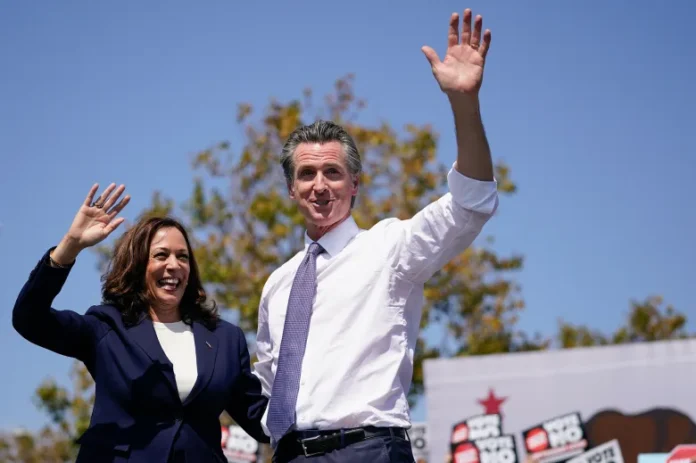

The 2028 Democratic primary frontrunners Harris discussion has gained momentum as early polling and political activity begin to shape the next presidential race. Former Vice President Kamala Harris is emerging as a leading potential contender in several national Democratic primary polls, while California Governor Gavin Newsom, former Transportation Secretary Pete Buttigieg, and Representative Alexandria Ocasio-Cortez are also attracting attention. However, the 2028 Democratic presidential nomination remains undecided, and early polling does not guarantee who will ultimately become the party’s nominee.
As Democrats prepare for the 2026 midterm elections, potential presidential contenders are building national networks, supporting candidates, and developing their political profiles. Harris’s previous presidential campaigns, national recognition, and connections with Democratic voters give her an important position in the early conversation. Nevertheless, there is no official confirmation that she will launch another presidential campaign, and the field could change considerably before the primary elections begin.
Kamala Harris Leads the Early 2028 Democratic Primary Conversation
Kamala Harris is one of the most prominent names in discussions about the 2028 Democratic presidential primary. Having served as vice president under Joe Biden and as the Democratic presidential nominee in 2024, she enters the early conversation with a level of national recognition that many potential competitors have yet to establish.
Early polling averages available in October 2026 place Harris ahead of several other frequently discussed Democratic contenders. A RealClearPolling national average covering surveys conducted from July 19 through October 6 shows Harris at approximately 26.4%, compared with 14.4% for Newsom and 12.6% for Buttigieg. Representative Alexandria Ocasio-Cortez follows at 10.6%, with Senator Jon Ossoff at 8.9%.
These figures suggest that Harris remains a significant early contender. They do not establish that she has secured the nomination or that Democratic voters will maintain the same preferences throughout the next two years.
The distinction matters because the 2028 primary remains in its preliminary stage. Potential candidates have not completed the formal nomination process, and the eventual outcome will depend on campaign announcements, fundraising, debates, endorsements, voter priorities, and performances in individual states.
Harris’s early position makes her central to the discussion of possible Democratic frontrunners, but her political standing will continue to be tested as the election approaches.
Latest 2028 Democratic Primary Polls and Harris’s Standing
The latest available polling provides a clearer picture of Harris’s position relative to other potential Democratic presidential candidates. National surveys show a consistent pattern of Harris leading several rivals, although the size of her advantage varies by pollster and survey period.
The following figures summarize the national polling average and the latest individual survey available as of October 13, 2026.
| Potential candidate | RealClearPolling average |
|---|---|
| Kamala Harris | 26.4% |
| Gavin Newsom | 14.4% |
| Pete Buttigieg | 12.6% |
| Alexandria Ocasio-Cortez | 10.6% |
| Jon Ossoff | 8.9% |
| Mark Kelly | 6.5% |
| Josh Shapiro | 5.6% |
| Andy Beshear | 4.0% |
| JB Pritzker | 3.2% |
| Gretchen Whitmer | 2.5% |
The average covers polling conducted from July 19 through October 6, 2026. These are early preference measurements among respondents, not official nomination results.
An individual Financial Times survey conducted October 3–6 placed Harris at 30%, with Newsom at 15%, Buttigieg at 9%, and Ocasio-Cortez at 9%. A late-September Harvard-Harris survey recorded 38% for Harris, 17% for Newsom, 12% for Ocasio-Cortez, and 11% for Buttigieg.
The differences between these surveys demonstrate why it is important to consider more than one poll. The results suggest that Harris has an early advantage, but the exact level of support depends on the respondents, methodology, and candidates included.
Another important detail is that the combined percentages leave a substantial portion of the electorate outside the leading candidates’ individual totals. Some voters may prefer other potential contenders, while others may be undecided or change their minds as the election approaches.
Consequently, the early polling picture supports describing Harris as a leading potential contender rather than declaring her the inevitable Democratic nominee.
Why Kamala Harris Remains a Major Potential Frontrunner
Several factors help explain why Harris continues to rank near the top of early Democratic presidential preference surveys.
National name recognition: Harris served as vice president from 2021 to 2025 and became the Democratic presidential nominee in 2024. Her previous national campaigns give her a level of familiarity that could be an advantage when voters initially consider possible candidates.
Existing relationships within the Democratic Party: Her years in national politics have provided opportunities to develop relationships with party officials, elected representatives, activists, donors, and campaign organizations. These connections may be valuable if she decides to compete for the nomination again.
Support among important Democratic constituencies: Harris has demonstrated political strength among Black voters, a constituency that has played an influential role in Democratic presidential primaries. Maintaining broad support among Black voters and other key groups could be particularly important in early nomination contests.
Experience in national campaigning: Having participated in presidential campaigns in 2020 and 2024, Harris understands the demands of national fundraising, media scrutiny, voter outreach, and organizing across multiple states. Her supporters may argue that this experience gives her a head start over less-established candidates.
These advantages do not eliminate the challenges facing Harris. Her 2024 defeat to Donald Trump remains an important part of her political record, and Democrats may disagree about whether she represents the strongest option for the next election.
A new campaign would require Harris to demonstrate that she can build a winning coalition, respond to criticism of her previous candidacy, and persuade voters that she offers a compelling direction for the party.
Kamala Harris’s 2028 Presidential Plans Remain Unconfirmed
As of October 13, 2026, Harris has not officially announced a 2028 presidential campaign. Her leading position in early polling should therefore not be confused with a formal candidacy.
Recent reporting indicates that Harris has remained politically active, including supporting Democratic candidates ahead of the 2026 midterm elections and maintaining relationships with political donors. Such activities can help a potential presidential contender build influence and prepare for future decisions, but they do not independently confirm that a campaign will take place.
Reporting published in October has also described differing views within Harris’s personal and political circles about another run. These accounts illustrate the uncertainty surrounding her plans rather than establish a final decision.
The question of whether Harris will run is important because her participation could shape the entire Democratic field. A former vice president with strong early polling numbers could attract significant donor attention and endorsements. Conversely, a decision not to run would create an opening for other candidates to compete for voters who currently favor her.
Until Harris makes a formal announcement, any description of her as a 2028 candidate should be understood as referring to a potential contender.
Gavin Newsom: Harris’s Most Prominent Early Rival
California Governor Gavin Newsom is one of the most frequently discussed alternatives to Harris in the 2028 Democratic primary conversation. His national profile, experience leading the country’s most populous state, and willingness to challenge Republican policies have helped keep him in the presidential discussion.
Newsom has also been active in supporting Democrats outside California ahead of the 2026 midterm elections. His political organization and outreach efforts provide opportunities to build relationships with party activists and voters across the country.
In the RealClearPolling average covering July through early October, Newsom stood at 14.4%, second behind Harris. The October Financial Times survey also placed him second, at 15%.
His position makes him a significant potential competitor, but there is no official confirmation that he will enter the presidential race. Newsom’s political calculations may also depend on whether Harris runs. Recent reporting has indicated that he has suggested he would not run if Harris enters the contest, a development that could substantially affect the field if that position holds.
For now, Newsom remains an important name to watch rather than a declared 2028 presidential candidate.
Pete Buttigieg and Alexandria Ocasio-Cortez Challenge the Early Field
Two other prominent Democrats are attracting attention as the party considers its next generation of presidential leadership.
Pete Buttigieg
Former Transportation Secretary Pete Buttigieg has experience from his 2020 presidential campaign and his service in the Biden administration. His ability to communicate policy issues and appeal to different groups of Democratic voters could make him a serious contender if he decides to run again.
Recent political reporting has highlighted Buttigieg’s extensive travel and efforts to support Democratic candidates nationwide ahead of the 2026 midterms. These activities may help him strengthen his national political network without holding an elected office.
Buttigieg received 12.6% in the RealClearPolling average, placing him third behind Harris and Newsom. However, individual polls have produced different results, emphasizing that the early field remains fluid.
Alexandria Ocasio-Cortez
Representative Alexandria Ocasio-Cortez is another potential contender whose political profile differs from those of Harris and Newsom. She is associated with the progressive wing of the Democratic Party and has built a national following around economic inequality, workers’ rights, healthcare, and climate policy.
Ocasio-Cortez’s potential appeal lies in her ability to engage younger voters and progressive activists. If she entered the presidential race, she could offer a different policy agenda and challenge more established Democratic figures.
She received 10.6% in the RealClearPolling average, placing her fourth. That result indicates meaningful early interest, although it does not establish that she will run.
Both Buttigieg and Ocasio-Cortez could influence the party’s policy debate even if they ultimately decide against seeking the nomination.
Other Democratic Presidential Contenders to Watch in 2028
The potential Democratic field extends beyond Harris, Newsom, Buttigieg, and Ocasio-Cortez. Several governors and senators have the experience, visibility, or political networks that could support a presidential campaign.
Jon Ossoff: The Georgia senator received 8.9% in the RealClearPolling average. His position in a competitive state and his experience in national politics may attract attention from Democrats looking for a candidate with appeal beyond traditionally Democratic strongholds.
Mark Kelly: The Arizona senator and former astronaut received 6.5%. His military and spaceflight background, combined with his experience representing a closely contested state, could be relevant to a campaign focused on national security and political moderation.
Josh Shapiro: The Pennsylvania governor received 5.6%. Pennsylvania is an important presidential battleground, and his executive experience could appeal to Democrats who prioritize winning competitive states.
Andy Beshear: The Kentucky governor received 4.0%. His success in a Republican-leaning state may be an asset in discussions about how Democrats can reach voters outside their strongest regions.
JB Pritzker: The Illinois governor received 3.2%. His executive experience and financial support for Democratic campaigns have helped maintain his visibility in national political discussions.
Gretchen Whitmer: The Michigan governor received 2.5%. Her leadership in a major battleground state could make her relevant to conversations about the party’s future, even though her early polling position is below those of Harris and several other potential candidates.
These figures should not be interpreted as a definitive ranking of each politician’s future prospects. A candidate’s polling position can change substantially after a formal announcement, a major endorsement, a televised debate, or a shift in the political environment.
There is also no confirmation that every politician listed will seek the Democratic nomination. Some may choose to remain in their current positions, support another candidate, or pursue different political opportunities.
How the 2026 Midterm Elections Could Influence the 2028 Democratic Primary
The November 2026 midterm elections may become an important early test for Democrats considering a presidential campaign.
Although the midterms do not determine the 2028 nominee, the results could influence the party’s strategy, leadership debates, and assessment of potential candidates. Strong performances by Democrats could encourage candidates to emphasize the issues and campaign approaches associated with those victories. Disappointing results could increase pressure for a different message or a new generation of leadership.
Potential presidential contenders are already participating in the political environment surrounding the midterms. Newsom has been supporting Democratic candidates in multiple states, while Buttigieg has maintained a high national profile through campaign appearances and endorsements. Other potential candidates are also working to establish their influence within the party.
For Harris, the midterms provide an opportunity to remain visible and support fellow Democrats without formally entering the presidential race. Her involvement may help maintain relationships with party constituencies and elected officials.
The results could also influence the issues that dominate the next presidential campaign. Economic conditions, housing affordability, healthcare costs, immigration, reproductive rights, and public confidence in government may all shape Democratic voters’ priorities.
However, the relationship between midterm results and the presidential primary is not automatic. A candidate’s performance in one state or a party’s success in congressional elections cannot, by itself, establish who will win a national nomination contest.
Key Challenges Facing Harris if She Runs Again
Harris’s early polling advantage does not mean she will face an easy path to the Democratic nomination.
One major challenge will be addressing the political consequences of the 2024 presidential election. Her defeat to Trump may influence how Democratic voters evaluate her candidacy and whether they believe another campaign would offer a stronger chance of winning.
A second challenge will be competition from within her own party. Potential rivals may argue that Democrats need a different messenger, a different policy approach, or a candidate with a distinct political background. A contested primary would give voters an opportunity to compare those arguments directly.
Harris would also need to explain her priorities for the country. A successful presidential campaign typically requires more than national recognition; it needs a clear platform, an effective organization, sufficient fundraising, and the ability to connect with voters in different regions.
Another consideration is the balance between experience and change. Some Democrats may value Harris’s familiarity with national politics, while others may prefer a governor or senator who can present a different record and campaign narrative.
Her eventual decision will depend on her own political judgment, the support she receives, and the circumstances surrounding the election. None of these factors can yet establish whether she will run or win.
What to Watch Next in the 2028 Democratic Primary
Several developments may clarify the early Democratic presidential race over the coming months.
- Official campaign decisions: Announcements from Harris and other potential candidates would distinguish declared campaigns from preliminary speculation.
- New national polls: Additional surveys will help show whether Harris’s lead remains consistent and whether other contenders gain support.
- Fundraising and endorsements: Financial backing and support from influential Democratic figures could reveal which candidates are building viable organizations.
- The 2026 midterm results: Election outcomes may shape the party’s priorities and influence the political standing of potential contenders.
- Policy debates: Discussions about the economy, healthcare, immigration, and other national issues may help distinguish candidates and define their appeal to primary voters.
- Early-state strategy: The organization and campaign activity surrounding the first presidential nomination contests may provide clues about which candidates are preparing seriously for 2028.
These developments will offer more meaningful evidence of the race’s direction than any single early poll. Until candidates formally enter the contest and Democratic voters begin casting ballots, the standings remain preliminary.
Final Thoughts on the 2028 Democratic Primary Frontrunners Harris
As of October 13, 2026, Kamala Harris is one of the strongest potential contenders in the early 2028 Democratic presidential primary discussion. Recent national polling places her ahead of Gavin Newsom, Pete Buttigieg, Alexandria Ocasio-Cortez, and several other prominent Democrats.
Her national recognition, experience as vice president, previous presidential campaign, and support among important Democratic constituencies help explain her position. At the same time, her 2024 election defeat, the possibility of a competitive primary, and questions about the party’s future direction could influence her prospects.
The central distinction is that Harris leads the early polling conversation, but she has not officially confirmed a 2028 presidential campaign, and no Democratic nominee has been selected. Newsom and other potential contenders remain important figures to watch as the party prepares for the next presidential election cycle.
Future polling, campaign announcements, fundraising activity, and the outcome of the 2026 midterms may provide a clearer picture of the Democratic field. For now, Harris is a leading potential frontrunner, not a confirmed nominee.
What do you think about Kamala Harris’s chances in the 2028 Democratic primary? Share your thoughts in the comments and stay tuned for the latest election updates.