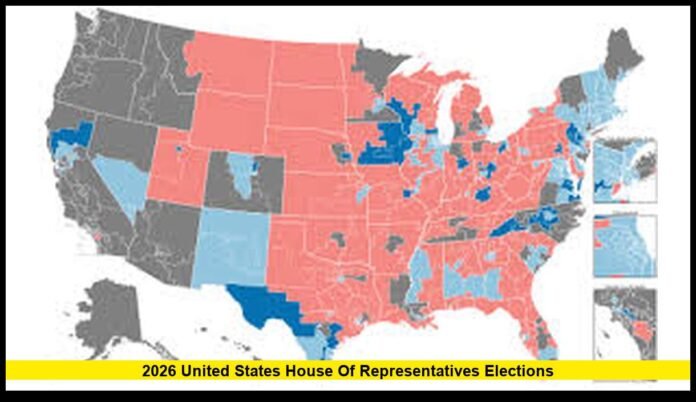

The 2026 United States House of Representatives elections have become one of the most consequential political contests of the year, determining which party will control the lower chamber of Congress and influence the direction of federal policymaking. Held on November 3, 2026, the midterm elections put all 435 voting seats in the House before American voters, creating a nationwide contest shaped by economic concerns, presidential approval, immigration, health care, government spending, and the future of American politics.
The election represents an important turning point for both major political parties. Republicans entered Election Day defending their narrow House majority, while Democrats sought to gain enough seats to take control of the chamber. The outcome will influence the legislative relationship between Congress and President Donald Trump during the remaining years of his current presidential term.
The House election is especially important because its results determine who controls the chamber’s leadership, committee assignments, legislative schedule, and investigative authority. Even without controlling the entire federal government, the majority party can significantly influence which national issues receive attention and how federal policies are debated.
As vote counting and the certification process continue, the final composition of the House will establish the political environment for the 120th Congress, which begins in January 2027.
Key Points Summary
– All 435 voting seats in the U.S. House of Representatives were contested on November 3, 2026.
– Republicans entered the election defending a narrow majority, while Democrats aimed to regain control of the chamber.
– A party needs at least 218 seats to secure a majority in the 435-member House.
– Economic conditions, affordability, immigration, health care, and presidential approval were important campaign issues.
– The new House majority will influence committee leadership, federal legislation, government funding, and oversight of the executive branch.
– Newly elected representatives are scheduled to begin their terms when the 120th Congress convenes in January 2027.
Democrats Secure the House Majority in a Major Midterm Upset
Democrats have won control of the House of Representatives, delivering a significant setback to Republicans and changing the balance of power in Washington. The election results indicate a substantial shift in voter preferences, with Democrats gaining seats in competitive districts and defeating Republican incumbents in several closely watched contests.
According to reported results on November 4, Democrats had secured 228 House seats compared with 139 for Republicans, with numerous districts still awaiting final race calls. These figures reflect projected and called winners rather than the final certified membership of the chamber.
Democrats needed a net gain of three seats to overcome the narrow Republican majority that existed before Election Day. Their performance exceeded that threshold, giving the party the opportunity to direct the House agenda when the next Congress begins.
The result is particularly consequential because the House plays a central role in federal spending, taxation, and legislative oversight. Democratic leaders will have greater authority to decide which proposals receive consideration and how congressional committees examine the administration’s policies.
Why the 2026 Midterm Elections Matter for American Politics
Midterm elections frequently reshape the political environment for a sitting president. Unlike presidential elections, these contests focus on congressional representation, state-level offices, and the public’s assessment of the governing party.
The 2026 election took place during the second half of President Donald Trump’s current term. Republicans entered the contest seeking to preserve their congressional influence, while Democrats campaigned on affordability, government accountability, and opposition to several administration policies.
The Democratic victory gives the opposition party a stronger institutional position in Washington. It also creates a different political environment for negotiations over federal budgets, economic legislation, immigration, and other national priorities.
A change in House control does not automatically mean that every Democratic proposal will become law. Congress must work within a system that divides authority among the House, Senate, and president. Nevertheless, the majority party has considerable influence over the legislative process.
The result also provides an early indication of the issues that may dominate the next two years of American political debate.
The Economy and Cost of Living Influenced Voters
Economic conditions were among the most important concerns during the 2026 campaign. Household budgets, everyday expenses, housing affordability, and uncertainty about the direction of the economy featured prominently in the political discussion.
For many voters, the election was an opportunity to express their views about the government’s economic performance. Rising expenses can affect how households evaluate policies involving taxes, wages, energy, health care, and public assistance.
Democrats emphasized affordability and argued that federal policy should do more to address the financial pressures experienced by American families. Republicans defended their governing approach and sought to maintain support among voters who favored their economic priorities.
The election outcome suggests that economic concerns helped shape the broader political environment, although no single issue can fully explain the results across 435 congressional districts.
The incoming House will face pressure to address these concerns through legislation and oversight. Potential areas of debate include tax policy, housing supply, prescription drug costs, energy prices, and federal spending.
Whether lawmakers can reach agreements on these subjects will depend on negotiations between the two parties and the administration.
Competitive Congressional Districts Played a Major Role
Although many House districts tend to favor one political party, a relatively small number of competitive seats can determine control of the chamber.
Campaigns in these districts often receive substantial national attention because a modest shift in voter support can change which party wins a seat. Candidates must appeal to local constituents while responding to national political debates.
Democratic gains in multiple districts helped the party overcome its pre-election disadvantage. Several races also demonstrated the importance of candidate recruitment, campaign organization, turnout, and the ability to connect national concerns with local priorities.
House elections are conducted district by district, so a national victory does not mean that one party wins every region. Republicans continue to have substantial support in many districts, while Democrats maintain strong positions in numerous urban and suburban areas.
The final seat distribution will determine the size of the Democratic majority and the extent to which party leaders can rely on unified support from their members.
What a Democratic-Controlled House Means for President Trump
A Democratic majority will create a more challenging legislative environment for President Trump during the remainder of his term.
When the president’s party controls the House, the administration generally has a greater opportunity to advance legislation supported by its congressional allies. When the opposition party controls the chamber, negotiations can become more difficult and oversight can intensify.
Democratic lawmakers will have the ability to schedule hearings, investigate federal agency decisions, and scrutinize administration policies through House committees. These activities may cover spending decisions, executive actions, regulatory policies, and other matters within congressional jurisdiction.
The new majority could also attempt to block or revise Republican-backed legislative proposals. However, the administration retains its own constitutional powers, and the president can veto legislation that reaches his desk.
Because Democrats have also secured control of the Senate according to reported election projections, the political shift extends beyond the House. The new balance of power could influence confirmation proceedings, judicial nominations, and the passage of legislation throughout the federal government.
The practical impact will depend on how congressional leaders use their authority and whether disagreements can be resolved through negotiation.
Hakeem Jeffries and the Next House Leadership
House leadership will be one of the first major issues addressed after the election. The speaker plays a central role in organizing the chamber, coordinating the majority party, and guiding legislation through the House.
Democratic leader Hakeem Jeffries is positioned to become speaker when the new Congress organizes in January 2027, subject to the formal vote by House members. If elected, he would become the first Black speaker of the House.
The position would give Jeffries considerable influence over committee assignments, floor scheduling, and the party’s legislative strategy. His leadership team would also need to coordinate members representing districts with different political priorities.
Republicans, meanwhile, must determine how to organize their party after losing the majority. The leadership transition could influence their approach to negotiations, opposition strategy, and preparations for the next election cycle.
The formal speaker vote will be an important early test for both parties as they prepare to begin the 120th Congress.
Key Policy Priorities for the Incoming Congress
The new House majority will face several major policy decisions when lawmakers return to Washington.
Federal Budget and Government Funding
Government funding will be an immediate priority. Congress must address spending legislation and negotiate over competing demands for federal resources.
Democrats may seek changes to spending priorities, while Republicans could oppose proposals they view as increasing government expenditure or reversing their previous policies. The outcome will depend on negotiations among congressional leaders and the administration.
Health Care and Social Programs
Health insurance affordability, Medicaid, Medicare, and other federal programs are likely to receive attention. Democrats have indicated interest in protecting access to health care and reconsidering certain policy changes associated with Republican priorities.
Any significant legislative changes will require negotiations over funding, eligibility rules, and the structure of federal programs.
Immigration and Border Security
Immigration policy remains another important area of disagreement. Democrats and Republicans have different approaches to border enforcement, asylum procedures, and the treatment of undocumented immigrants.
A Democratic-controlled House could change the direction of congressional hearings and legislative proposals, but major reforms would require agreement on the details and the support necessary to pass legislation.
Investigations and Congressional Oversight
House committees may devote greater attention to reviewing executive branch decisions. Oversight can involve public hearings, requests for documents, witness testimony, and investigations into the implementation of federal policies.
The scope of these activities will depend on committee priorities, applicable legal requirements, and the evidence available to lawmakers.
Election Results, Certification and the January Transition
Although control of the House has been determined by the projected winners, the administrative process is not necessarily complete in every district.
Election officials must finish counting eligible ballots, complete required canvassing procedures, and certify results according to state law. Close contests may require additional review, and recounts can occur when the relevant legal conditions are met.
The distinction between a projected winner and a certified result is important. Media organizations can call races when the available evidence indicates that the outcome is sufficiently clear, but official election procedures remain necessary.
The 435-member House will convene as part of the 120th Congress on January 3, 2027. Representatives will take office, elect a speaker, organize committees, and establish the legislative agenda for the new session.
The opening months will reveal whether the majority can maintain unity and translate campaign commitments into concrete legislative proposals.
How the 2026 Election Could Shape the 2028 Presidential Race
The political effects of the 2026 United States House of Representatives elections will extend beyond the next congressional session. Both parties will use the results to evaluate their campaign strategies and prepare for the 2028 presidential election.
Democrats will have an opportunity to demonstrate how they govern with greater congressional authority. Their performance on economic issues, oversight, and legislative negotiations could influence how voters evaluate the party in the next national election.
Republicans will seek to rebuild support and present an alternative policy agenda. Losing control of Congress can create organizational challenges, but it also gives the party an opportunity to reassess its message and identify areas where it can regain voter confidence.
The results do not determine the outcome of the next presidential election. Different candidates, economic conditions, international developments, and voter priorities could significantly change the political landscape by 2028.
Nevertheless, the 2026 midterms provide an important measure of the country’s political direction and the challenges facing both parties.
Final Outlook
The 2026 House elections have changed the balance of congressional power and created a new political environment for the remainder of President Trump’s term. Democrats’ victory gives them greater authority over the House agenda, committee leadership, federal legislation, and congressional investigations.
The immediate challenge will be turning that advantage into effective governance. Economic concerns, federal spending, health care, immigration, and government oversight are likely to remain central to congressional debates.
Republicans will need to adapt to their new position, while Democrats will face pressure to deliver results that address the concerns voters raised during the campaign.
The final certified seat count and the organization of the incoming Congress will determine how the new majority operates in practice. The decisions made during the next two years could influence federal policy and shape the political debate leading into 2028.
What should Congress prioritize first under the new majority? Share your opinion in the comments and follow the latest election developments for continuing coverage.