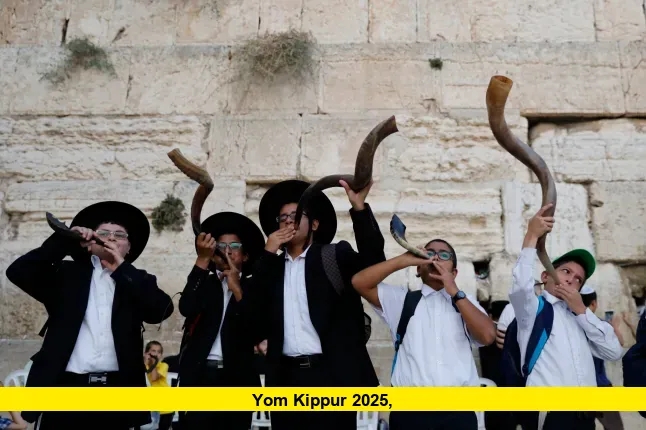

Yom Kippur, the holiest day of the Jewish calendar, begins at sundown on Wednesday, October 1, 2025, and concludes after nightfall on Thursday, October 2, 2025. For Jewish communities across the United States, this sacred day — known as the Day of Atonement — represents a time of deep reflection, repentance, and renewal.
Observed each year on the 10th day of Tishrei in the Hebrew calendar, Yom Kippur comes at the conclusion of the Ten Days of Repentance that begin with Rosh Hashanah. It is regarded as the most solemn and spiritually significant date in Judaism, a day devoted to fasting, prayer, and reconciliation with both God and fellow human beings.
When Yom Kippur Takes Place in 2025
In 2025, Yom Kippur begins on the evening of October 1 and ends the following evening on October 2.
The holiday lasts for approximately 25 hours, beginning at sunset and ending once three stars are visible in the night sky. During this time, observant Jews refrain from food, drink, and other physical comforts, focusing instead on prayer, repentance, and spiritual purification.
Approximate fasting times for major U.S. cities are as follows:
- New York City: Fast begins around 6:19 P.M. on October 1 and ends around 7:40 P.M. on October 2.
- Los Angeles: Fast begins around 6:19 P.M. on October 1 and ends around 7:13 P.M. on October 2.
- Washington, D.C.: Fast begins around 6:32 P.M. on October 1 and ends around 7:28 P.M. on October 2.
These times may vary slightly depending on local observances and rabbinical rulings.
How Yom Kippur Is Observed
The central observance of Yom Kippur is a complete fast, during which participants abstain from eating, drinking, bathing, wearing leather shoes, and engaging in marital relations. These restrictions are meant to shift attention away from the physical body and toward the soul’s purification.
Other key aspects of observance include:
- Prayer Services: The holiday begins with the moving Kol Nidre service, in which vows and oaths made to God are formally annulled. This is followed by a full day of services that include readings from the Torah, communal confessions of sins, and special prayers for forgiveness.
- Ne’ilah (Closing Service): The final service of Yom Kippur, Ne’ilah, is a deeply emotional conclusion to the day. As the gates of heaven are symbolically closing, worshippers offer heartfelt prayers for forgiveness and renewal.
- Shofar Blowing: At the end of Yom Kippur, the shofar — a ram’s horn — is sounded, marking both the conclusion of the fast and the spiritual cleansing of the community.
Many also wear white clothing or a traditional robe known as a kittel, symbolizing purity and a desire to start anew.
Yom Kippur and Community Security in 2025
For Jewish communities across the United States, Yom Kippur is not only a spiritual gathering but also one of the busiest times of synagogue attendance during the year. With larger-than-usual congregations, many synagogues have strengthened security measures to ensure a safe and peaceful observance.
Local law enforcement agencies often work closely with Jewish institutions during the High Holy Days, recognizing both the large gatherings and the need for reassurance in times of heightened antisemitic concerns. These efforts allow congregants to focus on their prayers and spiritual commitments with peace of mind.
Yom Kippur and American Culture
Over the years, Yom Kippur has intersected with American cultural life in meaningful ways. Sports, in particular, have often overlapped with the holiday, creating difficult choices for Jewish athletes and fans alike.
In 2025, the Major League Baseball playoffs coincide with Yom Kippur. Teams like the Yankees and Red Sox are scheduled to play during the holiday, and Jewish leaders have reminded fans of the importance of honoring spiritual commitments over entertainment. This echoes historic moments such as when baseball legend Sandy Koufax famously declined to pitch in the World Series on Yom Kippur, a decision that has inspired generations.
These cultural intersections highlight the unique role of Yom Kippur in American life — a balance between maintaining deep religious traditions and participating in broader national events.
Inclusivity and Health During the Fast
While fasting is at the center of Yom Kippur observance, Jewish tradition emphasizes that preserving life and health takes precedence over ritual. Those who are ill, pregnant, elderly, or otherwise unable to safely fast are exempt.
In recent years, American synagogues have placed special emphasis on inclusivity, offering accommodations and encouraging those unable to fast to participate in alternative ways, such as prayer, study, or acts of charity. This approach ensures that all members of the community can meaningfully engage with the holiday, regardless of physical ability.
The Spiritual Heart of Yom Kippur
At its core, Yom Kippur is about repentance (teshuvah), forgiveness, and renewal. Observers are encouraged not only to seek forgiveness from God but also from friends, family, and colleagues. Tradition teaches that sins committed against another person cannot be forgiven by God until the wronged individual has been asked for forgiveness directly.
This dual emphasis — on human relationships as well as divine accountability — makes Yom Kippur an especially powerful time for reflection. Many American Jews use the holiday to mend strained relationships, make amends, and enter the new year with a sense of spiritual clarity and peace.
A Time for Renewal and Hope
As Jewish communities across the United States observe Yom Kippur 2025, the focus remains on healing, unity, and the possibility of renewal. While modern challenges such as security concerns or cultural conflicts with entertainment may arise, the enduring message of the holiday remains unchanged: a call for forgiveness, compassion, and a fresh start.
Whether fasting in the synagogue, praying at home, or supporting others in their spiritual journeys, Yom Kippur continues to stand as a day that unites Jewish people with their faith, their community, and their hope for a better year ahead.
As you reflect on Yom Kippur 2025, how is your community marking this sacred day? Share your thoughts and experiences below — your perspective helps keep the conversation alive.