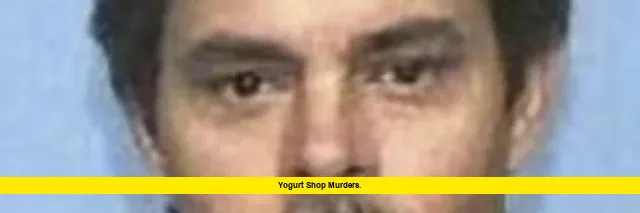

The yogurt shop murders have haunted Austin, Texas, for more than three decades. Now, after years of uncertainty, investigators have revealed a major breakthrough: DNA evidence has identified Robert Eugene Brashers as the man likely responsible for the 1991 killings of four teenage girls inside a north Austin yogurt shop.
A Long-Awaited Breakthrough
Authorities confirmed this week that DNA recovered from the crime scene has been matched to Brashers, a convicted criminal who died by suicide in 1999. This is the most significant development in the investigation in 34 years, as no suspect had ever been definitively tied to the evidence until now.
While the case remains technically open, officials described this finding as the strongest link yet between the crime and a suspect. For the victims’ families, who have waited decades for answers, this represents a turning point.
The 1991 Yogurt Shop Murders
On December 6, 1991, four young girls—Amy Ayers (13), Eliza Thomas (17), Jennifer Harbison (17), and Sarah Harbison (15)—were brutally murdered inside an I Can’t Believe It’s Yogurt! store in north Austin.
The girls were found bound, gagged, and shot in the head before the shop was set on fire. The horrifying details shocked the community and made national headlines.
For years, investigators struggled to piece together what had happened. Several men were arrested and even convicted, but their cases later fell apart after DNA tests excluded them as suspects.
How DNA Solved the Mystery
The latest revelation comes thanks to advanced forensic technology. Using genetic genealogy and re-examined samples, investigators identified a DNA match to Robert Eugene Brashers.
Brashers was never on the original list of suspects, but his DNA now directly links him to the crime scene. In addition, a bullet casing recovered at the shop has been connected to a firearm Brashers was known to possess, adding further weight to the evidence.
This match rules out prior suspects and reshapes the narrative of the case. Authorities emphasize, however, that they are still reviewing all findings before officially closing the file.
Who Was Robert Eugene Brashers?
Brashers had a violent criminal past spanning multiple states. He served time for attempted murder in the 1980s and was connected to other violent assaults and homicides.
In 1999, during a standoff with police in Missouri, Brashers took his own life. Because of his death, prosecutors will never bring him to trial, but identifying him as the likely killer provides long-awaited answers for families and investigators.
His connection to the yogurt shop murders also highlights how many crimes in different states can remain hidden until modern forensic methods bring them to light.
Impact on Families and Community
The yogurt shop murders have left scars on Austin for more than three decades. Families of the victims endured years of frustration as the case cycled through false leads, wrongful convictions, and stalled investigations.
The new identification offers a measure of closure. While Brashers will never face justice in court, his unmasking as the probable killer ensures that the girls’ story is no longer defined only by mystery and doubt.
For the community, the breakthrough restores confidence in modern forensic science and demonstrates that even the coldest of cases can eventually be solved.
What Happens Next
Though Brashers is deceased, investigators are not treating the case as fully closed. Authorities continue to:
- Verify all forensic links between Brashers and the crime scene.
- Re-examine witness statements and older evidence with this new perspective.
- Consider whether Brashers had accomplices or acted alone.
Officials are expected to release more details in the coming weeks as additional analysis is completed.
A Turning Point in a 34-Year Mystery
The yogurt shop murders remain one of the darkest chapters in Austin’s history. But with DNA evidence now pointing to a clear suspect, the decades-long uncertainty may finally give way to answers.
Families, survivors, and the community at large now have a name, a history, and a clearer understanding of what happened that December night in 1991.
As forensic science continues to evolve, this case proves that justice, even if delayed, is still possible.
The story of the yogurt shop murders is one that Austin will never forget. With this breakthrough, the hope is that healing can finally begin. Share your thoughts on this development and what it means after so many years of unanswered questions.