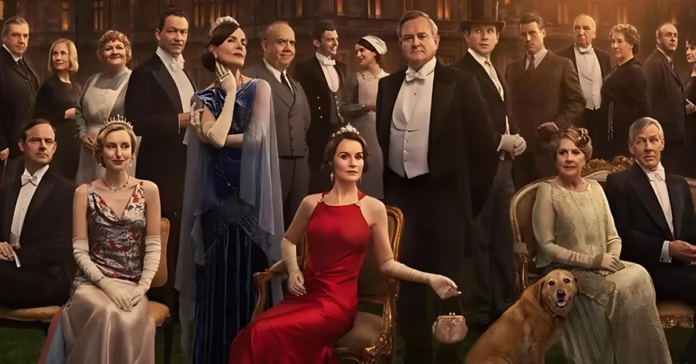

The world of British aristocracy has long held a captive audience, and the saga of the Crawley family at Highclere Castle remains one of the most successful cultural exports of the last decade. For years, the burning question among the global fanbase has been, will there be another Downton abbey movie, and the answer has arrived with the cinematic release of the franchise’s third and final installment. Titled Downton Abbey: The Grand Finale, this latest motion picture event serves as the definitive closing chapter for a story that began in the post-Edwardian era and has now transitioned into the 1930s. Released in the fall of 2025, the film has bridged the gap between the small and large screens, offering a sweeping conclusion to the drama that once defined Sunday night television.
A Historic Launch and a Triumphant Return
The journey to the third film was a labor of love for series creator Julian Fellowes and the production team at Carnival Films. After months of intense speculation and rumors of a potential seventh season, Focus Features and Universal Pictures International officially greenlit the third movie, which eventually premiered in the United States on September 12, 2025. Directed by Simon Curtis, the visionary behind Downton Abbey: A New Era, the film was designed to be a “motion picture event” that honored the series’ origins while pushing the narrative toward its inevitable conclusion.
Filming for this final outing took place across a rigorous schedule between May and August of 2024. The production returned to its spiritual home at Highclere Castle in Hampshire, where the sprawling 1,000-acre estate provided the backdrop for the Crawley family’s last stand. The return to Highclere was essential for maintaining the authenticity and grandeur that fans have come to associate with the name Downton. By late 2025, the film had already achieved significant commercial success, surpassing $102 million at the global box office and solidifying its place as a cornerstone of the historical drama genre.
Stepping Into the 1930s: A World in Transition
The narrative of The Grand Finale is set in 1930, marking a significant jump from the previous film’s late-1920s setting. This era represents a pivotal moment in British history, as the country grappled with the early years of the Great Depression and the slow erosion of the traditional class system. The Crawleys are no longer living in the secure, gilded age of their youth; instead, they are forced to confront the harsh realities of a modernizing world where the maintenance of a grand estate like Downton is becoming an almost impossible feat.
In this setting, the themes of succession and survival are paramount. Lady Mary, now firmly at the helm of the estate’s management, must navigate the complexities of leading a household in a time of economic downturn. The film portrays the 1930s not just as a decade of glamour, but as one of profound anxiety, where the old ways are being rapidly replaced by new social norms. This historical accuracy adds a layer of weight to the story, making the final farewell feel both earned and necessary.
The Ultimate Cast Reunion: Familiar Faces and Newcomers
One of the greatest achievements of the final movie was its ability to bring back nearly the entire principal cast, ensuring that every fan favorite received a proper goodbye. Hugh Bonneville returned as Robert Crawley, the Earl of Grantham, alongside Elizabeth McGovern as Cora Crawley. Their performances grounded the film, portraying a couple who has weathered decades of change with grace and resilience. Michelle Dockery’s Lady Mary continued her evolution from a sharp-tongued socialite to a formidable matriarch, standing as the bridge between the old world and the new.
The ensemble was further bolstered by the return of:
- Laura Carmichael as Lady Edith, whose career as a journalist and role as the Marchioness of Hexham reached a satisfying peak.
- Allen Leech as Tom Branson, the former chauffeur turned family pillar.
- Jim Carter as the legendary Mr. Carson, whose presence in the house remains as steadfast as ever.
- Phyllis Logan as Mrs. Hughes, continuing to lead the downstairs staff with her characteristic wisdom.
- Joanne Froggatt and Brendan Coyle as Anna and John Bates, whose enduring love story has been a fan-favorite since the first season.
The film also welcomed back Paul Giamatti as Harold Levinson, Cora’s brother, who returned from the United States with a host of new complications. New additions to the cast included Joely Richardson, Alessandro Nivola, Simon Russell Beale, and Arty Froushan, who portrayed characters that challenged the Crawley status quo. Dominic West also reprised his role as Guy Dexter, the film star whose storyline from the second movie provided a glamorous link to the world of 1930s cinema.
A Narrative of Scandal and Legacy
The core of the plot involves a series of challenges that threaten the very foundation of the Abbey. Lady Mary finds herself embroiled in a public scandal involving a high-profile divorce, a situation that would have been unthinkable for her father’s generation. This conflict highlights the shift in social mores during the 1930s, as Mary refuses to be cowed by the judgments of the press or the peerage. Meanwhile, the family faces a mounting financial crisis that puts the future of the estate in jeopardy, leading to a dramatic exploration of what it means to preserve a legacy when the world no longer values the same traditions.
The film also serves as a poignant tribute to the late Dame Maggie Smith, who portrayed the incomparable Violet Crawley, the Dowager Countess. Although the character passed away in the previous film, her presence is felt through the wisdom she left behind and the memory of her sharp wit. The cast and crew have frequently mentioned that the production of The Grand Finale felt like a collective mourning for both the character of Violet and the actress herself, who passed away in September 2024. This emotional layer makes the movie a deeply moving experience for anyone who has followed the series since its inception.
Filming Locations: A Tour of England’s Grandest Estates
While Highclere Castle remains the heart of the franchise, The Grand Finale expanded its visual palette by utilizing several other historic locations across England. To recreate the London of 1930, the production used Bridgewater House in St. James for the exterior of Grantham House, the family’s city residence. The interiors were shot at Basildon Park in Berkshire, a National Trust property known for its stunning Octagon Room.
Other notable locations included:
- Bampton, Oxfordshire: The village that has stood in for the fictional town of Downton for over a decade.
- Richmond Theatre: Used to recreate the glamorous interiors of a West End theatre during the “London season.”
- Ripon Racecourse: Doubled for Ascot, as the modern renovations at Ascot itself were too contemporary for the 1930s setting.
- The Great Yorkshire Showground: Used for scenes depicting the county show, a staple of the Crawley family’s social calendar.
These locations, combined with the meticulous costume design and cinematography, ensure that the final film is a visual masterpiece, capturing the fading glory of the British aristocracy with unmatched detail.
The Finality of the Grand Finale
As fans reflect on the journey, the question remains: will there be another Downton abbey movie after this one? According to Julian Fellowes and the executive producers, this is indeed the end. Fellowes has been clear about his desire to finish the story before the onset of World War II, wanting to leave the Crawleys in a period that still felt recognizable to the fans who fell in love with them in 1912. The title itself, The Grand Finale, was chosen to signal to the audience that the doors of Downton are closing for good.
The film concludes with a sense of “shuttering the story,” providing resolutions for every major character and ensuring that the house itself—the true star of the series—is left in capable hands. The final scene, which has already been described by critics as an emotional masterclass, offers a moment of reflection that ties together fifteen years of storytelling.
How to Watch and Stream the Final Chapter
Following its September theatrical release, the film has made its way to streaming platforms and physical media. In the United States, Peacock has become the primary streaming home for the final movie, while it remains available for digital purchase and rental on platforms like Amazon and Apple TV. To celebrate the release, NBC aired a special titled Downton Abbey Celebrates the Grand Finale on September 10, 2025, featuring behind-the-scenes footage and interviews with the cast at London’s Savoy Hotel. This special provided a rare glimpse into the camaraderie of the actors who have spent over a decade working together, making the finality of the project even more impactful.
A Cultural Phenomenon Comes to a Close
The impact of Downton Abbey on the television and film landscape cannot be overstated. It revitalized the period drama, proving that there was still a massive audience for stories about duty, family, and the changing tides of history. From the sinking of the Titanic to the dawn of the 1930s, the Crawleys have navigated a world of upheaval with dignity and heart. While the cinematic journey may be over, the legacy of the series lives on in the hearts of millions and in the halls of Highclere Castle, which continues to welcome fans from around the world.
With the curtains finally closing on this legendary saga, which character’s journey did you find the most inspiring over the years?