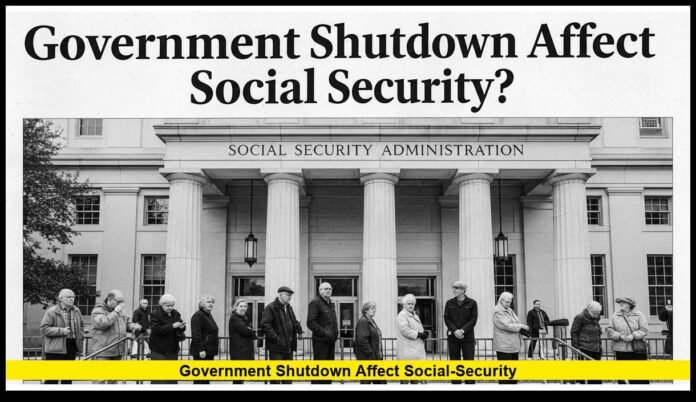

As Washington faces another budget standoff, millions of Americans are asking the same critical question: will the government shutdown affect Social Security?
For retirees, people with disabilities, and survivors who rely on these payments for daily living, any disruption can cause serious concern. The 2025 government shutdown has already triggered furloughs, closed some federal agencies, and delayed services in multiple sectors. But when it comes to Social Security, the picture is more stable — though not without a few complications.
This comprehensive guide breaks down exactly what a shutdown means for Social Security recipients, how payments are protected, which services may slow down, and what you should do to stay informed and prepared.
Social Security Payments Will Continue During the Shutdown
The single most important fact to know is that Social Security checks will not stop because of a government shutdown. Unlike many federal programs that depend on annual congressional appropriations, Social Security is funded through mandatory spending, which is not subject to yearly budget debates.
Here’s why your benefits are safe:
- Social Security is funded by the Social Security Trust Funds, which receive money from payroll taxes and other dedicated sources.
- The Treasury Department is legally required to continue sending out benefits regardless of a government shutdown.
- Congress does not have to pass a new law each year to authorize Social Security payments — the funding is permanent.
This means that monthly retirement, disability, and survivors’ benefits will continue to be issued on time and in full, whether you receive them through direct deposit or paper check.
Why Social Security Is Largely Shielded From Shutdowns
To understand why Social Security operates even when the federal government shuts down, it helps to know how the program is structured.
Social Security is not part of the discretionary budget, which is the portion of government spending Congress negotiates each year. Instead, it’s part of mandatory spending, which operates under permanent laws that automatically fund programs without annual approval.
Additionally:
- Administrative costs are mostly covered by the trust funds themselves.
- SSA (Social Security Administration) has legal authority to keep enough workers on duty to ensure payments are processed.
- The benefit structure is written into law, so delays would require legislative changes — not simply a lack of a budget deal.
In short, political gridlock doesn’t stop the flow of Social Security funds, even if it affects other services.
Some SSA Services Could Be Delayed
While benefit payments are safe, the shutdown does affect the Social Security Administration’s operations. SSA relies partly on discretionary funding for administrative tasks, and during a shutdown, many “non-essential” employees are temporarily furloughed. This can lead to delays and reduced service availability.
Here’s a breakdown of what could be impacted:
1. Local Field Offices
Many SSA field offices remain open during shutdowns but with limited staff. This means:
- Longer wait times for in-person visits.
- Reduced capacity to handle complex issues on-site.
- Some non-urgent services may be postponed.
2. Application Processing
If you’re applying for retirement, disability (SSDI), or Supplemental Security Income (SSI) benefits, processing times may increase. While initial applications are often considered essential, support tasks — like verifications and communications with other agencies — may be delayed.
3. Replacing Social Security or Medicare Cards
Requests for replacement cards typically rely on administrative staff who may be furloughed. Delays in processing these requests are common during shutdowns.
4. Benefit Verifications and Overpayment Corrections
Services such as verifying benefit amounts for loans, housing, or immigration applications may slow down or pause temporarily. Overpayment recovery efforts may also be delayed.
5. Call Center Wait Times
SSA call centers usually experience longer-than-usual hold times during a shutdown, since fewer agents are available to handle inquiries.
These disruptions don’t affect the actual distribution of funds — but they can impact anyone trying to apply for benefits, update their information, or resolve issues during this period.
Essential SSA Employees Stay on the Job
Despite staffing cutbacks, a large number of SSA employees are classified as “essential”, meaning they continue to work during a government shutdown to ensure payments are processed.
- Roughly two-thirds of SSA’s workforce typically remains active during shutdowns.
- These employees focus on critical functions, including maintaining IT systems, processing benefits, and handling urgent beneficiary needs.
- Non-essential functions — typically administrative or support roles — are where most furloughs occur.
This staffing structure ensures that the core mission of SSA — getting benefits to recipients — continues uninterrupted.
Impact on 2026 COLA Announcement
A potential indirect effect of the shutdown involves the Social Security Cost of Living Adjustment (COLA) for 2026.
- COLA increases are based on inflation data from the Bureau of Labor Statistics (BLS).
- If the BLS faces furloughs, it may delay the release of inflation data.
- This could postpone the official COLA announcement, typically expected in mid-October.
Even if the announcement is delayed, the adjustment itself will still be calculated and applied retroactively. Recipients will not lose any benefits, but they may have to wait longer for the official figures to be released.
Key Social Security Services During a Government Shutdown
| Service | Status During Shutdown |
|---|---|
| Monthly benefit payments | Continue on schedule – not affected |
| Application for benefits | Accepted, but processing may be slower |
| SSA field offices | Open with reduced staff; longer wait times expected |
| Replacement cards | Possible delays depending on staffing |
| Benefit verification requests | May be delayed or temporarily paused |
| Call centers | Open, but with longer response times |
| COLA announcement | Could be delayed if inflation data release is postponed |
Tips for Recipients During the Shutdown
To minimize any inconvenience, Social Security recipients can take several proactive steps:
- Use SSA’s online services whenever possible. Many tasks — such as viewing benefit statements, checking application status, or requesting replacement cards — can be done online without visiting an office.
- Avoid non-essential visits to local field offices during the shutdown period to minimize wait times.
- Be patient with customer service lines, as reduced staffing may mean longer delays.
- Plan ahead for any documentation or benefit verifications you may need, since these services may face slowdowns.
- Monitor official SSA communications, either through their website or official press releases, to stay updated on changes to service availability.
Past Shutdowns Show Social Security’s Reliability
History offers reassurance: Social Security has never stopped issuing payments during a government shutdown.
For example, during the 2018–2019 shutdown — the longest in U.S. history — benefit checks went out on schedule. The same was true in earlier shutdowns. While administrative tasks slowed down, the program’s funding structure ensured that recipients received their money without interruption.
This historical consistency underscores why Social Security is considered one of the most reliable federal programs during political impasses.
Long-Term vs. Short-Term Concerns
It’s important to separate the short-term impacts of a shutdown from the long-term issues facing Social Security.
The current shutdown affects administrative services but does not threaten the solvency of the program. However, separate from the shutdown, Social Security faces long-term funding challenges. According to projections, the trust funds could be depleted in the 2030s if no legislative action is taken — potentially leading to reduced benefits.
For now, though, the focus is on navigating the temporary disruptions caused by the 2025 government shutdown.
Final Thoughts
So, will the government shutdown affect Social Security? The bottom line is this: your benefits will continue, your payments will arrive on time, and your financial support remains secure.
However, expect slower service for administrative tasks such as applications, card replacements, and benefit verifications. The shutdown may also delay the official 2026 COLA announcement, but it will not affect the amount you receive once it’s determined.
This situation is a reminder of how Social Security operates independently of political gridlock, offering crucial stability to millions of Americans.
If you rely on Social Security, there’s no need to panic — just stay informed, plan ahead, and be prepared for minor delays. What concerns you most about the shutdown’s impact on your benefits? Share your thoughts below.