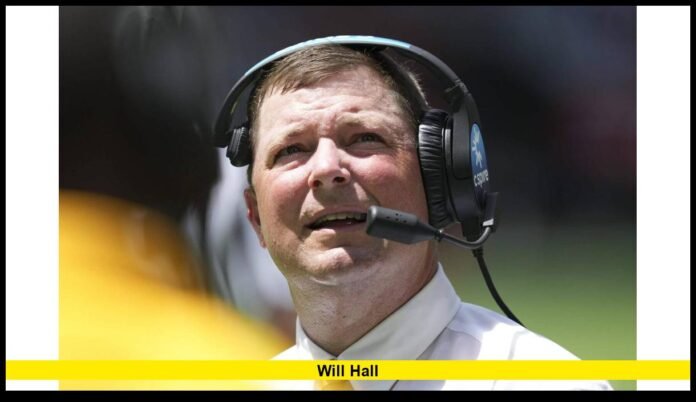

Will Hall has officially stepped into the spotlight as Tulane’s next head football coach, and the timing marks a pivotal shift for a program experiencing one of the most important moments in its modern history. Will Hall arrives in this role with familiarity, experience, and a renewed opportunity to guide a team preparing for its next competitive era. His return to the program and the decision to elevate him have sparked widespread discussion among fans, analysts, and the broader college football community, setting the tone for a significant new chapter.
From the moment Tulane announced the leadership transition, interest has centered on how Hall’s extensive background, established relationships, and offensive expertise will influence both immediate planning and long-term results. The promotion comes after months of performance evaluation, internal discussions, and a desire for continuity within a team that has already built strong momentum in recent years. The confidence shown in Hall underscores Tulane’s belief that he understands the program’s identity and can guide it without disruption as it prepares for the seasons ahead.
Will Hall’s Path Back to Tulane
Hall’s appointment reflects a full-circle journey for a coach who previously shaped Tulane’s offensive identity. His earlier tenure as offensive coordinator in 2019 and 2020 left a strong impression. During those seasons, the team displayed improved rhythm, stronger quarterback play, and a clear sense of offensive structure. His return in 2025 as passing game coordinator further reinforced his connection with the program.
Before his return, Hall built his coaching résumé through a varied path across multiple roles. He made his name at the Division II level, where he delivered exceptional results at both West Alabama and West Georgia. His teams recorded postseason appearances, conference championships, and nationally ranked offenses. These years highlighted his skill as a program builder and strategist.
Hall’s experiences also included offensive coordinator roles and, later, a head-coaching position at Southern Miss. Although his time there presented challenges, he gained valuable experience navigating roster shifts, competitive pressure, and the balance between long-term development and immediate performance.
His journey stands out not only for its results but for the range of situations he has encountered. It’s rare for a coach to work at multiple levels, lead programs through rebuilds, and hold both coordinator and head-coaching positions across different environments. Tulane recognized that these varied perspectives could strengthen the team’s transition, particularly at a time when stability is essential.
Why Tulane Selected an Internal Leader
Tulane’s choice reflects several priorities that align closely with Hall’s strengths. First, the need for continuity became essential as the program approached key postseason milestones. The administration understood the risks of introducing an external coach at a delicate moment. By promoting someone already on staff, Tulane ensured that the current playbook, communication lines, and locker room chemistry remained intact.
Second, Hall brought an established presence. The players know him, his coaching approach, and his expectations. That foundation can be crucial during a coaching turnover, as athletes often face uncertainty about roles, rotations, and system changes. With Hall stepping in, the program avoids those common turbulence points.
Third, Tulane recognized Hall’s offensive expertise as an asset. In an era of fast-paced, high-scoring college football, offensive identity has become a central factor in long-term success. Programs that maintain clarity and consistency in offensive philosophy tend to perform well in recruiting and player development. Hall’s track record, built on balanced play design and adaptable schemes, complements Tulane’s existing strengths.
Finally, Tulane valued leadership experience. Even though Hall’s last head-coaching position produced mixed results, he demonstrated the capacity to manage staff, recruit talent, and oversee the day-to-day demands of a major program. The administration viewed these experiences as stepping stones that could help him excel when given the right environment and support system.
How Hall’s Coaching Philosophy Aligns With Tulane’s Identity
Hall’s coaching style emphasizes structure, discipline, and efficient execution. His offensive schemes often blend tempo with versatility, allowing quarterbacks to make decisive reads while giving skill players room to create opportunities. This approach has historically produced steady improvements in yardage, scoring balance, and situational performance.
At Tulane, Hall will inherit a roster shaped by previous success. Many players have already benefited from the strategic systems developed over recent seasons. Hall’s familiarity with those systems makes him uniquely positioned to expand upon them without introducing unnecessary disruption.
Recruiting plays a significant role in his philosophy as well. Hall has long been considered a strong regional recruiter, with a particular strength in building relationships across the Southeast. His approach often focuses on identifying players with both athletic skill and developmental upside, especially those who fit within a defined system.
By combining scheme knowledge, player development, and recruiting focus, Hall aligns closely with Tulane’s broader goals. The program aims to remain competitive, attract high-impact talent, and maintain a strong presence within its conference. Hall’s style supports all three priorities.
Challenges Ahead for Hall and the Program
Taking over a major program always presents challenges, and Hall will face several in the months ahead. The transfer portal has changed the landscape of college football, making roster management more volatile than ever. Hall will need to act quickly to identify lineup strengths, address depth needs, and build rapport with both returning players and new arrivals.
Recruiting will also be essential. Tulane’s recent success has increased its visibility, creating higher expectations for talent acquisition. Hall must balance immediate roster demands with the long-term development pipeline needed to sustain performance across multiple seasons.
Staff assembly is another factor. Hall will be responsible for selecting coordinators, analysts, and various assistants who share his vision and can execute it effectively. These hires play a critical role in player development, preparation routines, and game planning.
Additionally, Hall will operate under heightened expectations. Tulane’s rise to national recognition has energized the fan base, and supporters want continued momentum. Success in the first season will depend on how quickly Hall can cement his system while managing the realities of transition.
How Players Benefit From Hall’s Leadership
Hall’s presence offers immediate benefits for the roster. Because he has already been working directly with players this season, many understand his coaching style and communication methods. This familiarity reduces the adjustment period that typically follows a coaching change.
Quarterbacks in particular may benefit from Hall’s system. His approach emphasizes clarity in decision-making, efficient reads, and structured play development. Skill-position players often thrive under coaches with offensive backgrounds, as they receive consistent opportunities to contribute within a reliable system.
Defensive players also stand to benefit, as Hall’s offensive structure can support complementary game planning. When an offense controls tempo and maintains consistent production, it eases pressure on the defensive unit. This balance helps create more sustainable performance across all four quarters.
Overall, Hall’s leadership provides stability at a time when many programs face uncertainty during transitions. Players who commit to Tulane can feel confident that the foundation remains steady.
Fan Expectations and Early Reactions
The reaction among fans has been highly engaged. Many appreciate the program’s decision to promote someone who understands Tulane’s culture and has a proven connection with the roster. This group sees Hall as a stabilizing force capable of extending the program’s upward trajectory.
Others point to the challenges from his previous head-coaching role and hope the new environment provides the support needed to maximize his potential. Despite differing perspectives, the shared theme is anticipation. Tulane fans want to see how Hall will shape the program over the next year and how he plans to build on existing momentum.
The excitement surrounding the transition underscores how much Tulane football has grown. Hall steps into a program with a dedicated fan base, rising national relevance, and strong competitive expectations.
What’s Next for Tulane Under Hall’s Leadership
Over the coming weeks, Hall will focus on several key priorities:
- Finalizing staff roles
- Evaluating roster strengths and needs
- Meeting with returning players
- Managing transfer portal activity
- Securing recruiting commitments
- Establishing his strategic direction for 2026
These efforts will shape both the immediate months ahead and the long-term trajectory of Tulane football. Each step represents a foundational move toward sustaining the progress the program has built.
Will Hall’s arrival as Tulane’s new head coach marks the start of a meaningful transition—one shaped by experience, familiarity, and a clear vision for the future. His leadership will guide the program into its next chapter, and fans will be watching closely as he puts his plan into action.
Share your thoughts about Tulane’s direction and join the discussion below.