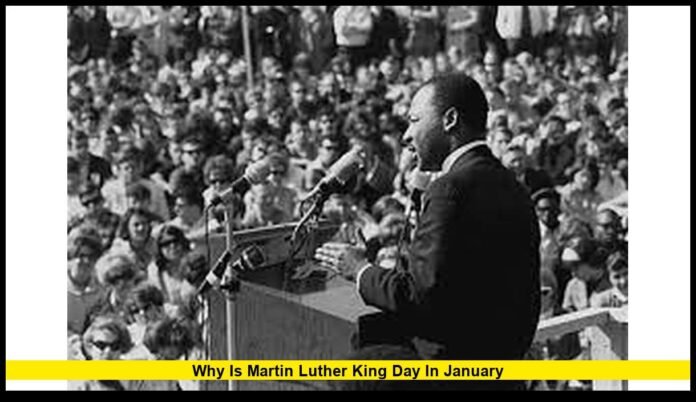

Why is Martin Luther King Day in January? Every year, Americans across the country come together on the third Monday of January to celebrate the life of Dr. Martin Luther King Jr., the civil rights leader who inspired generations with his message of equality, justice, and peace. The holiday’s date was chosen to honor his birthday on January 15, 1929, and to remind the nation that his vision for unity and service remains as important today as it was during the civil rights movement.
How the January Holiday Began
Dr. Martin Luther King Jr. was born in Atlanta, Georgia, on January 15, 1929. His leadership during the civil rights movement of the 1950s and 1960s forever changed the course of American history. After his assassination in April 1968, people across the country began calling for a national holiday to honor his life and work.
Creating the holiday took years of dedication. Members of Congress introduced legislation soon after his death, but it faced strong opposition. Supporters—including everyday citizens, civil rights activists, and cultural leaders—refused to give up. They believed the holiday should fall near King’s birthday as a celebration of his life and not as a reminder of his death.
After more than 15 years of campaigning, the U.S. Congress passed a bill in 1983 to make Martin Luther King Jr. Day a federal holiday. President Ronald Reagan signed the bill into law on November 2, 1983, officially designating the third Monday in January as the national day of observance.
The first nationwide celebration took place on January 20, 1986. Today, it remains one of America’s most meaningful and unifying holidays.
Why January Was Chosen
The choice to place the holiday in January wasn’t random—it was both symbolic and practical. First and foremost, January honors Dr. King’s actual birthday. But the month also carries deeper meaning: it represents new beginnings, reflection, and renewal.
At the start of each year, people set new goals and reflect on how they can improve themselves and their communities. That spirit perfectly matches King’s message of continuous progress and personal responsibility. By holding the holiday early in the year, Americans are encouraged to begin each new chapter with compassion, equality, and service.
The date also follows the Uniform Monday Holiday Act, passed in 1968, which moved several federal holidays to Mondays to create three-day weekends. This system made it easier for people across the country to participate in events, parades, and community service.
Because of this law, Martin Luther King Jr. Day always falls between January 15 and January 21, keeping it close to his birthday.
Here’s a look at the upcoming holiday dates:
| Year | Date of MLK Day | Closest to King’s Birthday |
|---|---|---|
| 2025 | January 20, 2025 | 5 days after |
| 2026 | January 19, 2026 | 4 days after |
| 2027 | January 18, 2027 | 3 days after |
| 2028 | January 17, 2028 | 2 days after |
The Long Road to Becoming a Federal Holiday
While Martin Luther King Jr. Day feels natural now, it took decades of effort to make it a reality. The first bill to create the holiday was introduced in 1968, but it failed to pass Congress. Opposition continued for years, with some arguing that no private citizen had ever received a federal holiday before.
Supporters never gave up. Throughout the 1970s, they organized rallies, wrote letters to Congress, and circulated petitions. The movement gained major national attention when musician Stevie Wonder released his hit song “Happy Birthday” in 1980, written to celebrate King and encourage the creation of the holiday.
Public support exploded. By 1983, millions of Americans had signed petitions urging Congress to pass the bill—one of the largest petition drives in U.S. history.
Finally, that same year, Congress approved the legislation, and President Reagan signed it into law. However, it wasn’t until 2000 that all 50 states officially observed the holiday. Today, every state and territory celebrates Martin Luther King Jr. Day each January.
A Day of Service and Reflection
Martin Luther King Jr. Day isn’t just a day to remember—it’s a day to take action. In 1994, Congress officially designated it as a National Day of Service, encouraging Americans to spend the day volunteering and giving back to their communities.
The idea behind this decision reflects King’s own values. He once said, “Life’s most persistent and urgent question is: What are you doing for others?”
Every year, thousands of local and national organizations coordinate service projects across the country. These efforts range from neighborhood cleanups to food drives, mentoring programs, and social justice workshops.
Common activities on MLK Day include:
- Helping at food banks or homeless shelters.
- Organizing clothing or school supply drives.
- Mentoring students or supporting youth programs.
- Joining community restoration projects such as park cleanups or mural painting.
- Hosting educational events focused on equality and leadership.
By turning the holiday into a “day on” instead of a “day off,” the country keeps Dr. King’s message of service alive and thriving.
The Connection Between King’s Birthday and His Mission
Dr. King’s birthday on January 15 holds deep personal and historical importance. The decision to celebrate his life near this date ensures that the holiday honors both the man and his mission.
Dr. King’s work went far beyond his speeches—it was about building a society rooted in fairness and understanding. Observing his birthday each January gives people time to reflect on his lessons and apply them to modern challenges.
Each year, cities across the nation host memorials, parades, and interfaith services that celebrate King’s life. The Martin Luther King Jr. National Historical Park in Atlanta becomes a center of activity, drawing visitors who want to learn more about his life, his ministry at Ebenezer Baptist Church, and his role in transforming America’s conscience.
The Educational Power of the January Holiday
Holding the holiday in January also benefits schools and educators. The timing allows teachers to start the new year with lessons that highlight Dr. King’s contributions to civil rights, equality, and leadership.
Throughout the month, schools organize activities that help students connect King’s message to real-world action. Examples include:
- Essay contests on leadership and justice.
- Art projects inspired by King’s vision of unity.
- Community service assignments that link classroom learning to civic engagement.
- Assemblies and guest speakers who discuss diversity and inclusion.
These activities ensure that younger generations not only learn about Dr. King but also understand how his ideas continue to shape America.
Why January Matters for the Nation
Celebrating Martin Luther King Jr. Day in January also holds cultural meaning. As the first major federal holiday of the year, it sets the tone for the months ahead. It reminds people to start the year with purpose—by focusing on compassion, equality, and community building.
January represents a fresh start, a time when resolutions are made and hope feels renewed. Dr. King’s message of unity fits naturally within this mindset. His belief that “we must learn to live together as brothers or perish together as fools” resonates deeply in a month dedicated to new beginnings.
Each January, Americans use this holiday as a chance to ask: How can I make a difference this year?
Digital Celebration and Modern Awareness
In recent years, Martin Luther King Jr. Day has become one of the most shared and discussed holidays online. Social media helps keep his message alive for new generations.
Hashtags like #MLKDay, #ServeToHonor, and #KeepTheDreamAlive trend across platforms every January. Millions of users share King’s quotes, speeches, and stories of community service. Schools, nonprofits, and public figures use digital campaigns to encourage people to volunteer and spread kindness.
Virtual events and online panel discussions also allow Americans to participate no matter where they are, ensuring that the message of service and unity reaches across every community.
King’s Legacy in the Context of the New Year
Honoring Dr. King in January carries emotional and symbolic power. It’s a time when the country reflects on where it stands and where it wants to go. The cold days of winter are a reminder of the warmth and light his leadership brought during some of the darkest chapters in American history.
His teachings remain timeless. He showed that courage, empathy, and love are stronger than hate and division. By celebrating his holiday at the start of the year, Americans are encouraged to embody those values moving forward.
Every January, as the nation honors his birthday, the message is clear: Dr. King’s dream lives on through action, understanding, and shared responsibility.
The Lasting Relevance of a January Celebration
Dr. Martin Luther King Jr. once said, “The arc of the moral universe is long, but it bends toward justice.” Placing his holiday in January reinforces that idea. It marks not just remembrance, but renewal — a yearly opportunity to recommit to building the fair and peaceful world he envisioned.
In classrooms, offices, and communities nationwide, the message remains the same: the fight for equality didn’t end with Dr. King—it continues through every person who chooses kindness, courage, and service.
How will you celebrate Martin Luther King Jr. Day this January? Share your thoughts, reflections, and ways you plan to make a difference this year.