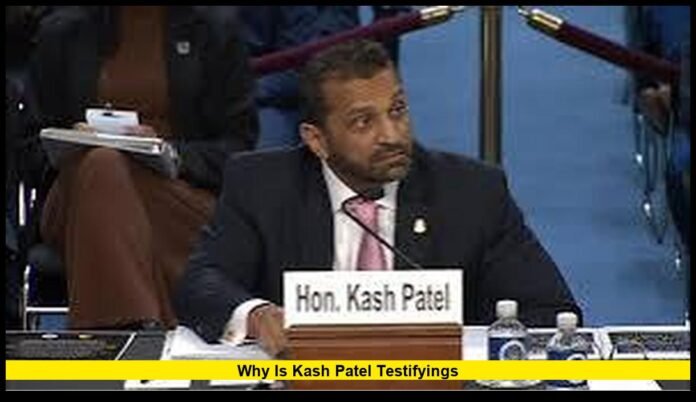

Why is Kash Patel testifying before the U.S. Senate? FBI Director Kash Patel is appearing before the Senate Judiciary Committee for a major oversight hearing examining how he is running the Federal Bureau of Investigation, his policy changes, personnel decisions, handling of politically sensitive investigations, and the bureau’s priorities under the Trump administration.
The September 15, 2026, hearing comes at a particularly consequential moment for the FBI. Republicans on the committee have highlighted Patel’s emphasis on violent crime, drug trafficking and changes they say are intended to restore accountability at the bureau. Democrats, meanwhile, have challenged his management decisions, questioned the independence of the FBI and pressed him on controversies involving personnel departures, travel, sensitive investigations and agency hiring standards.
The hearing is therefore about much more than a single controversy. It gives senators an opportunity to publicly question the FBI director about the direction of one of the federal government’s most powerful law-enforcement agencies.
Kash Patel Appears Before the Senate Judiciary Committee
The Senate Judiciary Committee scheduled the hearing as an oversight examination of the FBI. Patel’s appearance marks his return to the committee for the first time since September 2025.
Unlike a confirmation hearing, Patel is not appearing because he is seeking a new position. He is testifying because Congress has an oversight role over the FBI and wants information about the bureau’s operations.
Congressional oversight can involve questions about budgets, staffing, agency policies, investigations, management practices and the implementation of federal law. Senators can also use testimony to identify areas requiring additional investigation or legislative action.
Patel’s appearance has attracted substantial attention because his tenure as FBI director has been highly controversial.
What Is Kash Patel Being Questioned About?
Several major issues are driving the questioning.
Among them are:
- Changes to FBI hiring standards
- Departures and personnel changes within the bureau
- The FBI’s handling of politically sensitive investigations
- Jeffrey Epstein-related records
- Election security and the FBI’s role during the 2026 midterm elections
- FBI travel and use of government resources
- Crime statistics and law-enforcement priorities
- Allegations concerning Patel’s management and conduct
The hearing has produced sharply different reactions from Republicans and Democrats, reflecting a broader dispute over the FBI’s mission and independence.
FBI Hiring Standards Become a Major Flashpoint
One of the most contentious topics is the FBI’s revised employment standards.
The bureau has changed policies governing certain past conduct that could previously result in an automatic rejection of an applicant. The changes have attracted attention because they involve categories such as prostitution or sex solicitation, theft from an employer and bestiality.
Democratic senators have demanded a detailed explanation for the revisions. They argue that the FBI should maintain extremely high standards for people who may gain access to sensitive information, classified material and powerful investigative tools.
Patel has defended the policy changes.
His explanation has centered on the need to evaluate individual circumstances rather than automatically disqualify every applicant based on conduct in their past. He has emphasized situations involving trafficking, coercion or other circumstances in which a person’s conduct may not accurately reflect their character or suitability for federal employment.
That argument has not satisfied all senators.
Republican Sen. John Kennedy, for example, pressed Patel for additional clarification concerning the treatment of bestiality under the revised rules. The exchange demonstrated how unusual and politically sensitive the hiring changes have become.
Democrats have also requested documentation showing who approved the revisions and how many applicants could be affected by them.
Why Are FBI Staffing Decisions Under Scrutiny?
Personnel changes are another major part of the Senate’s examination of Patel.
The FBI has experienced significant changes in its workforce during Patel’s tenure. Critics argue that the departure of experienced agents and senior officials could reduce institutional knowledge at an agency where investigations can take years to complete.
Supporters of Patel see the personnel changes differently. They argue that the FBI needed a significant transformation after years of criticism over what they consider politicization, inconsistent enforcement priorities and excessive independence from elected officials.
That disagreement is at the heart of Patel’s relationship with Congress.
Democrats have argued that experienced career employees should not be removed or marginalized for political reasons. Patel has maintained that leadership changes are part of his effort to reform the bureau and establish greater accountability.
The Senate hearing allows both sides to put those competing arguments directly on the congressional record.
Epstein Files Are Another Major Issue
The FBI’s handling of records connected to Jeffrey Epstein is also drawing intense scrutiny.
Epstein, the wealthy financier and convicted sex offender who died in federal custody in 2019, has remained the subject of enormous public interest. Questions about his relationships, alleged trafficking activities and the government’s investigative records have continued for years.
During Patel’s time as FBI director, the bureau’s handling of Epstein-related material has become politically contentious.
Democratic senators have questioned whether additional records should be released and whether the FBI has provided enough transparency concerning the investigation.
Republican lawmakers have also shown interest in Epstein records, although their questions can differ significantly from those raised by Democrats.
The issue puts Patel in a difficult position because the FBI possesses investigative material that can be subject to legal restrictions, privacy protections, court orders and other limitations.
Patel has maintained that the bureau must operate within those legal boundaries.
Trump-Era Investigations Are Part of the Political Battle
Another major issue involves previous investigations connected to President Donald Trump and efforts to overturn the results of the 2020 presidential election.
Republican lawmakers have repeatedly argued that earlier federal investigations into Trump and his political allies were politically motivated or improperly handled.
Patel has been receptive to examining those matters and has emphasized accountability for what he views as misconduct within the federal law-enforcement system.
Democrats strongly disagree.
They have accused Patel of directing the FBI toward investigations and theories connected to Trump’s political grievances while diverting attention from other priorities.
That disagreement reflects one of the central questions surrounding Patel’s tenure: whether the FBI is being reoriented toward legitimate accountability or becoming too closely aligned with the political interests of the administration.
Election Security Comes Into Focus
The 2026 midterm elections add another important dimension to the hearing.
Senators questioned Patel about how the FBI will approach election security and whether agents could be physically present at polling locations.
Patel said the bureau would follow the law if circumstances required agents to respond to a potential federal offense. He also described the FBI’s election-security structure, including personnel working through field offices.
The issue is sensitive because federal law-enforcement agencies have to balance election security with the need to avoid unnecessary interference with voting.
The FBI has traditionally played a role in investigating threats, violence, cyberattacks and other federal crimes associated with elections. At the same time, the actual administration of elections is largely handled by state and local authorities.
With the midterm elections approaching, senators are seeking clarity about where the FBI’s responsibilities begin and end.
Patel Highlights Falling Crime
While Democrats have focused heavily on controversies surrounding Patel’s leadership, Republicans have emphasized crime statistics.
Patel has pointed to reductions in crime as evidence that his approach to the FBI is producing results.
The bureau’s latest crime data shows a significant decline in violent crime, with the 2024-to-2025 decline described as the largest year-to-year drop in violent crime rates since the FBI began estimating national crime levels in 1936.
Republican senators have used those figures to argue that Patel deserves credit for emphasizing traditional law enforcement priorities.
They have also highlighted the FBI’s work against violent crime and drug trafficking.
Democrats have not disputed the importance of crime reduction but have questioned whether those results should outweigh concerns about Patel’s management, personnel decisions and the FBI’s institutional independence.
Questions About Patel’s Travel and Use of Resources
Patel is also facing questions about his use of taxpayer-funded resources.
Democratic lawmakers have questioned expenses connected to his travel and other activities. They have sought explanations concerning whether government resources were used appropriately and whether personal activities were improperly connected to official FBI business.
These questions became particularly important after earlier congressional confrontations over Patel’s management and conduct.
Patel has rejected allegations of wrongdoing and defended his record.
The dispute is significant because the FBI director controls an agency with a substantial federal budget. Congressional committees have a responsibility to examine how that money is spent and whether agency resources are being used for legitimate government purposes.
Allegations About Patel’s Conduct Have Added to the Controversy
Patel has also been involved in a separate political and legal dispute concerning allegations about his personal behavior and management of the FBI.
Earlier in 2026, Democratic lawmakers questioned him about reports concerning alcohol use, absences and his ability to manage the bureau.
Patel strongly denied the allegations and characterized them as false.
He later filed a $250 million defamation lawsuit against The Atlantic over reporting concerning his conduct. The dispute has become another element of the political battle surrounding his leadership.
Although personal allegations are not the central purpose of the September 15 Judiciary Committee hearing, they remain part of the broader context surrounding questions about Patel’s leadership.
Democrats and Republicans See Patel’s Leadership Very Differently
The sharp divide between the two parties is one of the defining features of the hearing.
Republicans generally argue that Patel is changing the FBI after years of political controversy. They have emphasized crime reductions, accountability and investigations involving alleged misconduct by government officials.
Democrats have taken a much more critical position.
They argue that Patel has weakened the bureau by removing experienced personnel and has placed too much emphasis on issues connected to Trump’s political agenda. Some Democratic senators have gone as far as calling for Patel to be replaced.
Those competing perspectives make the hearing particularly significant.
It is not simply an assessment of Patel’s management style. It is also a debate about what the FBI should be and how independent it should remain from presidential politics.
Why Does Congress Have the Power to Question the FBI Director?
The Senate Judiciary Committee’s oversight role is rooted in Congress’s constitutional responsibility to monitor the executive branch.
Federal agencies are funded and governed through laws passed by Congress. Committees therefore routinely question agency leaders about how those laws are being implemented.
Oversight hearings can also lead to requests for documents, additional testimony, investigations or new legislation.
Patel’s testimony does not mean that he is facing criminal charges. It also does not automatically put his position as FBI director at risk.
Instead, senators are using their oversight authority to obtain information and challenge the director about policies and decisions that affect the bureau.
What Could Happen After the Hearing?
The September 15 hearing could lead to additional congressional scrutiny.
Senators may request records concerning FBI hiring policies, personnel changes, travel expenses or investigative decisions. They could also ask Patel or other FBI officials to provide additional testimony.
The committee could hold future hearings if senators believe significant questions remain unanswered.
Some issues could eventually lead to legislative proposals, particularly if lawmakers believe FBI policies need to be changed by statute.
The hearing itself, however, does not automatically produce a specific legal consequence for Patel.
Why This Testimony Matters
The FBI has responsibilities that extend across national security, counterintelligence, terrorism, organized crime, cybercrime, public corruption and federal criminal investigations.
The person leading the bureau therefore has enormous influence over federal law enforcement.
Patel’s tenure has become a test of competing visions for the FBI.
Supporters want a bureau that is more aggressively focused on crime, government accountability and issues they believe were mishandled in previous administrations.
Critics want stronger safeguards against political influence and are concerned that personnel decisions and investigative priorities could undermine public confidence in the agency.
The Senate hearing brings those disagreements into one public forum.
Final Takeaway
The answer to why is Kash Patel testifying is straightforward: he is appearing before the Senate Judiciary Committee for an FBI oversight hearing in which lawmakers are examining his leadership and the bureau’s current direction.
But the significance of the testimony goes much deeper.
Patel is being questioned at a time when the FBI is undergoing major organizational and policy changes. Senators are debating revised hiring standards, personnel departures, election security, Epstein-related records, previous Trump investigations, crime statistics and the use of FBI resources.
Republicans are emphasizing crime reduction and reform, while Democrats are raising concerns about political independence, staffing and Patel’s management of the agency.
The testimony is likely to remain part of a larger congressional debate over the future of the FBI and the balance between presidential control, law-enforcement accountability and the bureau’s traditional independence.