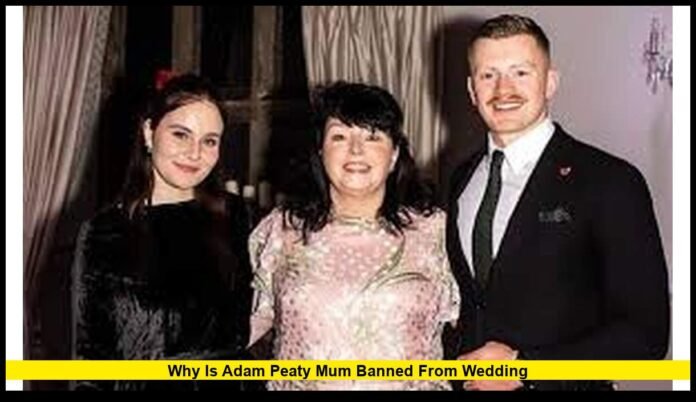

Why is Adam Peaty mum banned from wedding is a question that continues to draw attention long after the ceremony itself. The marriage of Olympic swimming champion Adam Peaty and wellness entrepreneur Holly Ramsay was meant to mark a joyful milestone. Instead, it revealed a deeply personal family division that transformed a private decision into an international discussion about boundaries, relationships, and emotional distance within families.
As of today, the situation is not surrounded by mystery or rumor. The confirmed reality is that Adam Peaty’s mother, Caroline Peaty, was not invited to her son’s wedding. This was a conscious and personal decision made by the couple, not a legal action, security restriction, or outside intervention. The absence of Adam’s mother, along with most of his immediate family, reflects a long-standing and unresolved conflict that reached a breaking point during wedding planning.
This article presents a comprehensive, factual, and clear account of what happened, why the decision was made, and why the story continues to resonate so strongly with readers in the United States and beyond.
A Wedding That Captured Global Attention
Adam Peaty is not only an Olympic gold medalist but also one of the most recognizable figures in modern competitive swimming. Known for his discipline, resilience, and public honesty, Peaty has built a reputation that extends far beyond sports. His relationship with Holly Ramsay, the daughter of internationally known chef Gordon Ramsay, added another layer of public interest.
Their wedding took place on December 27 at Bath Abbey, a historic location chosen for its privacy and symbolism. The ceremony was attended by friends, athletes, and high-profile figures, reflecting the couple’s social and professional circles. Everything about the event was carefully planned, from guest numbers to security, ensuring that the focus remained on the couple.
Yet despite the elegance of the ceremony, attention quickly shifted to who was not there.
Understanding What “Banned” Truly Means
The word “banned” has been widely used in public discussion, but it requires clarification. Caroline Peaty was not banned in a legal or institutional sense. She was not removed by security, nor was she restricted by venue rules or legal orders.
Instead, she was excluded from the wedding guest list by Adam Peaty and Holly Ramsay. This exclusion meant she was not invited and was not welcome to attend. In everyday language, this exclusion has been described as a ban, reflecting the emotional finality of the decision rather than a formal prohibition.
This distinction is important because it centers responsibility where it belongs: within the family relationship itself.
Early Tensions Before the Wedding
The decision to exclude Caroline Peaty did not emerge suddenly. Signs of strain were present months before the wedding took place.
One of the first clear indicators was Caroline’s absence from pre-wedding celebrations. She was not invited to Holly Ramsay’s hen party, an event that traditionally includes close family members when relationships are strong. This omission was deeply upsetting for Caroline and signaled that communication had already broken down.
From that moment, it became clear that the relationship between Caroline and the couple was not aligned with the expectations typically associated with a wedding.
The Breakdown of Communication
At the heart of the issue was a breakdown in communication. While the specific private disagreements have not been publicly detailed, the outcome is clear. Adam Peaty and Holly Ramsay felt that including Caroline in the wedding would create emotional strain rather than joy.
For couples preparing for marriage, weddings often bring long-standing tensions to the surface. Decisions about guest lists can reflect deeper values, boundaries, and unresolved conflicts. In this case, the couple chose emotional stability over tradition.
This choice, while painful for Caroline, was not impulsive. It followed months of strained interaction and unresolved feelings.
The Moment the Decision Became Final
As wedding plans progressed, Caroline Peaty learned that she would not receive an invitation. This confirmation marked a turning point in the family relationship.
Caroline later described the moment as devastating. For her, the wedding represented not only her son’s commitment to his partner but also a milestone she had expected to witness as a parent. Being excluded symbolized a deeper emotional separation.
Despite her pain, Caroline acknowledged that the decision came directly from the couple and that there was no misunderstanding involved.
The Emotional Toll on a Mother
The emotional impact on Caroline Peaty was profound. She described the experience as one of the most painful events of her life. Missing her son’s wedding was not simply about absence from a ceremony; it represented a fracture in a relationship she believed was foundational.
Caroline expressed feelings of rejection, sadness, and disbelief. She spoke about how the exclusion affected her sense of identity as a mother and her understanding of her role in her son’s life.
These emotions resonated with many readers who saw the situation as a reflection of how family conflicts can escalate during major life transitions.
Why Caroline Did Not Attend in Any Capacity
In the days leading up to the wedding, Caroline briefly considered traveling to the wedding location to be nearby, even without attending the ceremony itself. The idea was rooted in a desire to feel close to her son on an important day.
After discussions with her husband, Mark Peaty, she decided against it. The concern was that her presence, even outside the venue, could draw attention or create emotional tension. Ultimately, staying away was seen as the least disruptive choice.
This decision reflected restraint and a desire not to overshadow the couple’s moment, even while experiencing personal heartbreak.
Absence of the Wider Peaty Family
Caroline’s exclusion was part of a broader pattern. Most of Adam Peaty’s immediate family did not attend the wedding. This included his father and other close relatives.
The absence of multiple family members underscored that the conflict was not isolated to one relationship. It pointed to a wider family divide that had not been resolved by the time of the wedding.
Adam’s sister was the only immediate family member present, highlighting the selective nature of attendance rather than a complete family cutoff.
Why the Story Became Public
The question of why is Adam Peaty mum banned from wedding gained traction because Caroline chose to speak publicly about her experience. Her honesty transformed a private family matter into a widely discussed topic.
Her emotional reflections gave voice to the pain of exclusion and allowed the public to understand the human cost behind the decision. The story spread quickly because it combined celebrity, family conflict, and universal emotional themes.
Adam Peaty and Holly Ramsay, however, chose not to publicly engage with the discussion. Their silence reinforced the understanding that the matter was deeply personal.
No Legal, Safety, or External Issues Involved
It is crucial to restate that no legal or safety concerns were involved in Caroline’s exclusion. There were no restraining orders, security directives, or third-party interventions.
The wedding proceeded smoothly, and Caroline’s absence was the result of a personal boundary set by the couple.
This clarity helps separate fact from assumption and ensures that the narrative remains accurate.
The Timing During the Holiday Season
The wedding took place during the holiday season, a time often associated with family togetherness. For Caroline, this timing intensified the emotional impact.
She later reflected on experiencing the holidays without the usual family unity. The combination of a wedding and Christmas amplified feelings of loss and separation.
These reflections further humanized the story and deepened public empathy.
Why This Story Resonates With U.S. Readers
For American audiences, the story resonates because it touches on themes familiar to many families. Weddings often force difficult conversations about boundaries, inclusion, and emotional health.
The situation highlights how adult children sometimes make decisions that prioritize their immediate relationship over extended family expectations. It also illustrates the pain such decisions can cause.
These themes transcend celebrity status and connect with everyday experiences.
Adam Peaty’s Silence and What It Signals
Adam Peaty has not publicly commented on his mother’s exclusion. This silence has been interpreted as an effort to protect his marriage and avoid escalating the conflict.
Silence does not indicate indifference. Often, it reflects a desire to resolve matters privately rather than through public debate.
By focusing on his future, Peaty has chosen to limit public involvement in a deeply personal issue.
No Confirmed Reconciliation to Date
As of now, there has been no confirmed reconciliation between Adam Peaty and his mother. There have been no public statements suggesting that the rift has been resolved.
This does not rule out future healing. It simply reflects the current reality.
Why Weddings Can Expose Family Fault Lines
Weddings are emotional events that often magnify existing tensions. Decisions about guest lists can become symbolic of deeper issues.
In this case, the wedding acted as a catalyst that brought unresolved conflict to the surface. The choice to exclude Caroline was not about the ceremony alone but about the state of the relationship.
The Core Reason Behind the Exclusion
Ultimately, the answer to why is Adam Peaty mum banned from wedding lies in emotional boundaries. The couple believed that including Caroline would compromise the emotional environment they wanted for their wedding day.
This decision, while painful, was rooted in a desire for peace rather than conflict.
A Human Story Behind Public Headlines
Behind every headline is a human story. A mother grieving exclusion. A son choosing boundaries. A couple protecting their relationship.
These elements make the situation relatable, even as it unfolds in the public eye.
What Happens Next Remains Private
Any future changes in the relationship will likely happen away from public view. Whether reconciliation occurs or distance remains, it will be shaped by private conversations.
For now, the facts are clear and unchanged.
Why the Conversation Continues
The story continues to be discussed because it challenges assumptions about family roles. It raises questions about obligation, choice, and emotional safety.
These questions do not have easy answers, which is why the discussion persists.
Final Perspective
The situation surrounding Adam Peaty’s wedding serves as a reminder that even the most celebrated moments can be complicated by unresolved relationships. The decision to exclude a parent is never taken lightly, and the emotional consequences are significant for everyone involved.
Understanding the facts allows the story to be seen clearly, without speculation or distortion.
Family dynamics are rarely simple, especially during major life events. What are your thoughts on this situation, and do you believe emotional boundaries should outweigh tradition? Share your perspective and stay connected for future updates.