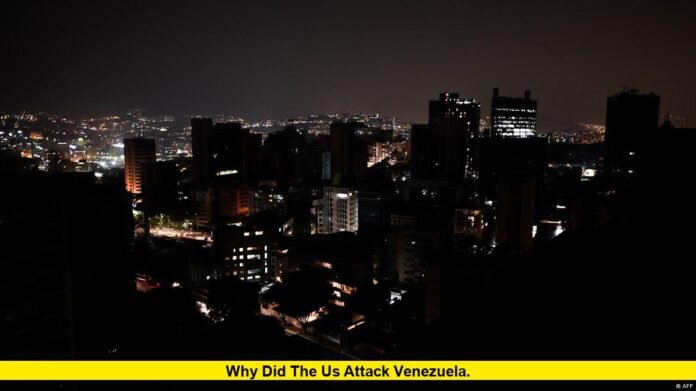

The question why did the US attack Venezuela dominated global headlines in early 2026 after American forces carried out a sudden military operation on Venezuelan soil and detained President Nicolás Maduro. The action marked one of the most dramatic moments in modern Western Hemisphere politics and immediately reshaped diplomatic, military, and economic calculations across Latin America and beyond.
Understanding how events reached this point requires tracing the steady buildup of pressure, policy changes, and confrontations that unfolded over the previous year. The attack did not emerge from a single decision or incident. Instead, it followed months of escalating actions that gradually narrowed the space for diplomacy and increased the likelihood of direct intervention.
Years of Strained Relations Before the Crisis
Relations between Washington and Caracas had been tense long before 2026. For more than a decade, U.S. officials accused Venezuela’s leadership of dismantling democratic institutions, undermining judicial independence, and allowing corruption to spread through state structures. Venezuela’s government consistently rejected these accusations, blaming economic hardship on foreign sanctions and external interference.
By the mid-2020s, Venezuela faced deep financial isolation. Sanctions limited oil exports, blocked access to international credit, and targeted senior officials. While the measures were framed as tools to encourage political reform, they also hardened positions on both sides. Trust eroded, and direct communication between the two governments became rare.
This environment laid the groundwork for a shift away from diplomacy toward enforcement-based strategies.
Early 2025: Policy Changes Signal a New Direction
The first major shift occurred at the start of 2025. The U.S. administration broadened its national security framework to address transnational crime in ways traditionally reserved for counterterrorism. This change allowed criminal networks involved in drug trafficking to be treated as security threats rather than solely law-enforcement matters.
U.S. officials argued that Venezuelan territory had become a central corridor for narcotics moving toward North America. More significantly, they claimed that these operations were protected by elements within the Venezuelan state. This allegation blurred the distinction between criminal activity and state responsibility, setting the stage for stronger action.
Existing criminal indictments against Nicolás Maduro and members of his inner circle gained renewed attention. Although the charges had been filed years earlier, they now became central to public messaging from Washington.
Mid-2025: Military Assets Move Closer
By late summer 2025, U.S. military activity in the Caribbean intensified. Naval vessels, surveillance aircraft, and intelligence platforms were deployed closer to Venezuelan waters. Official statements emphasized counter-narcotics patrols and maritime security, but the scale of the deployments suggested broader objectives.
From Venezuela’s perspective, the buildup looked like preparation for confrontation. Officials accused the United States of provocation and warned that sovereignty was under threat. Regional governments watched closely, concerned that the growing military presence could destabilize the region.
Despite rising tensions, neither side backed away. Instead, each action prompted a stronger response from the other.
September to October 2025: Strikes at Sea Increase Pressure
The conflict entered a new phase in early September 2025 when U.S. forces conducted direct strikes against vessels described as drug-smuggling boats. These operations resulted in casualties and quickly sparked debate inside the United States and abroad.
Supporters of the actions argued they were necessary to disrupt criminal supply chains. Critics countered that the strikes resembled acts of war rather than policing operations, especially given the absence of declared hostilities.
Throughout September and October, similar operations continued. Each strike reinforced Washington’s claim that it faced an organized, state-linked threat. At the same time, Venezuela framed the attacks as illegal uses of force that violated international norms.
Late 2025: Economic Pressure Turns Into Strategic Leverage
As the year drew to a close, economic pressure intensified. U.S. forces seized Venezuelan oil shipments accused of violating sanctions, further constraining the country’s ability to generate revenue. Oil, long the backbone of Venezuela’s economy, became both a financial and strategic focal point.
These actions had immediate consequences. Fuel shortages worsened inside Venezuela, and government revenues fell sharply. The leadership in Caracas accused Washington of waging economic warfare designed to collapse the state from within.
Diplomatic options narrowed further. With sanctions tightening and military activity increasing, both sides appeared to be preparing for a decisive moment.
Early January 2026: Signals of an Imminent Shift
In the final days before the attack, intelligence assessments cited by U.S. officials warned of escalating threats linked to drug trafficking networks allegedly coordinated from within Venezuela. Publicly, President Maduro called for talks while also placing security forces on alert.
Behind the scenes, U.S. military assets moved into final positions. Aircraft, naval units, and special operations forces coordinated across multiple domains, signaling that planning had reached an advanced stage.
The window for de-escalation closed rapidly.
January 3, 2026: The Military Operation
In the early hours of January 3, U.S. forces launched a coordinated operation targeting key locations in and around Caracas. The operation combined airpower, intelligence capabilities, and ground elements to achieve its objectives quickly.
Within hours, U.S. officials confirmed that President Nicolás Maduro and his wife had been detained. They were removed from Venezuelan territory and placed into U.S. custody to face longstanding criminal charges.
The speed and scale of the operation stunned observers worldwide. It marked the first time in recent history that the United States directly captured a sitting head of state through military action.
How Washington Explained Its Decision
U.S. officials presented a clear rationale for the operation. They argued that Venezuela’s leadership had crossed a threshold by allegedly enabling large-scale criminal networks that threatened U.S. national security. According to this view, traditional law enforcement tools were no longer sufficient.
The administration framed the operation as a combination of national defense and legal enforcement. Existing indictments were cited as justification, alongside claims that the Venezuelan state had effectively merged with criminal organizations.
This explanation formed the core answer to why did the US attack Venezuela, according to official statements.
Critics Raise Legal and Ethical Concerns
Opponents of the operation raised immediate concerns. They questioned whether criminal charges could justify military force against a sovereign nation and warned that the action could set a dangerous precedent.
International reactions were mixed. Some governments expressed alarm over the use of force, while others remained cautious, avoiding direct confrontation with Washington. Emergency diplomatic meetings followed as global institutions attempted to assess the implications.
Inside the United States, lawmakers and analysts debated whether the operation strengthened security or undermined international norms.
Regional Impact and Uncertain Future
The attack reshaped the political landscape in Venezuela overnight. Power vacuums emerged, uncertainty spread, and the population faced new instability. Across Latin America, governments reassessed their relationships with both Washington and Caracas.
The broader consequences remain unclear. What is certain is that the events of January 2026 altered the trajectory of U.S.–Latin American relations and reopened debates about intervention, sovereignty, and the limits of military power.
Conclusion
The events leading up to January 3, 2026, reveal a steady escalation driven by policy shifts, military positioning, and competing narratives of security and sovereignty. While the operation was swift, it was the culmination of months of mounting pressure rather than a sudden decision.
As the world continues to debate the legality and consequences of the action, the question that first captured global attention remains central: why did the US attack Venezuela, and what precedent does it set for the future of international relations?
Only time will determine whether the operation reshapes regional stability or deepens long-standing divisions.