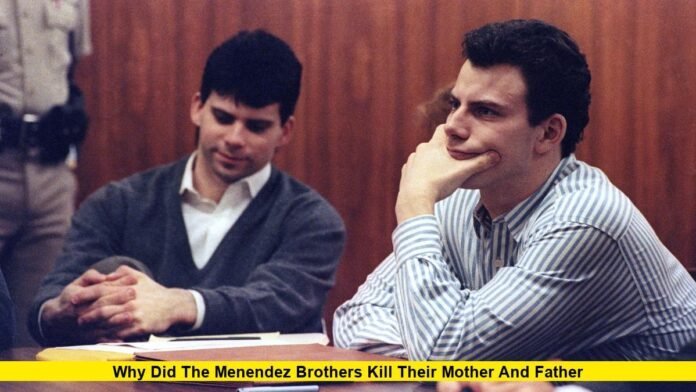

Why did the Menendez brothers kill their mother and father? That question still fuels true crime debate nearly four decades after the murders, and fresh parole developments this month have pushed the case back into headlines.
Erik and Lyle Menendez shot Jose and Kitty Menendez to death inside the family’s Beverly Hills mansion on August 20, 1989. The brothers, then 18 and 21, fired a combined 15 shotgun blasts while their parents sat in the den watching television.
Investigators and prosecutors framed the killings as a calculated grab for money. Defense attorneys told a very different story, one built on years of alleged abuse. Both accounts still shape how the public understands the case today.
The Inheritance Motive
Beverly Hills police initially treated the murders like a possible mob hit, given the brutality of the crime scene. Attention shifted to Lyle and Erik once investigators learned the brothers stood to inherit roughly $14 million from their father’s estate.
Prosecutors built their case around greed. They pointed to the brothers’ spending spree in the months after the killings as proof of premeditation and financial motive.
Lyle reportedly spent close to $60,000 on a Porsche, tens of thousands more on clothing, and bought a restaurant near Princeton University. Erik pursued a professional tennis career and hired expensive coaching help.
Prosecutors also highlighted the planning involved. They noted the brothers drove to San Diego to buy shotguns, later collected shell casings from the crime scene, and disposed of the weapons before calling 911 to report finding their parents dead.
The Abuse Defense
Lyle and Erik never denied pulling the triggers. Their defense instead argued the killings were an act of self-defense following years of sexual, physical, and emotional abuse by their father, Jose Menendez.
The brothers testified that their mother, Kitty, knew about the abuse and failed to intervene. Defense attorneys argued the brothers believed their parents intended to kill them to keep the abuse hidden, which they said justified using deadly force.
A taped therapy session with psychologist Dr. Jerome Oziel became central evidence at trial. On that recording, the brothers confessed to the shootings but said nothing about abuse or inheritance as a motive, which prosecutors used to challenge the self-defense narrative.
The first trial, held in 1993 with separate juries for each brother, ended in a mistrial after jurors deadlocked on the question of motive. A second trial in 1995 combined the juries and limited the abuse testimony allowed into evidence.
That second trial ended differently. On April 17, 1996, jurors convicted both brothers of first-degree murder and recommended life sentences without the possibility of parole.
A Timeline Worth Tracking
| Year | Event |
|---|---|
| Aug. 20, 1989 | Jose and Kitty Menendez killed in Beverly Hills |
| March 1990 | Lyle and Erik arrested after taped confession surfaces |
| 1993–94 | First trial ends in mistrial |
| 1995–96 | Second trial results in murder convictions |
| April 17, 1996 | Brothers sentenced to life without parole |
| May 2025 | Brothers resentenced to 50 years to life with parole eligibility |
| Aug. 21, 2025 | Erik denied parole at first hearing |
| April 29–30, 2026 | Both brothers denied parole again |
| Sept. 2026 | Board grants both brothers an earlier parole hearing date |
Why the Case Reopened
The brothers’ legal team has spent years pushing for a new trial, arguing that new evidence strengthens the original abuse claims. That evidence reportedly includes a letter Erik wrote to a cousin describing the abuse months before the killings, along with allegations from another man who says Jose Menendez abused him as well.
Los Angeles County District Attorney George Gascón moved in 2024 to support resentencing, citing that additional evidence. His successor, current District Attorney Nathan Hochman, has since opposed a new trial, arguing the abuse allegations do not change the legal standard for self-defense in this case.
A Los Angeles judge resentenced Lyle and Erik in May 2025 to 50 years to life, which made both brothers eligible for parole under California’s youth offender parole laws. Those laws apply to people convicted of crimes committed before turning 26.
Where Things Stand Now
Both brothers were denied parole at hearings held April 29 and April 30, 2026. Commissioners cited concerns about institutional behavior and the severity of the crime, and they set the next review for 2028.
That timeline has since moved. The California Board of Parole Hearings confirmed this month that it approved administrative reviews for both brothers, advancing their next suitability hearings. Reports indicate the new hearings could take place as early as March 2027, though the board has described the dates as tentative.
A family spokesperson confirmed the earlier hearing date in a statement released this week, calling it a welcome development for Lyle and Erik’s relatives. Both men remain housed at Richard J. Donovan Correctional Facility in San Diego County.
The brothers’ habeas corpus petition seeking a new trial also remains active. Hochman’s office continues to oppose that petition, and Lyle Menendez has said publicly that the defense team plans to file a rebuttal.
Why Public Interest Keeps Growing
Renewed attention to why the Menendez brothers killed their mother and father accelerated after Netflix released a dramatized series revisiting the case. That surge in interest coincided with the brothers’ resentencing and first parole bids, drawing millions of new viewers into a decades-old legal fight.
The case has also become a reference point in broader conversations about how courts treat abuse claims in violent crime cases. Legal scholars and advocacy groups continue to cite the Menendez trials when discussing domestic violence and trauma-informed defense strategies.
Whether the brothers gain release still depends on the outcome of their upcoming parole hearing and the fate of their pending habeas petition. Both proceedings carry real weight for two men who have now spent more than three decades behind bars.
What happens next in this case could reshape one of America’s most-watched criminal justice stories, so keep checking back and share your take in the comments below.