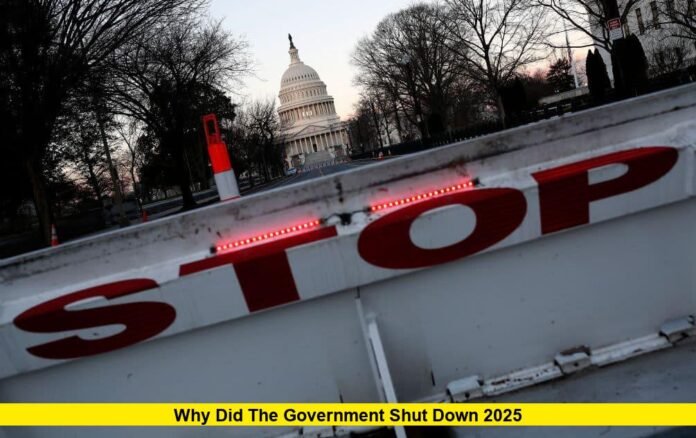

When Americans woke up on October 1, 2025, one question dominated the headlines and conversations across the nation: why did the government shut down 2025? The midnight deadline for a new federal budget passed without an agreement in Congress, and as a result, the United States government entered a shutdown.
This shutdown is not only about missed funding deadlines—it is also a reflection of deeper conflicts over healthcare, spending priorities, and the size of government itself. It has already impacted millions of families, disrupted services across the country, and raised uncertainty about how long it might last.
In this article, we’ll break down the causes, the key political battles, the human impact, and the broader economic consequences.
The Immediate Trigger: Budget Stalemate in Congress
At the heart of every shutdown is one core issue: Congress did not pass the necessary funding bills. The federal government runs on a fiscal year that begins October 1, and without appropriations or at least a temporary stopgap bill (known as a continuing resolution), agencies lose their authority to spend money.
For fiscal year 2026, lawmakers failed to pass a single full appropriations bill before the deadline. The House approved a Republican-backed continuing resolution, but it was rejected in the Senate. The sticking point was over healthcare subsidies and social spending.
- Democrats wanted to extend Affordable Care Act subsidies and preserve protections for low-income assistance programs.
- Republicans refused to include these in the bill and instead pushed for a “clean” resolution.
- Neither side moved, and at midnight, the government officially shut down.
Why This Shutdown Feels Different
While government shutdowns have happened before, the 2025 version is unique because of the administration’s approach. In the past, furloughs during a shutdown were always seen as temporary. This year, agencies were directed to prepare for reductions in force, meaning permanent layoffs.
This signals a new level of seriousness. For many workers, the shutdown isn’t just about waiting for back pay; it’s about wondering if their careers in federal service are coming to an end.
Additionally, the shutdown is being framed as a way to shrink the federal government, something that has been a stated goal of the administration since the beginning of the year.
Read Also-What Does a Government Shutdown Mean for Americans in 2025?
Partisan Gridlock: How We Got Here
Healthcare Subsidies at the Center
The extension of healthcare subsidies was the most immediate cause. Democrats wanted to secure multi-year funding to stabilize healthcare access, especially for families relying on subsidies to afford insurance. Republicans argued that these subsidies were expensive and should be debated in a separate healthcare bill, not tied to keeping the government open.
Broader Political Strategy
Beyond healthcare, the shutdown reflects broader strategies. Republicans have emphasized cutting federal spending and reining in deficits, while Democrats have resisted cuts to safety net programs. Both parties see this battle as central to their political futures, which made compromise harder.
Pressure to Restructure Government
The administration has openly stated that a leaner federal government is part of its vision. By allowing a shutdown, it gains leverage to press agencies into cutting roles and restructuring departments.
The Scale of Impact on Federal Workers
No group feels the effects of a shutdown more immediately than federal employees.
- Furloughs: Around 750,000 federal workers are estimated to be furloughed each day.
- Agencies Hit Hardest: The Department of Health and Human Services is furloughing about 40% of its workforce, the NIH about 75%, and the CDC more than 60%.
- Transportation Disruptions: At the Federal Aviation Administration, over 11,000 employees are furloughed, while 13,000 air traffic controllers are working without pay.
- Military and Essential Staff: Military personnel and essential workers must continue to serve but won’t see paychecks until the shutdown ends.
Though the Government Employee Fair Treatment Act ensures back pay once the shutdown ends, that does not help families struggling with mortgage payments, childcare costs, or daily expenses while paychecks are delayed.
Public Services and Programs Disrupted
The question of why did the government shut down 2025 cannot be separated from its real-life effects. Everyday Americans are already seeing consequences:
- National Parks and Monuments: Many are closed or operating with reduced staff. Visitors face blocked entrances and canceled tours.
- Health and Nutrition Programs: Vital programs like WIC (Women, Infants, and Children nutrition assistance) risk running out of funds.
- Research and Oversight: Federal research projects, disease tracking, and oversight work are paused or significantly reduced.
- Small Business Loans: Processing has been frozen, impacting entrepreneurs who rely on government-backed financing.
- Travel Industry: Flight delays and disruptions are increasing as the FAA operates with reduced staffing.
The Economic Ripple Effect
Shutdowns are not just political—they carry real economic costs.
- Lost Wages: Furloughed employees lose billions in delayed wages each week, even though they may be repaid later.
- Local Business Impact: Restaurants, childcare centers, and shops near federal offices lose customers when workers are not being paid.
- Travel Sector: Analysts project billions in losses for airlines, hotels, and tourism as delays and cancellations mount.
- National Economy: Consumer confidence drops, stock markets react nervously, and overall economic growth slows when shutdowns drag on.
The longer the shutdown continues, the deeper these impacts will be felt.
Historical Comparisons: Past vs. Present
Looking at history helps put this year’s crisis into context.
| Year | Duration | Workers Affected | Key Issue |
|---|---|---|---|
| 2025 | Ongoing | ~750,000 daily | Health subsidies, government restructuring, possible permanent layoffs |
| 2018–2019 | 22 days | ~380,000 furloughed | Border wall funding dispute |
| 2013 | 16 days | ~800,000 furloughed | Dispute over Affordable Care Act |
What makes 2025 stand out is not just the scale but the policy shift toward permanent cuts rather than temporary disruption.
Political Fallout and Public Opinion
Public opinion has been sharply divided. Polls indicate that a majority of Americans disapprove of government shutdowns in general, regardless of which party is blamed. However, each side is banking on the idea that the public will ultimately support its stance.
- Republicans argue they are protecting taxpayers and ensuring fiscal discipline.
- Democrats argue they are protecting healthcare access and family programs.
- The Public increasingly expresses frustration, especially among furloughed workers and families dependent on federal services.
If the shutdown stretches on, pressure on lawmakers from both parties will intensify.
Why the Question Matters
The phrase “why did the government shut down 2025” is more than just a search query—it reflects the urgency Americans feel to understand how politics in Washington directly affects their lives. This shutdown is about much more than procedure; it’s about competing visions of government’s role, the livelihoods of federal workers, and the stability of essential services.
What Comes Next?
The shutdown will end only when Congress and the President agree on a funding resolution. Until then:
- Federal agencies will operate in skeleton mode.
- Millions of families will juggle delayed paychecks.
- Businesses and local economies tied to government contracts will feel more strain.
Negotiations are ongoing, but with both sides entrenched, there is no clear timeline. Some analysts warn it could be one of the longest shutdowns ever if neither party yields.
Final Thoughts
The 2025 government shutdown has shown how fragile the federal budget process has become. At its core, the question of why did the government shut down 2025 reveals more than missed deadlines—it exposes a deep divide over what kind of government Americans want for the future.
What’s your take on the shutdown—should Congress stand firm on principles, or compromise to get the government running again? Share your thoughts below and stay updated as this story continues to unfold.