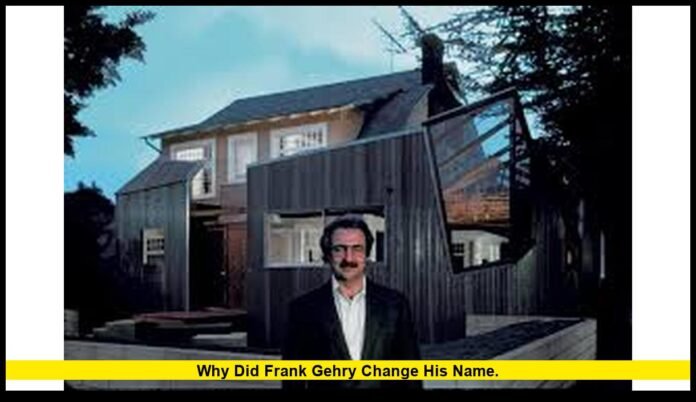

The question why did frank gehry change his name continues to attract attention because it reveals a rarely discussed part of the legendary architect’s early life. Long before he became known for structures that transformed entire cities, Frank Gehry faced social pressures that shaped one of the most personal decisions of his youth: replacing his birth surname, Goldberg, with the name that would later become internationally recognized. Understanding the environment he lived in, the expectations placed upon him, and the concerns raised within his family offers valuable insight into how this decision formed and why it still matters today.
Early Life: A Childhood Shaped by Creativity and Culture
Frank Owen Goldberg was born in Toronto in 1929. His early years were spent in a close-knit Jewish family whose traditions, stories, and sense of community influenced his understanding of identity from a young age. Relatives who worked with their hands, especially his grandfather, exposed him to woodworking, scrap materials, and simple building tasks that sparked his fascination with form and structure. These experiences laid the groundwork for the visual imagination that would define his future career.
When his family moved to Los Angeles during his teenage years, Gehry encountered a new cultural landscape entirely different from the one he had known in Canada. Southern California, with its sprawling neighborhoods, new architectural trends, and blend of influences, opened opportunities for learning while also placing him in the center of social challenges that many immigrant and Jewish families faced at the time. Discrimination, though often unspoken, was present in housing, hiring, and social institutions.
This environment shaped much of his early worldview. It also set the stage for the moment when his family name became a topic of concern.
Early Career Aspirations and Rising Pressure
As Gehry developed an interest in architecture, he pursued studies and entry-level work that required determination and resilience. The architectural field during the 1950s was competitive and heavily influenced by established networks that did not always welcome newcomers from minority backgrounds. Gehry, ambitious and innovative, wanted his work to be judged on its merit. His first wife, who understood the professional landscape he was entering, worried that employers or clients might unfairly judge him based on his surname before giving him a chance.
The social tension of the era made these concerns understandable. Jewish professionals frequently encountered barriers, ranging from limited access to certain firms to more subtle forms of prejudice. The environment was changing slowly, but not fast enough to guarantee a fair start for every young designer. These pressures were familiar to many families of the time who worried about the future opportunities available to their children.
Gehry found himself balancing personal heritage with the reality of building a career. The question became how to move forward without carrying disadvantages unrelated to skill or potential.
The Decision to Change His Name
In the mid-1950s, when he was completing his studies and beginning to establish himself professionally, he decided to adopt a new surname: Gehry. The choice grew out of conversations with his first wife, who encouraged the change as a protective measure. She feared that “Goldberg,” a clearly Jewish name, could create unnecessary obstacles in industries already slow to embrace diversity.
Although the decision was practical, it was not easy. Changing a name carries emotional weight, especially when it is tied to family identity. But Gehry approached the choice with a long-term view. He wanted to secure the best possible path for his design ambitions, and taking on the Gehry name offered a way to enter the professional world without the added burden of bias.
For many Americans of the era, name changes were a common response to discrimination. Actors, writers, performers, and young professionals often adopted new names to avoid losing opportunities before they even had the chance to prove themselves. Gehry’s decision fits within this broader historical context, reflecting a reality that shaped countless lives during the mid-20th century.
How the New Name Influenced His Early Public Identity
Once he began using the surname Gehry, it quickly became associated with the fresh, unconventional ideas he was bringing into architecture. His early projects showed a willingness to break from tradition, experiment with materials, and challenge existing design habits. This creative energy allowed his career to gain momentum.
As his reputation grew, so did the visibility of the Gehry name. Colleagues, clients, and local communities began recognizing his work, especially during the period when he started reshaping parts of Los Angeles with residential and commercial designs that stood out for their boldness.
While the new surname became an asset in the professional world, Gehry never distanced himself from the roots represented by the name Goldberg. He maintained close ties with his family and acknowledged the influence of his upbringing. The name change marked a strategic step, not a separation from heritage.
How He Reflected on the Decision Later in Life
Throughout his long and successful career, Gehry spoke openly about the moment he changed his name. His reflections often carried a mix of candor and humor. He acknowledged the pressures of the time and the concerns expressed by those close to him. While he understood why the change was necessary, he also recognized the emotional complexity behind it.
Gehry described the decision as one shaped by the climate of the 1950s rather than a desire to distance himself from his cultural identity. He remained deeply connected to his background and often spoke about the early experiences that fueled his creativity — experiences tied directly to his childhood as Frank Goldberg.
These reflections help modern audiences understand how personal decisions intersect with societal forces. His comments also offer clarity about why the question why did frank gehry change his name continues to draw interest today.
The Name Change in the Broader Cultural Landscape
To fully understand the significance of Gehry’s decision, it is important to look at the cultural environment of mid-century America. The era was marked by shifting attitudes and slow progress toward inclusion. Many individuals, particularly those from immigrant families, felt pressured to adjust their names to fit into spaces where they might otherwise face scrutiny.
Professional fields like architecture, law, and entertainment often held narrow expectations of who belonged. A name that signaled ethnic or religious identity could invite unfair judgment, even before a person’s talents were considered.
In Gehry’s case, the name change allowed him to enter the field without immediate assumptions being made about his background. It provided him with space to demonstrate his abilities, win clients, and build relationships based on talent rather than preconceived notions. Although the change did not erase the challenges he faced, it removed one barrier at a critical time in his life.
The Gehry Name and His Rise to Global Prominence
As his career developed, the Gehry name became synonymous with daring architectural vision. His early residential experiments eventually led to major international commissions that reshaped how the world viewed modern design. Projects like the Walt Disney Concert Hall in Los Angeles and the Guggenheim Museum in Bilbao established him as one of the most influential architects of his generation.
The name he adopted in his twenties traveled farther than he likely imagined. It became attached to works that transformed skylines, revived cities, and inspired new movements in design. Yet behind that globally known name remained the story of a young man navigating the realities of his time.
Why the Question Still Matters
Today, the question of why he changed his name is not merely a curiosity about a famous architect. It opens a window into the era he grew up in and reminds readers of the obstacles that shaped the lives of talented individuals across the country. It reflects the broader American story of identity, adaptation, and the pursuit of opportunity.
It also invites reflection on how far society has come — and how far it still has to go — in ensuring that people from all backgrounds can pursue their goals without fear of discrimination.
For Gehry, the decision sits within a lifetime defined by creativity, resilience, and a refusal to be confined by expectations. His success did not erase the pressures of his past, but it did show how determination and talent can overcome barriers, even those that make their mark in deeply personal ways.
Key Takeaways for Readers
- Frank Gehry was born Frank Owen Goldberg in 1929.
- He adopted the surname Gehry in the 1950s at a pivotal point in his early career.
- The change was motivated by concerns about discrimination common during that era.
- His heritage continued to shape his life and creativity regardless of the name he used publicly.
- The Gehry name eventually became associated with groundbreaking architecture across the world.
The story behind why did frank gehry change his name highlights a moment where personal identity intersected with societal pressures. It also underscores how early decisions, made in response to the challenges of the time, can evolve into defining elements of a public legacy.