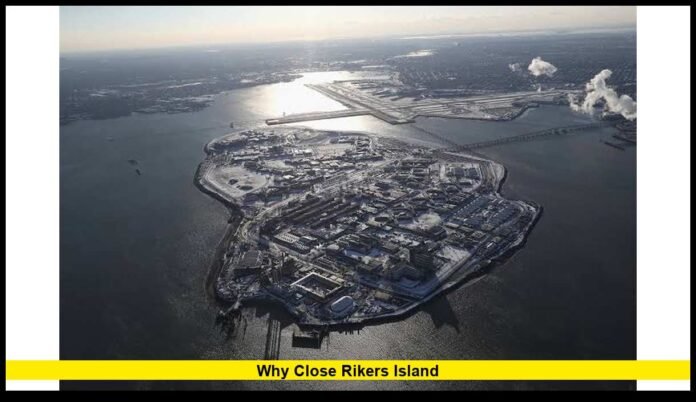

Why close Rikers Island remains an important issue in New York City as officials work toward replacing the troubled jail complex with smaller facilities located in four boroughs. The closure effort reflects years of debate over jail conditions, violence, overcrowding, healthcare, staffing, pretrial detention, and the city’s responsibility to create a safer and more effective correctional system.
Rikers Island has long been at the center of criticism from public officials, civil rights advocates, families of incarcerated people, correctional employees, and community organizations. Concerns about conditions inside the complex have strengthened calls for a fundamental change rather than relying only on temporary improvements to existing facilities.
New York City’s latest strategy proposes a transition away from the island’s jail operations by the end of 2032. The plan involves building replacement facilities in Brooklyn, the Bronx, Queens, and Manhattan, reducing the jail population, improving treatment services, and preparing the Department of Correction for a different operating structure.
The proposed closure is a long-term project that will require construction, legal approval, funding, operational planning, and continued attention to public safety. Although the city has established a new target, Rikers Island remains operational while officials work toward the transition.
Why New York City Wants to Close Rikers Island
The campaign to close Rikers Island is connected to a wide range of problems that have affected the jail complex for years. Critics have raised concerns about violence, unsafe living conditions, inadequate medical care, staffing shortages, and difficulties maintaining effective supervision.
These problems have created pressure on city leaders to reconsider whether a large jail complex on an isolated island can meet modern correctional standards. Supporters of closure argue that replacing the facilities provides an opportunity to redesign the system around smaller housing units, better services, stronger supervision, and improved access to courts and families.
The closure effort also reflects a broader debate about incarceration. New York City has increasingly focused on alternatives to detention for eligible individuals, community-based treatment, supervised release, and programs that address the underlying needs of people who enter the criminal justice system.
The proposed transition is therefore intended to address both the physical jail infrastructure and the policies that determine how many people remain in custody.
Longstanding Concerns About Violence and Jail Conditions
Rikers Island has faced persistent criticism over violence, security failures, and the difficulty of maintaining safe conditions across its facilities. These concerns have affected people held in custody, correctional officers, medical personnel, and other employees.
The jail complex has experienced repeated problems involving assaults, inadequate supervision, staffing challenges, and operational breakdowns. Such conditions have raised questions about whether the existing facilities can consistently provide a safe environment for everyone inside.
The city’s closure strategy treats the replacement of Rikers Island as an opportunity to address the physical and operational weaknesses of the current system. Smaller housing units, improved layouts, modern security infrastructure, and better staffing arrangements are intended to make supervision more effective.
The administration also plans to strengthen accountability within the Department of Correction. This includes improving the handling of misconduct investigations, supporting staff training, reviewing staffing deployment, and working alongside federal oversight officials.
Closing Rikers Island alone will not automatically eliminate violence or misconduct. The effectiveness of the new facilities will depend on how they are managed, how staff are trained, whether accountability systems work, and whether the city maintains adequate resources after the transition.
Overcrowding and the Challenge of Reducing the Jail Population
Reducing the number of people held in city jails is one of the most important parts of the closure plan. New York cannot transfer its current jail population into four smaller facilities without significantly changing the overall system.
The administration’s latest strategy seeks to reduce the population from more than 6,500 people to approximately 4,500 as the city works toward closing Rikers. The exact population will fluctuate, but lowering the number of people in custody is essential to making the borough-based model operationally possible.
Officials are considering a combination of alternatives to incarceration, supervised release, community-based programs, supportive services, and improvements to court processing. These approaches are intended to ensure that eligible individuals do not remain in jail unnecessarily while their cases move through the courts.
Population reduction is not simply a construction requirement. It also involves legal decisions, public safety considerations, individual circumstances, and the availability of services.
The city must ensure that alternatives to incarceration are appropriate for the individuals who qualify and that programs provide meaningful supervision and support. The plan’s success will depend on whether the city can reduce unnecessary detention while maintaining accountability and public safety.
Pretrial Detention and the Right to a Timely Court Process
Many people held in New York City’s jails are awaiting the resolution of criminal cases. Pretrial detention can have serious consequences for individuals who have not been convicted, particularly when cases take months or longer to resolve.
Extended detention may disrupt employment, housing, family responsibilities, education, and access to medical care. It can also place pressure on jail facilities and contribute to population levels that make the closure process more difficult.
The latest plan places greater emphasis on addressing delays in criminal cases. City officials intend to improve evidence processing and coordination among law enforcement agencies, prosecutors, defense attorneys, courts, and other participants in the legal system.
The administration also plans to establish an interagency task force focused on identifying the causes of case delays and developing practical solutions.
Improving the exchange and review of evidence may help certain cases move more efficiently. The city also plans to review procedures involving forensic investigations, discovery, record production, and medical examiner testing when delays affect the progress of cases.
These changes are intended to support the timely resolution of cases, reduce unnecessary pretrial detention, and help the city achieve the population reduction required for the Rikers Island closure.
Four New Borough-Based Jails Will Replace Rikers Island
The centerpiece of the closure strategy is the construction of four replacement correctional facilities in Brooklyn, the Bronx, Queens, and Manhattan. These jails will gradually take over operations as the city closes facilities on Rikers Island.
The borough-based model is intended to bring people in custody closer to courts, families, attorneys, healthcare providers, public transportation, and community services. The city believes these connections may improve access to legal representation, family visits, programming, and support after release.
The facilities are also expected to use modern designs that improve safety and supervision. Plans include smaller housing units, individual cells, outdoor spaces, dedicated programming areas, and more functional infrastructure.
Each facility is expected to include at least 20,000 square feet of community space separate from jail operations. The city plans to work with local elected officials and residents to determine how these spaces could support neighborhood services, including youth programs, senior services, and small-business assistance.
The replacement facilities will be developed according to a phased schedule.
| Borough | Expected Opening |
|---|---|
| Brooklyn | 2029 |
| Bronx | 2031 |
| Queens | 2031 |
| Manhattan | 2032 |
Brooklyn is expected to become the first borough to receive its replacement jail. The other facilities will follow as construction and operational preparation progress.
The gradual opening schedule is essential because the city must prepare each facility before transferring people from Rikers Island. The transition will involve staffing, security systems, transportation arrangements, medical services, programming, and coordination with the court system.
A Dedicated Facility for Women in Custody
The replacement jail plan also includes a dedicated location for women in custody. Under the city’s current strategy, women will be centralized at the Queens facility.
The proposed arrangement is intended to provide more appropriate housing and services while improving access to healthcare. The Queens location is expected to offer proximity to Elmhurst Hospital, which may help with medical needs requiring hospital-level treatment.
The city has also emphasized input from formerly incarcerated women and service providers when developing its plans. Their experiences may help officials identify needs involving healthcare, family connections, housing, trauma-informed services, and reentry support.
The administration is also seeking to reduce the number of women held in city jails through community-based alternatives when legally appropriate. This could involve treatment programs, supportive services, diversion initiatives, and other options that allow eligible individuals to remain in the community.
The goal is to create a system that responds more appropriately to the needs of women while maintaining necessary legal supervision and public safety protections.
Healthcare and Therapeutic Housing Are Central to the Transition
Medical and mental health services represent another major component of the Rikers Island closure plan. People held in jail may have serious medical conditions, psychiatric needs, substance use disorders, or disabilities that require specialized treatment.
The city intends to create additional Outposted Therapeutic Housing Units at NYC Health + Hospitals facilities. These units will allow eligible people in custody with serious mental health conditions or complex medical needs to receive care in more appropriate healthcare environments.
The latest plan calls for an additional 236 therapeutic beds in Brooklyn and the Bronx, bringing the citywide total to 340 beds. These services are designed for individuals whose healthcare needs may be difficult to manage in traditional jail housing.
The administration is also investing in mental health counseling, substance use treatment, and other services inside correctional facilities. These programs may help individuals address health challenges during detention and prepare for a more stable transition after release.
Therapeutic housing is not a substitute for the broader jail closure process. Instead, it is intended to help the city improve care while reducing the number of people who must remain in traditional jail facilities.
The $146 Million Investment in Treatment, Education, and Community Services
The city’s latest strategy includes approximately $146 million in proposed investments for the next fiscal year. The money is intended to support services inside jails and in communities, as well as programs for crime victims and survivors.
A significant portion of the funding will support education, vocational training, counseling, and treatment programs for people in custody. The city plans to invest approximately $50 million in these services.
Education and job training may help incarcerated individuals prepare for employment after release. Programs can provide skills, certifications, academic opportunities, and other resources that may improve their ability to reintegrate into the community.
The administration also proposes approximately $76 million in additional community-based services. These investments are expected to support supportive housing, diversion programs, reentry assistance, emergency stabilization housing, behavioral health services, substance use treatment, and peer support.
The city also plans to invest in services for victims and survivors of crime. The proposal includes additional funding for mental health care and legal assistance through Family Justice Centers, victim assistance programs, and community organizations.
These investments reflect the administration’s position that public safety requires more than jail capacity. Housing stability, healthcare, employment, treatment, and support services may also play important roles in reducing repeated involvement with the criminal justice system.
Why the Original 2027 Closure Deadline Is No Longer Realistic
New York City previously committed to closing Rikers Island by August 31, 2027. That deadline was established as part of the city’s plan to replace the jail complex with four borough-based facilities.
However, the replacement projects have faced delays, and construction has not progressed quickly enough to support a complete closure by the original deadline. The Brooklyn facility is not expected to open until 2029, while the Bronx and Queens facilities are expected to follow in 2031. Manhattan’s replacement facility is currently scheduled for 2032.
The city therefore needs a revised timeline that reflects the construction schedule and the practical requirements of transferring the jail population.
The latest administration plan proposes closing Rikers Island by December 31, 2032. The new target would provide time to finish the replacement facilities, prepare them for operation, reduce the jail population, and gradually transfer people out of the existing complex.
The proposed deadline is not yet a final legal change. New York City Council legislation will be required to revise the existing closure timeline. The administration is expected to work with council members on legislation and transition benchmarks.
The city will also need to demonstrate progress through construction milestones, population reduction, service improvements, staffing preparation, and facility closures.
Public Safety Remains a Major Consideration
The closure proposal has generated debate because reducing the jail population and replacing Rikers Island must be accomplished without compromising public safety.
Supporters argue that a smaller, modern correctional system can improve safety by providing better supervision, healthcare, rehabilitation, and access to services. They also believe that alternatives to incarceration may help eligible individuals avoid unnecessary detention while maintaining accountability.
Critics and concerned residents may question whether population reduction could create risks if people who pose serious threats are released without appropriate safeguards. These concerns are part of the broader debate over criminal justice reform in New York City.
The administration’s strategy seeks to balance these competing priorities through supervised release, diversion programs, case processing improvements, supportive services, and secure replacement facilities.
The plan does not eliminate incarceration for people who must remain in custody under the law. Instead, it aims to reduce unnecessary detention and improve the conditions and management of the correctional system.
Public safety will remain one of the most important measures of the plan’s success. Officials will need to demonstrate that the new facilities, community programs, supervision systems, and healthcare services can operate effectively throughout the transition.
What the Closure Means for Correctional Officers and Employees
The Rikers Island closure will also affect the people who work within the city’s correctional system. Thousands of correctional officers, supervisors, civilian employees, healthcare personnel, maintenance workers, and administrative staff are involved in jail operations.
The city plans to prepare employees for the transition to the borough-based facilities through training, staffing reviews, improved deployment, and operational planning.
The replacement jails are expected to offer more modern working environments and layouts that support safer supervision. Smaller housing units and improved sightlines may make it easier for staff to monitor individuals and respond to incidents.
The administration also plans to strengthen accountability and improve the handling of misconduct investigations. These changes are intended to support a correctional system with clearer procedures and more consistent oversight.
The transition will require careful planning to ensure that staffing levels remain adequate as facilities open and older buildings close. Correctional employees will also need to adapt to new security procedures, housing arrangements, programming spaces, and operational responsibilities.
The city has emphasized that the closure plan must account for the safety and working conditions of employees as well as the rights and welfare of people in custody.
Rikers Island Is Already Beginning a Gradual Transition
Although the entire complex remains open, New York City has already begun taking steps toward reducing its reliance on Rikers Island.
The city has closed the North Infirmary Command and has resumed property transfers involving parts of the jail complex that are no longer being used for housing people in custody. These steps are intended to begin moving land and facilities away from correctional operations as the transition progresses.
The administration also plans to close additional jail buildings as replacement facilities become available. The closure process will be gradual rather than occurring all at once.
As the borough-based jails open, the city will be able to move people out of selected facilities on Rikers Island. Buildings that no longer serve correctional purposes may then be transferred for other uses or prepared for demolition.
The administration’s plan also calls for beginning demolition work on unused jail buildings as early as 2027, subject to the necessary preparations and approvals.
These early steps are important because they demonstrate that the closure effort involves more than a future announcement. The city is beginning to prepare for the physical transition, although full closure remains several years away.
What Could Rikers Island Become After the Closure?
The future of Rikers Island is another major issue connected to the closure plan. Once jail operations end, the city will have an opportunity to reconsider how the island’s land and infrastructure could be used.
Officials are beginning a broader planning process that will examine potential future uses. The city’s sustainability and energy goals are part of the discussion, including possible renewable energy projects and other infrastructure initiatives.
The island could eventually support public-purpose projects, sustainability efforts, energy infrastructure, or other uses that benefit New York City. However, no single redevelopment plan for the entire island has been finalized.
The city plans to involve local stakeholders and advisory groups as it develops a long-term vision. Environmental considerations, infrastructure needs, financial feasibility, public input, and the island’s history will all be relevant to future decisions.
The transformation of Rikers Island could take place over many years, even after jail operations officially end. Closing the correctional facilities will be only the first stage of a much larger process involving land reuse, demolition, infrastructure preparation, and redevelopment planning.
Latest Update on the Rikers Island Closure Plan
The latest major development is the November 20, 2026, announcement of New York City’s comprehensive strategy to close Rikers Island by the end of 2032.
The plan includes several key elements:
- Four replacement jails in Brooklyn, the Bronx, Queens, and Manhattan.
- The Brooklyn facility expected to open in 2029.
- The Bronx and Queens facilities expected to open in 2031.
- The Manhattan facility expected to open in 2032.
- A proposed reduction in the city jail population to approximately 4,500.
- An additional 236 therapeutic beds in Brooklyn and the Bronx.
- Approximately $146 million in proposed service investments for the next fiscal year.
- Expanded mental health care, substance use treatment, education, and vocational training.
- Additional community-based diversion, housing, and reentry services.
- Efforts to reduce court delays and unnecessary pretrial detention.
- Support and training initiatives for correctional staff.
- Planning for the future use of Rikers Island after jail operations end.
The revised closure target will require City Council action because the existing legal deadline remains tied to the earlier timeline. The city will also need to meet construction, population, staffing, and operational milestones before it can complete the transition.
The announcement represents a significant step forward in the city’s planning, but Rikers Island has not yet closed. The jail complex continues to operate while the administration works to implement the proposed roadmap.
Final Thoughts on Why Close Rikers Island
The reasons New York City wants to close Rikers Island involve years of concerns about violence, poor conditions, healthcare, overcrowding, staffing, supervision, and the challenges of operating a large correctional complex on an isolated island.
The proposed replacement system is intended to bring jails closer to families, attorneys, courts, public transportation, and community services. It also seeks to improve healthcare access, expand education and vocational programs, strengthen rehabilitation, reduce unnecessary pretrial detention, and create more manageable facilities for correctional staff.
The latest plan establishes December 31, 2032, as the proposed closure target, with four borough-based facilities expected to open between 2029 and 2032. The transition will require legal approval, construction progress, population reduction, operational preparation, and continued attention to public safety.
The future of Rikers Island will depend on whether New York City can turn its closure commitment into measurable progress while building a correctional system that is safer, more accountable, and more humane.
Share your thoughts in the comments and stay updated on the latest news about Rikers Island, NYC jail reform, and the city’s closure plan.