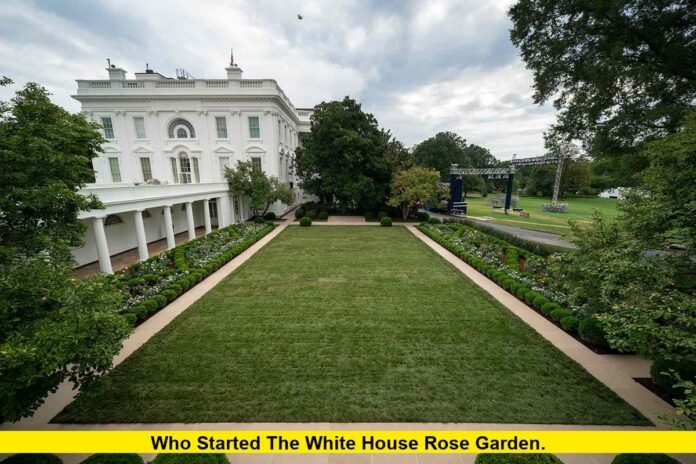

Who started the White House Rose Garden is a question that reveals over a century of evolving American history, design, and political symbolism. This iconic garden—nestled between the West Wing and the Executive Residence—has long served as a backdrop to presidential ceremonies, press conferences, and historic addresses. But as of 2025, the Rose Garden is once again at the center of national attention following another major redesign under former President Donald Trump.
The White House Rose Garden was first formally envisioned and created by First Lady Ellen Wilson in 1913, when she sought to transform what was then a traditional colonial garden into a more formal and symmetrical space that emphasized roses and classical landscaping. She worked with landscape architect George Burnap, who brought European-style symmetry and horticultural structure to the area.
However, the version that defined the garden for most of the 20th and early 21st centuries came decades later. In 1961, President John F. Kennedy enlisted his friend and horticulturist Rachel “Bunny” Mellon to redesign the Rose Garden into a modern, elegant space that retained historical elements while offering a new layout better suited for television, public events, and press appearances. Mellon, with the help of White House head gardener Irvin Williams, created the now-famous rectangular lawn bordered by colorful flowerbeds, crabapple trees, and seasonal roses. The redesign was elegant, balanced, and symbolic—representing order, diplomacy, and American beauty.
A Drastic Change in 2025
Fast forward to the summer of 2025, and the garden is undergoing one of the most significant overhauls since Mellon’s time. In June, construction began on a new project that removed the large central lawn—long considered the heart of the space—and replaced it with flat concrete pavers. By late July, newly released photos confirmed that the entire grass area had been paved over. Only the side flowerbeds and perimeter hedges remained recognizable.
This move is part of a broader effort by Donald Trump—now serving another term as President—to reshape several parts of the White House grounds and interior. The stated purpose of the Rose Garden redesign is to improve drainage, make the space more accessible for guests, and provide a more durable surface for formal events—especially in wet weather. Supporters argue that high-heel-friendly paving and stable flooring are more practical than turf, especially for events attended by diplomats and press.
Yet many Americans see the change differently.
Read also-White House Rose Garden Unveils Bold New Look Amid Ongoing Renovations
Backlash and Cultural Impact
Critics across social media, academia, and the arts have called the redesign a “destruction” of a national treasure. Many see it as a loss of the natural charm and historical value that Mellon’s design embodied. The once-soft and serene centerpiece of the garden now appears stark and hard-edged. Phrases like “stone plaza,” “soulless walkway,” and “political staging ground” have flooded online platforms.
Landscape historians and former White House staffers have also weighed in, expressing concern that removing the central lawn breaks with over 60 years of tradition and erases a symbol of quiet diplomacy. The Rose Garden, they argue, was not just a place to host press events—it was a representation of America’s connection to nature, heritage, and presidential poise.
Timeline of Key Rose Garden Milestones
| Year | Key Figure | Major Development |
|---|---|---|
| 1913 | Ellen Wilson | Creation of the formal Rose Garden with George Burnap |
| 1961 | Rachel “Bunny” Mellon | Iconic redesign with lawn, symmetrical flowerbeds |
| 2020 | Melania Trump | Limestone paths, drainage upgrades, more roses added |
| 2025 | Donald Trump | Central lawn removed, replaced with stone pavers |
What Remains—and What’s Coming
Despite the controversy, the flowerbeds still contain roses, seasonal perennials, and boxwood hedges. However, many are worried that the essential feeling of the garden—a blend of vibrant life and political symbolism—has been replaced by something more sterile.
Reports suggest the full project will be completed by mid-August, just in time for a planned diplomatic event. There is still uncertainty about whether more green features will be added or if public access will change once the project is finished.
For now, the White House has made no indication that it will reverse or scale back the renovation. The administration insists it improves usability while keeping historical elements intact, but for many Americans, the paved-over lawn feels like a piece of American heritage has been stripped away.
Why This Garden Still Matters
The White House Rose Garden is not just a physical space—it’s a symbol of continuity, grace, and leadership. From Kennedy’s speeches on civil rights to Clinton’s announcements, Obama’s climate remarks, and Biden’s vaccine updates, this garden has witnessed history unfold.
So when its core elements are altered, it’s more than landscaping—it becomes a national conversation.
If you have thoughts on the changes or memories of the garden from past presidencies, feel free to share them below. Is this evolution or erasure?