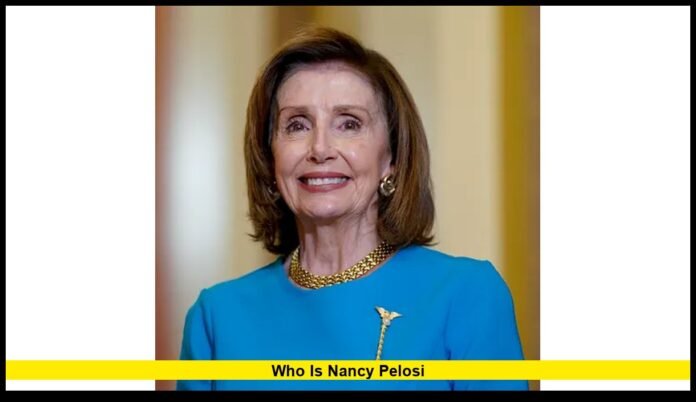

If you’ve ever asked who is Nancy Pelosi, you’re asking about one of the most accomplished, powerful, and enduring figures in American political history. As of 2025, Nancy Pelosi remains an active member of the U.S. House of Representatives, representing California’s 11th Congressional District, which covers much of San Francisco.
Pelosi’s career spans nearly four decades in Congress, during which she became the first woman in U.S. history to serve as Speaker of the House, a role she held twice — from 2007 to 2011 and again from 2019 to 2023. Known for her sharp political strategy, her ability to unite her party, and her unwavering focus on progressive values, Pelosi’s influence reaches far beyond Capitol Hill.
Early Life and Family Background
To understand who is Nancy Pelosi, it’s important to start with her roots. Nancy Patricia D’Alesandro was born on March 26, 1940, in Baltimore, Maryland, into a politically active Italian-American family. Her father, Thomas D’Alesandro Jr., was a Democratic Congressman and later the Mayor of Baltimore, while her mother, Annunciata D’Alesandro, was involved in grassroots politics and civic engagement.
Growing up in such a household exposed Nancy to political life early on. She attended campaign events, met elected officials, and learned the value of public service firsthand. Politics was part of everyday life in the D’Alesandro home, and these early experiences would shape her lifelong commitment to government and leadership.
Education and Early Career
Pelosi attended the Institute of Notre Dame High School in Baltimore, where she was an honors student and an active participant in community service programs. She later earned a bachelor’s degree in political science from Trinity College (now Trinity Washington University) in 1962.
After graduation, she interned for Senator Daniel Brewster of Maryland, gaining her first formal experience in national politics. This early exposure to legislative processes gave her a foundation in policy work that she would later build upon in Congress.
In 1963, Nancy married Paul Pelosi, a San Francisco-based businessman. The couple moved to California, where they raised five children — Nancy Corinne, Christine, Jacqueline, Paul Jr., and Alexandra Pelosi. Alexandra would later become a journalist and documentary filmmaker, often covering U.S. political events.
Nancy Pelosi’s Entry Into California Politics
While balancing motherhood and family life, Pelosi began her political journey in California’s Democratic circles. By the 1970s, she had built a strong reputation as a talented organizer and fundraiser within the California Democratic Party.
Her leadership abilities quickly stood out. She served as the Chair of the California Democratic Party from 1981 to 1983, helping to strengthen the party’s structure and expand its grassroots influence. During this period, Pelosi became known for her ability to unite diverse factions within the Democratic coalition — a skill that would later define her congressional career.
Path to Congress: A Historic Beginning
Pelosi’s entry into Congress came under poignant circumstances. In 1987, following the death of Rep. Sala Burton, Pelosi ran in a special election to represent California’s 5th District (now the 11th). Burton, a close friend and mentor, had personally encouraged Pelosi to run for her seat before her passing.
Pelosi won the election and was sworn in on June 2, 1987. From her earliest days in Congress, she became known for her focus on healthcare, civil rights, and environmental protection — causes that resonated deeply with her San Francisco constituents.
Her first years in Washington were marked by quiet persistence. She built alliances, gained policy expertise, and quickly rose within the Democratic ranks, establishing herself as a capable leader who combined strategic intelligence with diplomatic skill.
Climbing the Leadership Ladder
Pelosi’s political career gained momentum in the late 1990s as she moved into key leadership positions.
Milestones in Pelosi’s Rise to Power:
- 2001: Elected as House Minority Whip, becoming the first woman in U.S. history to hold the position.
- 2003: Became House Minority Leader, leading Democrats in the House of Representatives.
- 2007: Elected as the 52nd Speaker of the U.S. House of Representatives, breaking a historic gender barrier.
Her election as Speaker in 2007 was a defining moment in American history. Standing in front of the House chamber, Pelosi held the gavel and declared, “For our daughters and granddaughters, today we have broken the marble ceiling.”
This moment symbolized a breakthrough for women in politics and inspired countless others to pursue leadership roles across the country.
Tenure as Speaker of the House
Pelosi’s years as Speaker were characterized by major legislative achievements, tough political battles, and historic firsts. She was known for her discipline, negotiation skills, and deep understanding of parliamentary procedure — qualities that allowed her to navigate some of the most challenging periods in modern politics.
Key Achievements During Pelosi’s Speakership:
- The Affordable Care Act (2010):
Pelosi played a pivotal role in passing President Barack Obama’s healthcare reform law, which extended insurance coverage to over 20 million Americans. - Economic Stimulus (2009):
She guided the American Recovery and Reinvestment Act, a $787 billion stimulus package designed to pull the nation out of the Great Recession. - COVID-19 Relief Legislation (2020–2021):
Pelosi led negotiations for pandemic relief bills totaling trillions of dollars to support American workers, businesses, and healthcare systems. - Infrastructure and Climate Investments:
During her second term as Speaker, she championed long-term funding for clean energy and modernization projects through the Infrastructure Investment and Jobs Act.
Her ability to manage a deeply divided Congress earned her both admiration and criticism, but few could deny her effectiveness. Even political opponents often recognized her as one of the most skilled legislative tacticians in Washington.
Nancy Pelosi’s Leadership Style
Understanding who is Nancy Pelosi means recognizing her leadership approach — a blend of discipline, loyalty, and sharp strategy.
Pelosi is known for:
- Building consensus: She maintains unity within her party, even during contentious debates.
- Tactical patience: She rarely rushes votes, waiting until she has secured the necessary support.
- Emotional intelligence: Her ability to read the political landscape and understand personalities helps her navigate complex negotiations.
Under her leadership, the Democratic caucus often functioned with remarkable cohesion, even during politically volatile moments like government shutdowns and impeachment proceedings.
Political Philosophy and Advocacy
Throughout her career, Pelosi has been a steadfast advocate for progressive values while maintaining a pragmatic approach to policy-making.
Her core policy priorities include:
- Healthcare Reform: A champion of expanding access and protecting the Affordable Care Act.
- Climate Action: Strong advocate for renewable energy and environmental sustainability.
- Women’s Rights: Longtime supporter of reproductive rights and equal pay initiatives.
- LGBTQ+ Equality: Early supporter of same-sex marriage and anti-discrimination legislation.
- Economic Opportunity: Pushes for higher minimum wages, family leave, and middle-class tax relief.
Even in 2025, Pelosi continues to influence Democratic policy, focusing on preserving legislative achievements and guiding new lawmakers entering Congress.
Nancy Pelosi’s Personal Life and Family
Outside politics, Pelosi’s life centers around her family. She and her husband, Paul Pelosi, have been married for over 60 years. Paul is a successful businessman who founded Financial Leasing Services, Inc., an investment and real estate firm based in San Francisco.
Together, they have five children and several grandchildren. Their family remains close-knit, and Pelosi frequently credits her husband and children for their support throughout her demanding career.
Pelosi is also known for her strong faith. A practicing Catholic, she often cites her religious upbringing as a source of strength and moral grounding in her political life.
Wealth and Financial Background
While not the focus of her career, Pelosi’s personal wealth has often drawn attention. As of 2025, her net worth is estimated at around $135 million, much of it tied to her husband’s investments in real estate and the stock market.
Pelosi’s official congressional salary is $223,500 annually, reflecting her seniority and leadership status. However, her financial transparency has also made her one of the most scrutinized lawmakers in Washington.
Awards and Recognition
Throughout her long career, Pelosi has received numerous awards recognizing her public service and leadership:
- John F. Kennedy Profile in Courage Award for her role in passing healthcare reform.
- National Women’s Hall of Fame Inductee (2013) for breaking barriers in government.
- Time Magazine’s 100 Most Influential People (multiple appearances).
- Democracy Service Medal for her lifelong commitment to public service.
These accolades highlight Pelosi’s enduring role as a trailblazer for women and a defender of democratic institutions.
Nancy Pelosi’s Role in 2025
Today, in 2025, Nancy Pelosi continues to serve in Congress, focusing on mentoring emerging leaders and advancing key policy issues. While no longer the Speaker, she remains one of the most respected voices in the Democratic Party and continues to advocate for economic fairness, climate action, and women’s empowerment.
Her ability to balance political toughness with empathy has made her a model for leadership worldwide.
The Bottom Line
For anyone wondering who is Nancy Pelosi, she is a historic trailblazer, legislative powerhouse, and one of the most consequential leaders in American history. From breaking gender barriers as the first female Speaker of the House to shaping decades of U.S. policy, Pelosi’s career is a testament to resilience, intelligence, and dedication to public service.
What are your thoughts on Nancy Pelosi’s leadership and legacy? Share your opinions in the comments below and join the discussion.