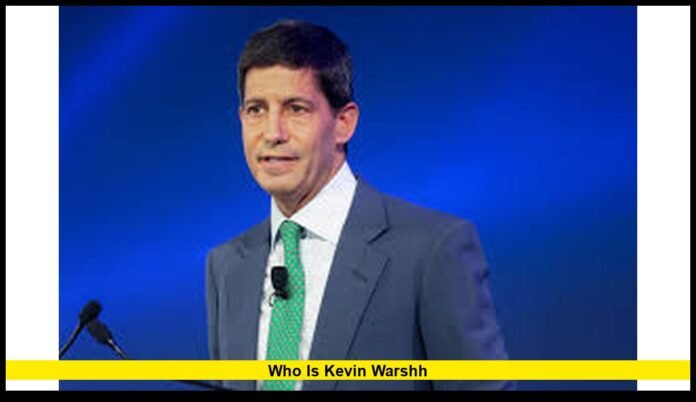

Who is kevin warsh continues to be a widely searched question as Americans follow debates about inflation, interest rates, and the future of U.S. monetary policy. Kevin Warsh is a former Federal Reserve governor whose influence has endured long after his departure from the central bank, driven by his role during the financial crisis and his continued presence in economic policy discussions.
A Clear Profile of Kevin Warsh
Kevin Maxwell Warsh is an American economist, lawyer, and former senior policymaker. He is best known for serving on the Federal Reserve Board of Governors during one of the most volatile economic periods in modern U.S. history.
Although he no longer holds a government position, Warsh remains active in academic, policy, and advisory roles. His views often emphasize monetary discipline, financial stability, and the long-term consequences of central bank decisions.
Early Life and Academic Foundation
Kevin Warsh was born in 1970 in Albany, New York. His early life was shaped by a strong focus on education and civic responsibility.
His academic path includes:
- Graduation from Stanford University with a degree in public policy
- Completion of a Juris Doctor degree at Harvard Law School
At Harvard, Warsh concentrated on financial regulation and legal frameworks that govern markets. This background helped prepare him for future roles at the intersection of law, finance, and public policy.
Experience in Finance and Government
Before joining the Federal Reserve, Warsh developed experience in both Wall Street and Washington.
Work in the Private Sector
Warsh worked at Morgan Stanley, where he gained exposure to:
- Capital markets operations
- Corporate finance transactions
- Financial risk assessment
This experience gave him firsthand knowledge of how financial institutions operate under both normal and stressed conditions.
Service in the White House
Warsh later transitioned into public service. He served as:
- Special Assistant to the President for Economic Policy
- Executive Secretary of the National Economic Council
In these roles, he advised senior officials on economic strategy and helped coordinate policy across federal agencies.
Appointment to the Federal Reserve
In 2006, Kevin Warsh was appointed to the Federal Reserve Board of Governors. At the time, he was among the youngest individuals ever selected for the role.
The appointment placed him at the center of U.S. monetary policy just before the onset of the global financial crisis.
Role During the 2008 Financial Crisis
Warsh’s tenure at the Federal Reserve coincided with the collapse of major financial institutions and widespread market panic.
Key Responsibilities
During the crisis, he participated in:
- Emergency policy meetings addressing liquidity shortages
- Decisions related to unconventional monetary tools
- Coordination with domestic and international regulators
The period required rapid responses under extreme uncertainty. Warsh was involved in shaping measures designed to stabilize markets and restore confidence.
Views on Monetary Policy
Kevin Warsh is known for expressing caution about the long-term use of aggressive monetary interventions.
His policy outlook generally stresses:
- The importance of price stability
- Risks associated with prolonged low interest rates
- Potential market distortions from large-scale asset purchases
These views have made him a distinct voice in debates over the appropriate limits of central bank authority.
Departure from the Federal Reserve
Warsh left the Federal Reserve Board in 2011, after completing his term. His departure came as the U.S. economy began a slow recovery from the financial crisis.
Rather than stepping away from public life, he shifted his focus toward research, teaching, and policy commentary.
Academic and Policy Roles After the Fed
Following his time at the central bank, Warsh remained deeply engaged in economic analysis.
As of today, his confirmed roles include:
- Serving as a distinguished visiting fellow at the Hoover Institution
- Teaching and lecturing at Stanford Graduate School of Business
- Participating in global policy forums and economic conferences
These positions allow him to influence future business leaders and contribute to long-term economic research.
Public Commentary and National Attention
Kevin Warsh frequently appears in national discussions about inflation, interest rates, and Federal Reserve independence.
He is often invited to:
- Speak at economic conferences
- Participate in televised policy discussions
- Publish opinion pieces on monetary policy challenges
His commentary is closely watched by investors, policymakers, and academics alike.
Why Kevin Warsh Remains Relevant
Understanding who is kevin warsh matters because his ideas continue to shape economic debate in the United States.
Several factors explain his ongoing relevance:
- Direct involvement in crisis-era decision-making
- Consistent engagement with monetary policy issues
- Credibility built through both public and private sector experience
In periods of economic uncertainty, voices with prior crisis experience often receive heightened attention.
Public Image and Perception
Warsh is widely regarded as:
- A disciplined thinker on inflation control
- A critic of unchecked monetary expansion
- An advocate for clear policy boundaries
Supporters see his approach as essential for long-term stability. Critics argue it may limit flexibility during downturns. This contrast keeps his perspectives in active debate.
Personal Background
Kevin Warsh is married to Jane Lauder, an executive associated with Estée Lauder Companies and a member of the Lauder family. Despite public interest, Warsh maintains a relatively private personal life.
Public appearances and interviews typically remain focused on economic policy rather than family or lifestyle topics.
Impact on Future Economic Discussions
While Warsh does not currently hold office, his past experience places him among a small group of policymakers with direct knowledge of crisis management at the highest level.
His continued engagement ensures that:
- His views remain part of policy conversations
- His analysis influences both markets and academia
- His experience informs debates on central bank strategy
As economic conditions evolve, figures like Warsh often regain attention during critical policy moments.
Career Highlights at a Glance
- Born in Albany, New York
- Educated at Stanford University and Harvard Law School
- Worked at Morgan Stanley in finance
- Served in the White House National Economic Council
- Appointed Federal Reserve Governor in 2006
- Active participant in crisis-era monetary decisions
- Continues to shape economic thought through academic and policy work
Final Perspective
Kevin Warsh’s career reflects a blend of legal training, financial expertise, and public service. His role during the financial crisis and his continued engagement with monetary policy explain why his name remains prominent in U.S. economic conversations.
Do you think voices like Kevin Warsh’s should play a larger role in today’s economic debates? Share your thoughts and stay connected for ongoing coverage.