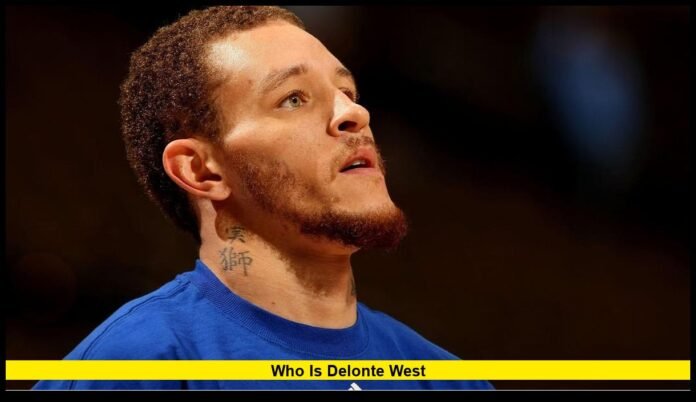

Many sports fans continue to ask, who is Delonte West, as the former NBA player’s life remains both fascinating and heartbreaking. Once celebrated as a tough, talented guard in the NBA, West’s story has since become one of the most publicized tales of post-career struggle in professional basketball. His journey—from high school prodigy to NBA standout and then to homelessness and recovery—illustrates the often-overlooked human side of fame and the challenges that come with it.
Today, at 42 years old in 2025, Delonte West’s name is remembered not only for his contributions to the game but also for the resilience he has shown while fighting to rebuild his life.
Early Life: The Making of a Competitor
Delonte Maurice West was born on July 26, 1983, in Washington, D.C., and raised in Prince George’s County, Maryland. His childhood was marked by hardship—financial instability, family struggles, and a tough neighborhood environment. But it was also where his passion for basketball took root.
From an early age, West used sports as an outlet to escape his circumstances. His determination and grit were visible even in his teenage years, as he spent countless hours honing his skills on local courts. His hard work paid off when he enrolled at Eleanor Roosevelt High School, where he became a standout player and one of Maryland’s top recruits.
West’s combination of quickness, shooting ability, and defensive intensity caught national attention. These skills earned him a scholarship to Saint Joseph’s University in Philadelphia—an opportunity that would define the early years of his career.
College Stardom at Saint Joseph’s University
At Saint Joseph’s, West formed one of the best backcourts in college basketball history alongside Jameer Nelson. The duo helped lead the 2003–2004 Saint Joseph’s Hawks to a near-perfect season with a 30–2 record, capturing the hearts of fans across the country.
West averaged 18.9 points, 4.7 assists, and 3.8 rebounds per game during that standout season. His remarkable consistency, composure under pressure, and ability to score from anywhere on the floor made him a first-round NBA draft prospect.
After an impressive college career, West declared for the 2004 NBA Draft, where he was selected 24th overall by the Boston Celtics. That moment marked the realization of his lifelong dream—and the beginning of his journey as a professional athlete.
The NBA Career: Hard Work, Grit, and Unfulfilled Potential
Early Years with the Boston Celtics (2004–2007)
Delonte West made an immediate impact in Boston. As a rookie, he showed flashes of excellence, particularly with his defensive energy and mid-range shooting. By his second season, he had become a reliable starter for the Celtics, averaging over 11 points and 4.6 assists per game. His aggressive play and versatility allowed him to play both guard positions effectively.
However, like many young players, West struggled with consistency and injuries. Still, he developed a reputation as a hardworking, blue-collar player who gave his all every time he stepped on the court.
Stint with the Seattle SuperSonics (2007–2008)
In 2007, West was traded to the Seattle SuperSonics (now the Oklahoma City Thunder). Though his time there was short, it provided him valuable experience and set the stage for the most significant period of his career—the move to Cleveland.
Rise with the Cleveland Cavaliers (2008–2010)
West’s career reached its peak with the Cleveland Cavaliers, where he played alongside LeBron James. Under head coach Mike Brown, West became an integral part of Cleveland’s rotation. His defensive tenacity, shooting accuracy, and chemistry with LeBron helped the Cavaliers achieve multiple deep playoff runs.
During the 2008–09 season, West averaged 11.7 points, 3.5 rebounds, and 3.2 assists per game, and became known for his hustle and fearlessness. His contributions helped the Cavaliers finish with one of the best records in the NBA that year.
For many fans, this was the version of Delonte West they’ll always remember—a gritty guard who played with passion and heart.
Later Years: Dallas Mavericks and the End of His NBA Journey
After leaving Cleveland, West returned briefly to the Celtics before joining the Dallas Mavericks in 2011. Unfortunately, his final NBA seasons were marked by inconsistency and personal issues.
By 2012, West’s NBA career came to an abrupt end following a series of off-court incidents and confrontations with teammates and management. He later played overseas in China and Venezuela and had brief appearances in the NBA G-League, but none matched his earlier success in the NBA.
Over eight professional seasons, West averaged 9.7 points, 3.6 assists, and 2.9 rebounds per game, playing in more than 430 games.
Financial Success and Loss
Over the course of his NBA career, Delonte West earned an estimated $16.4 million in salary. His largest contract came during his time with the Cavaliers, when he signed a three-year deal worth $12.7 million.
However, after retiring, West struggled to maintain financial stability. Reports indicate that mental health challenges, substance abuse, and poor financial management depleted much of his wealth. He went from owning homes and cars to being photographed living on the streets—an image that stunned fans who remembered him as an energetic NBA guard.
Mental Health Battles and Public Struggles
Delonte West was diagnosed with bipolar disorder in 2008, and this condition would play a major role in his life after basketball. While he initially tried to manage it with medication, the stress of fame, the demands of professional sports, and life after retirement led to several relapses.
In the years following his NBA career, West faced legal troubles and addiction issues. Several videos and photos emerged online showing him in distress, homeless, or panhandling in various cities, including Dallas and Virginia. These heartbreaking moments highlighted the mental health crisis facing many former athletes.
Despite his challenges, West’s openness about his struggles has brought attention to the need for better mental health resources for retired players. His story has become a rallying point for advocates seeking improved support systems for athletes transitioning out of professional sports.
Support and Recovery Efforts
In 2020, Mark Cuban, the owner of the Dallas Mavericks, personally intervened after seeing West’s deteriorating condition. Cuban helped reunite West with his mother and paid for his entry into a rehabilitation facility.
While West showed signs of recovery and even participated in rehabilitation programs and community basketball events, setbacks continued in the following years. As of 2025, reports indicate that West has faced recurring issues with substance abuse and has been arrested multiple times for public intoxication.
Nonetheless, many in the sports community, including fans, former players, and organizations, continue to hope for his full recovery. His story serves as both a tragedy and an inspiration—a reminder that recovery is a long process requiring compassion and continued support.
Legacy and Lessons from His Story
When people ask who is Delonte West, the answer goes far beyond his basketball statistics. His life has become a symbol of the complex realities athletes face when the spotlight fades.
1. The Importance of Mental Health Awareness
West’s struggles forced the sports world to confront how poorly mental health has been addressed in professional leagues. His courage to speak publicly about his bipolar disorder has inspired other athletes to seek help and destigmatize mental illness.
2. The Fragility of Fame
West’s fall from NBA riches to homelessness underscores the fleeting nature of fame. Without proper guidance, financial literacy, and emotional support, even the most successful players can face dramatic downturns.
3. The Power of Redemption
Despite repeated setbacks, West’s willingness to reenter rehab and seek help shows resilience. His story is still being written, and redemption remains possible.
Where Is Delonte West Now (2025)?
As of 2025, Delonte West continues to reside in Virginia, where he has faced recent legal challenges. In early November 2025, he was reportedly found unconscious and intoxicated by authorities. However, according to people close to him, West remains committed to recovery and has support from family and local organizations.
While his current situation remains uncertain, his story continues to resonate deeply with fans, journalists, and advocates who want to see him find stability and peace.
Key Facts About Delonte West
| Category | Details |
|---|---|
| Full Name | Delonte Maurice West |
| Date of Birth | July 26, 1983 |
| Age (2025) | 42 years old |
| Birthplace | Washington, D.C., USA |
| Height | 6 ft 4 in (1.93 m) |
| NBA Teams | Boston Celtics, Seattle SuperSonics, Cleveland Cavaliers, Dallas Mavericks |
| Career Duration | 2004 – 2012 |
| Average Stats | 9.7 PPG, 3.6 APG, 2.9 RPG |
| Estimated Career Earnings | $16.4 million |
| Known For | NBA career, mental health struggles, resilience, advocacy |
Conclusion
Understanding who is Delonte West requires compassion and perspective. He’s more than a former NBA player; he’s a man who reached the pinnacle of professional success only to face some of life’s toughest challenges afterward. His story represents both the triumphs of perseverance and the pain of personal battles.
Delonte West’s journey reminds us that behind every athlete is a human being—one who deserves empathy, not judgment. Whether on or off the court, his name continues to symbolize courage, vulnerability, and the ongoing fight for redemption.
Do you believe enough is being done to support athletes after their careers end? Share your thoughts below and continue the conversation.