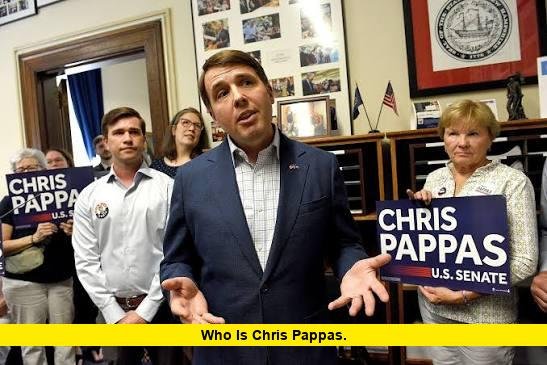

Chris Pappas has secured the Democratic nomination for the U.S. Senate seat in New Hampshire, defeating progressive challenger Karishma Manzur in a primary election held on Tuesday. The result sets up a high-stakes general election matchup in one of the country’s most closely watched Senate races, with control of the chamber potentially hanging in the balance. Pappas, a four-term U.S. Representative from New Hampshire’s 1st Congressional District, is now positioned to compete for the seat currently held by retiring Democratic Senator Jeanne Shaheen.
The primary drew national attention not only because of the open Senate seat, but also because of the ideological contest it represented within the Democratic Party. Manzur, a medical scientist and first-time candidate running from the party’s progressive wing, mounted a late surge in the polls that briefly raised questions about whether the establishment favorite could hold his lead. In the end, Pappas won decisively, with vote totals reported in the range of 60 to 62 percent to Manzur’s roughly 36 to 38 percent, according to results reported as ballots were counted on primary night. Three other candidates, including David Jarvis, Maxwell Saal, and John Vail, also appeared on the Democratic primary ballot but did not draw significant support.
Who Is Chris Pappas
Chris Pappas is a Manchester, New Hampshire native who first won election to the U.S. House of Representatives in 2018. His election made him New Hampshire’s first openly LGBTQ+ member of Congress, a milestone that has remained part of his political identity throughout his career. Since taking office, Pappas has built a reputation as a pragmatic lawmaker, aligning himself with the bipartisan Problem Solvers Caucus in the House and describing himself on the campaign trail as an independent voice for New Hampshire rather than a strict party loyalist.
Pappas also serves as a cochair of the Congressional Equality Caucus and has been an active supporter of the Equality Act. He has backed legislation aimed at prohibiting the so-called gay and transgender panic legal defense and has advocated for the interests of LGBTQ+ veterans during his time in Congress. His record in the House has generally emphasized bipartisan cooperation, constituent services, and a focus on affordability issues that resonate with New Hampshire’s famously independent-minded electorate.
Career and Path to the Senate Race
Before entering federal politics, Pappas served on the New Hampshire Executive Council, where he built relationships across the state’s political establishment. His 2018 congressional campaign was notable for defeating multiple primary challengers, including a candidate backed by prominent progressive figures, in a district considered one of the most competitive in the nation. That win, and his subsequent reelections, cemented his standing as a durable and electable figure in New Hampshire’s 1st Congressional District, a seat that has historically swung between the two parties.
In a widely covered 2022 general election, Pappas defeated Republican challenger Karoline Leavitt, who has since gone on to serve as White House Press Secretary. That contest raised his national profile and gave him a track record of winning tough races against well-funded opponents, a factor that Democratic Party leaders cited when encouraging him to run for the Senate seat being vacated by Shaheen.
Pappas entered the 2026 Senate primary as the clear frontrunner, backed by a significant fundraising advantage and a long list of high-profile endorsements. His supporters included Senator Shaheen herself, Senator Maggie Hassan, former Vice President Kamala Harris, former President Barack Obama, and former Transportation Secretary Pete Buttigieg, along with major LGBTQ+ political organizations. That establishment support helped him weather a late challenge from Manzur, whose campaign drew energy from progressive frustration with the direction of the national Democratic Party.
Public Interest and the Progressive Challenge
The New Hampshire Senate primary became a proxy battle over the future direction of the Democratic Party, echoing similar establishment-versus-progressive contests that played out in other states this election cycle. Manzur, a democratic socialist who had never previously held elected office, criticized Pappas over his ties to donors aligned with pro-Israel advocacy groups, his record on healthcare policy, and what she characterized as insufficient attention to corporate influence in politics. She drew support from prominent progressive voices, including former Representative Jamaal Bowman, former Ohio state Senator Nina Turner, Progressive Democrats of America, and the climate advocacy group 350NH Action.
Pappas, for his part, defended his voting record and campaign priorities, pointing to his long-standing efforts to reduce the influence of money in politics since he was first elected to Congress in 2018. He positioned himself as a candidate who appeals to voters across the political spectrum, arguing that New Hampshire is not a state defined by strict ideological lines. Despite Manzur’s late momentum in the polls, the Associated Press and other outlets called the race for Pappas relatively quickly after polls closed, reflecting a comfortable margin of victory once a meaningful share of the vote had been counted.
Public interest in the race has also been fueled by New Hampshire’s competitive political landscape. Although Republicans have controlled the New Hampshire governor’s office since 2017, the state has not elected a Republican to the U.S. Senate since 2010, and it has not favored a Republican presidential candidate since 2000. That history makes the general election matchup particularly significant for both parties heading into the fall campaign.
Latest Updates on the General Election Matchup
With the Democratic primary decided, attention now turns to the November general election. Pappas will face former Republican Senator John E. Sununu, who won his own primary against former Massachusetts Senator Scott Brown. Sununu, the brother of former New Hampshire Governor Chris Sununu and son of former Governor John H. Sununu, previously represented New Hampshire in the Senate before losing his seat to Jeanne Shaheen in 2008. His candidacy carries considerable name recognition in the state, given his family’s decades-long presence in New Hampshire politics, and he entered the primary season with a notable endorsement from President Donald Trump.
Republican strategists view the open Senate seat as one of their top opportunities to flip a seat currently held by Democrats, particularly given the tightening national battle for Senate control. Democrats, meanwhile, consider the seat a must-hold race, and Pappas’s decisive primary win is being framed by party leaders as evidence that a pragmatic, results-focused candidate gives them their strongest chance of retaining it. As of this writing, there is no official confirmation of any additional candidates entering the general election field, and further campaign developments are expected to unfold in the weeks ahead as both campaigns ramp up fundraising and public appearances across the state.
Final Thoughts
Chris Pappas’s victory in the New Hampshire Senate primary reflects both his individual political strength and a broader trend of Democratic voters favoring experienced, electable candidates in several high-profile primaries this cycle. His win over a progressive challenger, despite a late polling surge from his opponent, underscores the durability of his support base built over multiple successful House campaigns. As the race shifts toward a general election contest against a well-known Republican opponent in John Sununu, New Hampshire is set to become one of the most closely watched Senate battlegrounds in the country this November, with implications that could extend well beyond the state’s borders.
Stay tuned for more updates on the New Hampshire Senate race, and share your thoughts on this developing story in the comments below.