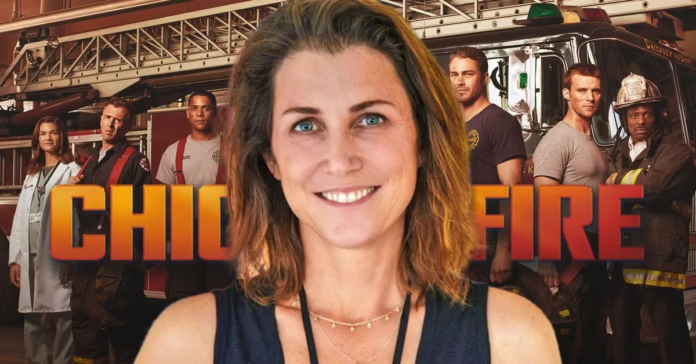

The question Who Is Andrea Newman on Chicago Fire? has become increasingly common among viewers who want to understand the creative force behind one of television’s most enduring firefighter dramas. While audiences are familiar with the brave faces inside Firehouse 51, the storytelling engine that powers those characters comes from behind the camera—where Andrea Newman plays a defining role.
Andrea Newman is not an on-screen character but a key architect of the series’ identity. Serving as co-showrunner, executive producer, and writer on Chicago Fire, she helps shape the emotional depth, narrative direction, and long-term evolution of the show. Her influence extends across multiple seasons, making her one of the most important figures in maintaining the series’ success.
A Driving Creative Force Behind the Series
Television dramas rely heavily on consistent leadership, especially those that run for many seasons. Newman operates at the center of that leadership structure. Her role involves not just managing scripts but guiding the entire creative ecosystem of the show.
Working within the larger franchise created by Dick Wolf, she contributes to a storytelling style that blends procedural action with deeply personal narratives. This combination has become a hallmark of Chicago Fire, and Newman’s fingerprints are visible in how those elements are balanced.
Her leadership ensures that the show never leans too far in one direction. Action sequences remain intense and realistic, while emotional storylines retain authenticity and depth.
Understanding the Co-Showrunner Role
As co-showrunner, Newman holds one of the highest creative positions on the series. This role involves overseeing the narrative vision from a broad perspective. Instead of focusing on a single episode, she helps design entire seasons.
She works with writers to map out long-term arcs, deciding how characters grow, struggle, and change over time. This includes determining when major events should occur and how they impact the ensemble cast.
The co-showrunner also ensures that each episode contributes to a larger narrative journey. Even standalone stories are carefully aligned with ongoing developments, allowing the show to feel cohesive rather than episodic.
Newman’s ability to maintain this balance is one of the reasons the series continues to feel connected, even after years on air.
Executive Producer Responsibilities
In addition to her storytelling duties, Newman plays a crucial role in production as an executive producer. This position bridges the gap between creative vision and practical execution.
She collaborates with directors, production teams, and editors to ensure that each episode aligns with the show’s tone and standards. Scripts are reviewed and refined under her guidance before filming begins, ensuring clarity in both character voice and narrative structure.
Her involvement continues through post-production, where she evaluates edits, pacing, and emotional impact. Adjustments are made to strengthen storytelling, ensuring that each episode delivers both excitement and meaning.
Beyond creative input, Newman also navigates logistical challenges. Television production is complex, requiring careful coordination of schedules, locations, and resources. Her ability to manage these elements while preserving storytelling quality is a key part of her effectiveness.
A Writer Focused on Emotional Realism
Andrea Newman’s contributions as a writer bring a distinct emotional layer to Chicago Fire. Her scripts often explore the psychological and personal dimensions of first responders, moving beyond action to examine the human cost of the job.
Rather than focusing solely on emergencies, her storytelling highlights what happens after the sirens fade. Characters deal with consequences, reflect on their choices, and navigate relationships shaped by high-stress environments.
This approach creates a deeper connection between viewers and the characters. Audiences are not just watching rescues—they are experiencing the emotional journeys of the people involved.
Her writing often includes moral dilemmas, where characters must make difficult decisions under pressure. These moments add complexity and realism, reinforcing the show’s reputation for grounded storytelling.
Maintaining Character Continuity Over Time
Long-running series face a unique challenge: keeping characters consistent while allowing them to evolve. Newman plays a central role in achieving this balance.
She ensures that past events continue to influence present storylines. Characters remember their experiences, and those experiences shape future decisions. This continuity adds credibility and depth to the narrative.
When new characters are introduced, they are integrated carefully into the existing dynamic. Relationships are developed gradually, allowing audiences to form genuine connections.
At the same time, departures and transitions are handled with attention to emotional impact. Changes within Firehouse 51 feel meaningful rather than abrupt, maintaining the integrity of the story.
Balancing Action and Emotion
One of the defining features of Chicago Fire is its ability to combine high-stakes action with intimate storytelling. Newman’s leadership is instrumental in maintaining this balance.
Rescue scenes are designed to be intense and visually engaging, but they are never the sole focus. Each emergency serves a larger narrative purpose, often revealing something about the characters involved.
This approach ensures that action sequences are not just spectacle—they are integral to character development. Viewers understand not only what happens but why it matters.
The emotional stakes remain central, giving the show a distinctive identity within the procedural drama genre.
Collaboration Across a Shared Universe
Chicago Fire exists within a larger interconnected television universe, alongside series like Chicago P.D. and Chicago Med. Newman’s role involves coordinating storytelling across these shows when necessary.
Crossover episodes require careful planning to ensure consistency in character behavior and timeline continuity. Newman works with other creative leaders to align narratives, creating a seamless viewing experience.
This collaboration enhances the overall franchise, allowing stories to expand beyond a single series while maintaining coherence.
Adapting to Changing Audience Expectations
Television audiences evolve over time, and long-running shows must adapt to remain relevant. Newman plays a key role in guiding Chicago Fire through these changes.
She introduces new themes and perspectives that reflect contemporary issues while staying true to the show’s core identity. Storylines evolve to address both personal and professional challenges faced by first responders.
At the same time, she ensures that the fundamental appeal of the series—its focus on teamwork, courage, and resilience—remains intact.
This balance between innovation and consistency is essential for sustaining long-term viewer engagement.
Why Her Role Matters to Fans
For many viewers, the appeal of Chicago Fire lies in its characters. The relationships, conflicts, and growth of those characters are what keep audiences coming back.
Andrea Newman’s work directly shapes these elements. Her decisions influence how characters interact, how stories unfold, and how emotional moments are delivered.
Although she remains behind the scenes, her impact is visible in every episode. The consistency of tone, the depth of storytelling, and the evolution of characters all reflect her creative direction.
Understanding her role provides insight into why the series continues to resonate with audiences year after year.
A Lasting Influence on the Series
The question Who Is Andrea Newman on Chicago Fire? extends beyond a simple job title. It points to a broader understanding of how television storytelling works.
Newman represents the kind of leadership that keeps a long-running show cohesive and compelling. Her ability to oversee narrative structure, manage production realities, and contribute meaningful writing makes her an essential part of the series.
As Chicago Fire continues to evolve, her influence remains a guiding force behind its success.
The Bottom Line
Andrea Newman is one of the key creative leaders responsible for shaping Chicago Fire into the series it is today. Through her roles as co-showrunner, executive producer, and writer, she ensures that the show delivers both thrilling action and emotionally rich storytelling.
Her work behind the scenes allows the characters of Firehouse 51 to feel authentic, their stories to feel meaningful, and the series itself to remain relevant in a competitive television landscape.