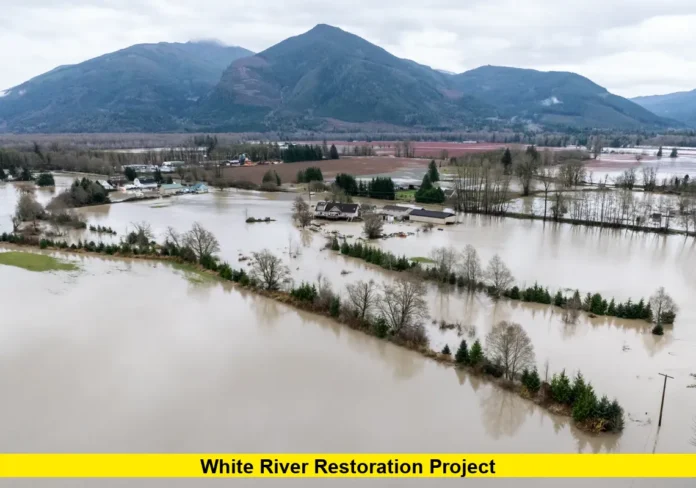

The White River Restoration Project is drawing renewed attention after a powerful atmospheric river storm drenched Western Washington in December, delivering between 10 and 16 inches of rain and triggering one of the wettest events in state history. The extreme weather caused widespread flooding, forced evacuations, and disrupted transportation networks, but it also offered a real-world test of long-term flood mitigation efforts already underway in Sumner.
Communities across the region faced rising waters, overwhelmed drainage systems, and damaged infrastructure. Several levees were breached, roads were shut down, and schools canceled classes as emergency responders worked to manage rapidly changing conditions. For many residents, the storm served as a stark reminder of how vulnerable the area remains to major rainfall events.
Yet within the chaos, early signs suggest that ongoing restoration and flood control work may have prevented even greater damage.
A Storm That Rewrote the Week
The December atmospheric river event brought relentless rainfall over several days, saturating soil and pushing rivers beyond their limits. Western Washington is no stranger to heavy rain, but the intensity and duration of this system placed it among the most severe on record.
Floodwaters spread quickly across low-lying areas, particularly near river corridors that have long been prone to overflow. Emergency alerts urged residents in some neighborhoods to evacuate as water levels rose unpredictably. Detours stretched commutes by hours, and key routes became impassable.
One of the most notable closures occurred at the Stewart Road bridge in Sumner, a critical crossing for local traffic. Construction crews had already been working on a replacement structure, and the storm forced a halt to progress while highlighting the vulnerability of aging infrastructure.
Infrastructure Under Pressure
The Stewart Road bridge closure underscored a broader challenge: many of the region’s transportation systems were not designed to handle the kind of flooding now becoming more common. As water levels surged, roads near the White River were quickly submerged, cutting off access to residential and industrial areas alike.
For commuters who rely on these routes daily, the disruption was immediate and severe. Alternate paths added significant travel time, while some areas became temporarily isolated.
Despite these impacts, city officials say the situation could have been far worse without recent groundwork tied to flood management planning.
How Restoration Efforts Made a Difference
At the center of those efforts is the White River Restoration Project, a multi-phase initiative designed to reduce flood risk while restoring natural river functions. Although the project is still incomplete, portions already in place played a crucial role during the December storm.
A newly developed floodplain and wetland storage area—spanning roughly 200 acres—absorbed a significant volume of excess water. Instead of spilling into neighborhoods, warehouses, and major roadways, much of the floodwater was redirected into this designated space.
This engineered overflow area acts as a pressure release system for the river, giving water somewhere to go during peak flow events. By lowering the strain on levees and surrounding land, it helps prevent catastrophic flooding.
Officials monitoring the storm observed that water levels rose within expected ranges in several key zones, suggesting that the system performed as intended under extreme conditions.
Understanding the River’s Complex History
To fully grasp the importance of current efforts, it helps to understand how the White River evolved over time. More than a century ago, the river followed a different course entirely, flowing northward before a major flood in the early 1900s altered its path.
That event redirected the river southward, permanently changing the region’s hydrology. In response, engineers reinforced the new channel with levees, concrete barriers, and rock structures to stabilize the flow and protect surrounding land.
While those measures helped control the river, they also limited its natural ability to spread out during high water events. Over time, this confinement contributed to recurring flooding, particularly in areas like Sumner.
The modern restoration approach seeks to reverse some of those constraints by reintroducing space for the river to expand safely.
Balancing Nature and Development
Flood management in Sumner is not just about protecting homes—it’s also about safeguarding a major economic hub. The city’s industrial district plays a significant role in regional supply chains, supporting manufacturing, warehousing, and distribution operations that extend far beyond local boundaries.
When flooding disrupts this area, the effects ripple outward, impacting businesses and consumers across the region. Ensuring its resilience is therefore a top priority.
At the same time, the project aims to restore ecological balance. Decades of river modification have reduced habitat quality for fish and wildlife, particularly salmon, which depend on healthy river systems for survival.
By reconnecting the river to its floodplain and creating new habitat areas, planners hope to support both environmental recovery and long-term flood resilience.
A Multi-Phase Plan with Long-Term Goals
The restoration initiative is not a single construction project but a coordinated series of improvements designed to address multiple challenges at once.
Key components include:
- Elevated infrastructure, such as a redesigned Stewart Road bridge, to accommodate higher water levels
- Flood barriers to protect critical industrial zones
- Habitat restoration across dozens of acres to support fish populations
- Expansion of floodplain areas to safely store excess water
Together, these elements form a comprehensive strategy that blends engineering with environmental science.
The project carries an estimated cost of around $60 million and is expected to continue in phases through at least 2027. Progress depends on funding, environmental conditions, and careful scheduling to minimize disruption to wildlife.
Working Within Nature’s Timeline
One of the unique challenges of the effort is the need to coordinate construction with natural cycles. Work near the river must often pause during periods when fish are migrating or spawning, limiting the window for certain activities.
Heavy equipment can create vibrations and disturbances that affect aquatic life, so crews must operate within strict environmental guidelines. While this slows progress, it ensures that restoration goals are not undermined by the construction process itself.
The return of salmon to parts of the river in recent years is seen as an encouraging sign, reinforcing the importance of maintaining these protections.
Lessons from the December Flood
The recent storm provided valuable data for engineers and planners. Real-world conditions revealed how water moves through the system, where pressure points remain, and which measures are most effective.
Early observations suggest that the combination of floodplain expansion and targeted infrastructure upgrades is working as intended. However, officials caution that no system can eliminate flood risk entirely, especially as weather patterns become more unpredictable.
Instead, the goal is to reduce the severity and frequency of damaging events, giving communities a better chance to withstand extreme conditions.
Looking Ahead
As climate trends point toward more intense rainfall events in the Pacific Northwest, projects like this are becoming increasingly important. Cities across the region are exploring similar approaches, combining traditional flood control with ecosystem restoration.
For Sumner, the work is far from finished, but the progress made so far offers a glimpse of what’s possible. The December flooding, while disruptive, demonstrated that proactive planning can make a measurable difference.
Residents who experienced road closures, delays, and evacuation warnings may take some reassurance in knowing that steps are being taken to reduce future risks.
A Shift Toward Proactive Resilience
Historically, many flood control efforts have been reactive—responding to disasters after they occur. The approach behind the White River Restoration Project reflects a shift toward anticipation and prevention.
By investing in infrastructure and environmental restoration before catastrophic damage occurs, communities can avoid greater costs down the line—both financially and in terms of safety.
The December storm may be remembered for its intensity, but it may also mark a turning point in how the region prepares for the next major event.