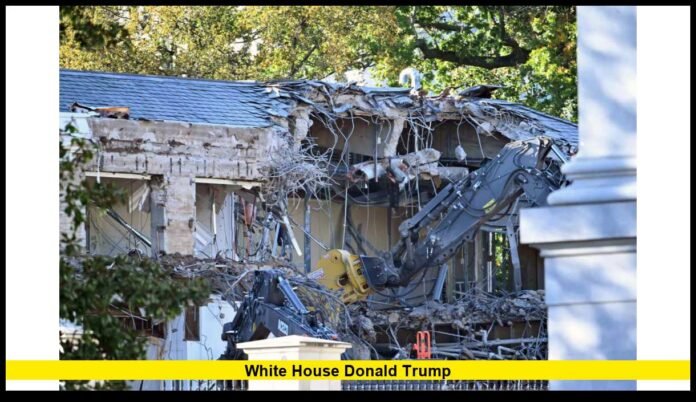

The White House Donald Trump project has once again captured national attention, this time with the launch of a massive $300 million ballroom construction inside the historic residence. This newly announced initiative marks one of the most ambitious—and controversial—undertakings of Trump’s current administration, with the demolition of the East Wing already underway and plans for the “state ballroom” progressing rapidly.
Background: Why the Ballroom and What’s Being Changed
Earlier in 2025, the White House under President Donald J. Trump acknowledged spatial limitations during large-scale events. The current East Room can host only around 200 guests, insufficient for grand state occasions. In response, the administration unveiled plans for a new “state ballroom” spanning nearly 90,000 square feet.
The new ballroom is designed to accommodate up to 999 guests, significantly increasing capacity for official gatherings, banquets, and state dinners. The President emphasized that the project would be fully privately funded, assuring that no taxpayer money would be used in its construction.
Trump described the ballroom as a “celebration of American excellence and hospitality,” noting that the addition would help restore grandeur to the White House’s ceremonial traditions.
What’s Happening Now: Cost, Demolition, Timeline
The project, initially projected to cost around $200 million, has since grown to approximately $300 million as of October 2025. The East Wing, once home to the offices of the First Lady and a vital part of the White House tour route, has now been largely demolished to make room for the new ballroom.
Construction crews have cleared most of the structure, with satellite images confirming visible demolition progress. The White House is reportedly reaching out to high-profile donors and private entities to close the remaining funding gap.
Legal petitions have already emerged from preservation groups and citizens who claim that the project violates historical preservation laws. Despite opposition, the administration maintains that the changes fall within presidential authority and that all necessary regulatory steps are being followed.
Public Reaction and Preservation Concerns
Public opinion remains deeply divided. Polling data shows that a majority of Americans—over half—oppose the demolition of the East Wing, while a smaller but vocal segment supports the expansion, citing the potential for new ceremonial opportunities.
Historians and preservationists have voiced alarm over the loss of the East Wing, which dates back to the early 1900s. Many argue that the wing was a critical part of the White House’s architectural and cultural legacy, and removing it could erase important chapters of American history.
Supporters, however, claim the ballroom will enhance the White House’s ability to host dignitaries, restore elegance to formal occasions, and cement Trump’s lasting architectural legacy.
Timeline Overview
| Date | Event |
|---|---|
| July 31 2025 | Trump announces the ballroom project publicly. |
| September 2025 | Demolition of the East Wing begins. |
| October 2025 | Most of the East Wing is demolished; costs reach $300 million. |
| Late 2025 | Fundraising for additional private donors intensifies. |
Why It Matters
The White House Donald Trump ballroom project raises important questions about governance, symbolism, and national priorities.
- Governance and Transparency: While Trump insists that the project is privately funded, critics question the transparency of the donor list and the approval process.
- Heritage and Symbolism: The White House is both a working residence and a historic landmark. Altering it on this scale introduces debates about preserving national heritage versus modernizing the executive estate.
- Economic Optics: With ongoing concerns about the economy, inflation, and healthcare costs, critics question whether a lavish addition is appropriate at this time.
- Legacy Building: Supporters see the ballroom as a signature addition that will become a permanent part of Trump’s presidential legacy—akin to how past presidents left their marks through major White House renovations.
Key Figures and Stakeholders
- President Donald J. Trump – The project’s chief advocate, promising no taxpayer funds will be used.
- Karoline Leavitt (Press Secretary) – Spearheading media briefings and defending the decision to demolish the East Wing.
- Private Donors and Corporations – Providing the financial backing for the $300 million construction.
- Preservationists and Legal Petitioners – Actively contesting the project through court filings and public campaigns.
What Comes Next
With demolition nearly complete, the White House will soon enter the “vertical construction” phase, where the new ballroom begins to take shape. Officials estimate that the project will take several years to complete, with the goal of unveiling the finished space before the end of Trump’s current term in 2029.
There are, however, multiple challenges ahead. Court decisions regarding preservation lawsuits could delay the project, and transparency issues around donor contributions may invite further scrutiny from watchdog groups.
Public tours of the White House are also expected to be temporarily halted during construction, as the demolished East Wing traditionally served as the entry route for visitors. Once completed, the new ballroom is expected to feature advanced security technology, grand chandeliers, marble flooring, and an integrated sound and lighting system for high-profile events.
Frequently Asked Questions (FAQ)
Q1: Who is paying for the new White House ballroom?
The administration states that the entire project is being financed through private donations, with no federal funds or taxpayer contributions.
Q2: Why was the East Wing demolished?
The East Wing was removed to make space for the new ballroom, which will occupy the same footprint but extend deeper underground to accommodate event logistics and support areas.
Q3: What is the purpose of the ballroom?
The new ballroom will serve as a state venue for large gatherings, dinners, press events, and international receptions—expanding White House capacity to nearly 1,000 guests.
Q4: When will the project be finished?
The official timeline targets completion before 2029, though legal challenges and funding adjustments could extend construction.
Q5: Why is the project controversial?
Critics point to the destruction of a historically significant part of the White House, rising costs, and the potential influence of undisclosed donors. Supporters argue it modernizes the space and enhances U.S. prestige.
Disclaimer
This article summarizes factual developments related to the White House Donald Trump ballroom project as of October 24, 2025. It is intended for informational purposes only and does not constitute legal, political, or financial advice. All information reflects publicly verifiable updates available at the time of writing.
The White House Donald Trump ballroom project symbolizes both ambition and controversy—a blend of legacy-building and debate over preservation. As construction continues, the nation watches to see how history, architecture, and politics converge under one of the most scrutinized presidencies in modern times. Share your thoughts below—what do you think about this monumental change to the White House?