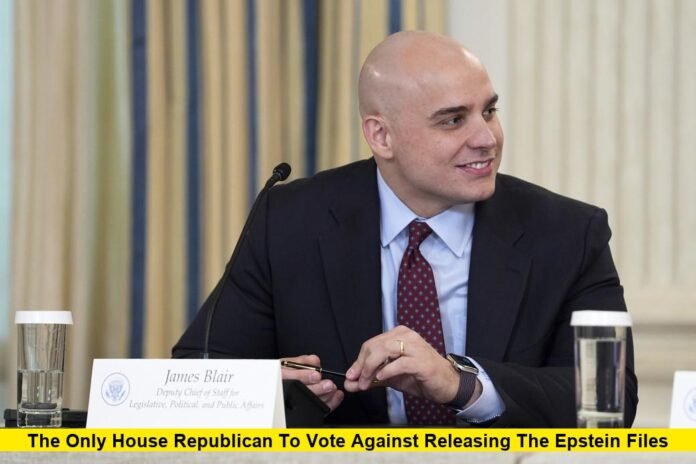

The debate over which republican voted against releasing the Epstein files became a major national focus after the House of Representatives took a decisive vote on the issue. The chamber overwhelmingly approved the bill mandating the release of unclassified materials linked to the long-running investigation into Jeffrey Epstein. Yet one vote stood apart from the near-unanimous wall of support: Representative Clay Higgins of Louisiana cast the single “no.”
This moment drew widespread attention because the vote was not only historic in scale but also emblematic of the public demand for transparency surrounding a case that has lingered in the national consciousness for years. Understanding why this single dissent occurred, and what it reveals about the broader conversation on privacy, justice, and government disclosure, has become a key topic for many Americans.
A Historic Vote With One Lone Opponent
The House vote produced one of the most bipartisan outcomes seen in recent years. Members from both parties rallied around the idea that releasing unclassified Epstein-related files was necessary for public confidence. Only one representative—Clay Higgins, a Republican from Louisiana—voted “no.”
His solitary dissent was not framed as opposition to shedding light on the Epstein case. Rather, his stated reasoning centered on how the release would be carried out, who might be affected, and whether longstanding principles of criminal justice would be respected.
Higgins has built a reputation as a blunt, outspoken lawmaker with a strong focus on law-enforcement ethics and constitutional protections. His objections grew directly from that identity. While most lawmakers viewed the bill as a transparency measure, he argued that its scope risked harming individuals who were never accused of wrongdoing, including people who may have appeared in investigative files only as witnesses or peripheral contacts.
Why Clay Higgins Cast the Only “No” Vote
Concerns About Privacy
A major factor in Higgins’s decision was his focus on protecting the privacy of individuals whose names could appear in investigative materials but who were never implicated in any criminal conduct. He emphasized that wide-ranging investigative records often include references to people who provided background information, offered alibis, or were connected only tangentially to the subject of the investigation.
In his view, releasing such information without robust privacy protections risks exposing innocent individuals to public scrutiny, potentially causing unjust reputational harm.
Attention to Criminal-Justice Norms
Higgins has long said that criminal-justice procedures form a core pillar of American law. His dissent reflected his belief that the bill departed from traditional investigative practices, where sensitive files—especially those involving victims—are handled with caution to avoid retraumatization or public misinterpretation.
He warned that mass document releases, even when intended to promote accountability, may generate confusion, mischaracterizations, or harmful speculation. His argument centered on protecting the integrity of the justice system rather than shielding wrongdoing.
Call for Amendments Instead of Rejection
He did not oppose the concept of transparency. Instead, he expressed support for a revised version of the bill that would include stronger safeguards for victims, witnesses, and uninvolved individuals. His stance placed him in a unique position: supporting the overall goal of accountability while raising concerns about legislative execution.
Many lawmakers viewed transparency as paramount. Higgins saw accuracy and privacy as equally essential and argued that the bill’s structure did not fully account for those complexities.
Why the Vote Drew Nationwide Attention
The Epstein Case’s Unique Public Gravity
Few criminal cases in modern American history have generated as much public interest as the Epstein case. It involves international travel, high-profile individuals, allegations of systemic abuse, and longstanding questions about how investigations were handled.
The public’s appetite for information remains enormous, and the House vote signaled a major shift toward full transparency. This made any deviation—especially a lone vote—all the more visible.
An Overwhelming Congressional Consensus
When hundreds of lawmakers agree across party lines, public attention naturally turns to the outlier. Higgins’s decision stood out not because it derailed the bill, but because it illuminated an important debate within the conversation about government transparency:
- How can the country balance openness with privacy?
- How should sensitive investigative files be handled once they are no longer part of an active case?
- Should transparency ever override personal protections?
Higgins’s vote forced these questions back into public discussion.
The Symbolism of a Single Dissent
In a political climate often defined by division, a near-unanimous vote is striking. When that unity breaks by just one vote, the dissent automatically becomes symbolic. It represents an alternative viewpoint, however unpopular or misunderstood, and invites deeper inquiry into the reasoning behind it.
What the Bill Requires
Release of Unclassified Files
The legislation directs the Department of Justice to release all unclassified records connected to the Epstein investigation. These may include:
- Internal memos
- Communications among investigators
- Testimonies and interviews
- Records of leads, tips, or witness statements
- Notes from prosecutors and federal agents
Classified documents and materials containing certain protected categories—such as victim identities or explicit content—remain subject to redaction or withholding.
Redaction Protocols
Although the bill allows for some information to be redacted, Higgins argued that these protections are not sufficient for individuals who appear in the files only indirectly. Advocates of the release contend that public trust requires maximum transparency with limited exceptions.
Public Expectations After the Vote
The overwhelming support in both chambers shows a bipartisan belief that full disclosure is necessary to answer lingering public questions. Many Americans want to understand:
- Why previous investigations unfolded the way they did
- Whether any misconduct was covered up
- How powerful figures may or may not have been connected
- What failures occurred in the justice system
The intent of the bill is to address those concerns by making unclassified material accessible.
The National Conversation After the Vote
Transparency vs. Privacy
The central tension emerging from the vote revolves around balancing:
- The public’s right to know
- The privacy of individuals never charged with wrongdoing
- The well-being and protection of victims
- The preservation of investigative integrity
Most lawmakers concluded that transparency must take priority at this moment in history. Higgins believed privacy required stronger safeguards before files were released.
Public Reactions to the Lone Dissent
The public has responded intensely to the revelation that only one Republican voted “no.” Many expressed curiosity about the reasoning behind the dissent. Others questioned whether a single vote should influence a bill that otherwise enjoyed near-universal support.
Many also note that dissenting votes—though rare—play an important role in democratic processes. They provoke discussion, ensure debate, and highlight issues that might otherwise be overlooked.
Mentioning the Key Phrase Again (Required Usage)
As conversations about which republican voted against releasing the epstein files continue, it becomes clear that the issue touches on far more than a single vote. It reflects a national struggle to balance openness with caution, justice with privacy, and public interest with personal protection.
The spotlight on this lone dissent underscores how deeply the American public remains invested in understanding every layer of the Epstein case and ensuring that government institutions operate with honesty and accountability.
What Comes Next
The bill has passed both chambers, so the next chapter involves implementation. The Department of Justice is preparing to process, review, and publish unclassified investigative materials while applying legally required redactions.
As this process unfolds:
- Victims’ privacy protections will remain a priority
- Public expectations for transparency will remain high
- Policy discussions about file releases may resurface
Members of Congress, advocacy groups, and legal experts will continue to debate how future document releases should be handled, especially in cases involving sensitive material or high-profile individuals.
Higgins may seek modifications through future legislation, amendments, or procedural reviews. Meanwhile, lawmakers who supported the bill will monitor the release process to ensure compliance and transparency.
The national conversation is far from over. Many Americans will continue watching to see how the release of these files reshapes public understanding and government accountability.
Share your thoughts below and join the conversation as new developments unfold.