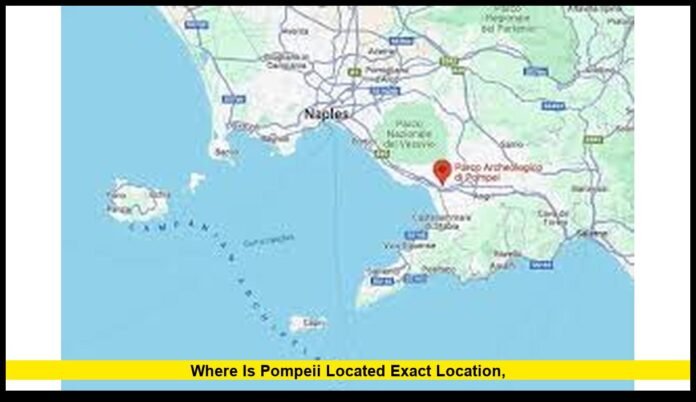

Where is Pompeii located is one of the most searched history and travel questions in 2026, and the answer is precise: Pompeii is located in southern Italy, near Naples, at the base of Mount Vesuvius in the Campania region.
This ancient Roman city sits in a geographically unique position that shaped both its tragic destruction and its extraordinary preservation. Today, Pompeii stands as one of the most visited archaeological sites in the world, offering a direct look into life nearly 2,000 years ago.
Exact Geographic Location of Pompeii
Pompeii lies in southwestern Italy, within the Campania region. It is positioned southeast of Naples and close to the Bay of Naples.
Core Location Details
- Country: Italy
- Region: Campania
- Province: Naples
- Distance from Naples: About 15 miles (24 kilometers)
- Nearby landmark: Mount Vesuvius
The site sits on elevated ground formed by ancient volcanic activity. This terrain helped preserve the ruins after the eruption in 79 AD.
Pompeii’s Position on the Map
Pompeii’s location places it in one of Italy’s most historically rich and scenic regions. It sits between major travel destinations, making it easy to include in a broader itinerary.
Nearby Geographic Features
- Bay of Naples to the west
- Mount Vesuvius to the northwest
- Sarno River flowing nearby
- Amalfi Coast to the south
This combination of coastal and volcanic geography makes Pompeii unique.
Distance From Major Cities
Pompeii is centrally located among several well-known Italian destinations.
Travel Distances
- Naples: 15 miles (24 km)
- Rome: About 150 miles (240 km)
- Salerno: Around 20 miles (32 km)
These distances make Pompeii accessible for both short visits and extended travel plans.
Close Proximity to Mount Vesuvius
Pompeii’s location near Mount Vesuvius defines its history. The volcano erupted in 79 AD, burying the city under ash and pumice.
Distance From the Volcano
- Roughly 5 miles (8 kilometers) from the crater
This close range placed Pompeii directly in the path of volcanic debris. The eruption preserved buildings, streets, and artifacts in remarkable detail.
Why Pompeii’s Location Is So Important
Pompeii’s location is not just a geographic fact. It explains why the site exists in its current form.
Key Reasons Its Location Matters
- Positioned near an active volcano
- Close to a major Roman trade route
- Located in fertile agricultural land
- Easily accessible in modern times
This combination made Pompeii both prosperous in ancient times and vulnerable to disaster.
Modern Pompeii: What Exists Today
Pompeii is now an open-air archaeological park. It is not a living city, but a preserved historical site that covers a large area.
Visitors can explore:
- Residential homes and villas
- Public baths and temples
- Streets with original paving stones
- Shops, bakeries, and marketplaces
The layout reflects a complete Roman city frozen in time.
Size and Structure of the Site
Pompeii is one of the largest archaeological sites in the world.
Site Overview
- Covers about 170 acres (66 hectares)
- Includes multiple districts and zones
- Contains thousands of preserved structures
Large sections remain under excavation, meaning new discoveries continue to emerge.
UNESCO World Heritage Recognition
Pompeii is recognized globally for its historical importance. It is part of a UNESCO World Heritage Site that includes nearby Herculaneum and Torre Annunziata.
What This Status Means
- Protection of the site’s integrity
- Continued conservation efforts
- International attention and research
This recognition helps ensure Pompeii remains preserved for future generations.
Visitor Access and Travel in 2026
Pompeii remains one of Italy’s top tourist destinations. Its location makes it easy to reach for both international and domestic travelers.
How Visitors Reach Pompeii
- Train from Naples: About 30–40 minutes
- From Rome: High-speed train to Naples, then local connection
- Driving: Direct access via major highways
Public transportation options make it convenient for visitors without a car.
What Visitors Experience Today
The site has evolved into a well-organized destination with modern amenities.
Visitor Features
- Marked walking paths
- Restored structures and frescoes
- Informational signage
- Guided tours and audio options
Ongoing preservation ensures that visitors can safely explore the ruins.
Climate and Best Times to Visit
Pompeii’s location in southern Italy gives it a Mediterranean climate.
Seasonal Conditions
- Summer: Hot and dry
- Winter: Mild with occasional rain
- Spring/Fall: Comfortable temperatures and fewer crowds
Many visitors prefer spring and fall for a more relaxed experience.
Nearby Historical Sites
Pompeii is not the only ancient site in the region. Its location allows easy access to other important locations.
Close Attractions
- Herculaneum, another city buried by Vesuvius
- Mount Vesuvius hiking trails
- Naples historic center
- Amalfi Coast
These nearby destinations add depth to any visit.
Ongoing Discoveries and Excavations
Pompeii continues to reveal new details about ancient life. Archaeologists actively work on different sections of the site.
Recent Discoveries Include
- Detailed frescoes and wall paintings
- Everyday household items
- Human remains preserved in ash
These findings provide insight into how people lived, worked, and interacted.
Safety and Monitoring of the Area
Mount Vesuvius remains an active volcano, but modern monitoring systems track its activity closely.
Safety Measures in Place
- Continuous scientific observation
- Emergency planning for surrounding areas
- Controlled access to certain zones
These efforts help maintain safety for both locals and visitors.
Why Pompeii Attracts U.S. Travelers
Pompeii’s location and history make it especially appealing to American tourists.
Reasons for Its Popularity
- Direct connection to ancient Roman history
- Easy access from major European cities
- Unique preservation of daily life
- Educational and cultural value
Its proximity to Naples also makes travel straightforward.
Quick Reference Table
| Feature | Details |
|---|---|
| Country | Italy |
| Region | Campania |
| Nearby City | Naples |
| Distance from Naples | 15 miles |
| Nearby Volcano | Mount Vesuvius |
| Site Size | 170 acres |
| UNESCO Status | Yes |
Understanding Pompeii Through Its Location
Pompeii’s story cannot be separated from its location. Its position near Mount Vesuvius led to a sudden and devastating eruption.
At the same time, that same event preserved the city in a way no one could have predicted.
Today, its location allows visitors to stand in the exact place where history changed in a single day.
Final Answer to Where Is Pompeii Located
Pompeii is located in southern Italy, in the Campania region near Naples, at the base of Mount Vesuvius. This exact setting explains its historical significance, preservation, and continued global importance in 2026.
Would you explore Pompeii in person or learn about it from afar? Share your thoughts and keep following for more travel and history updates.